




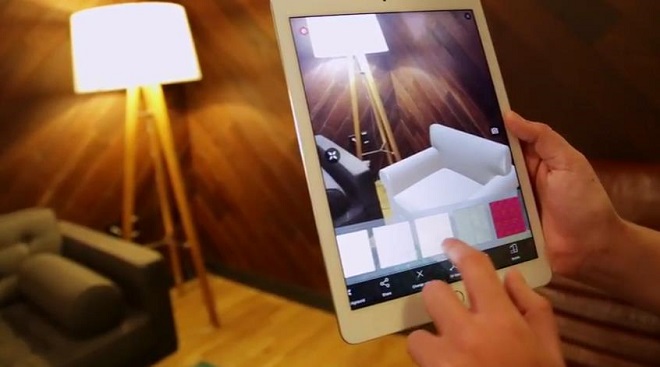
Overview
Augmented reality (AR) is a technology that superimposes computer-generated visuals, sounds, or other sensory inputs onto the user’s view of the real world, enhancing their perception and interaction with their surroundings. Unlike virtual reality (VR), which immerses users in entirely simulated environments, AR integrates digital elements—such as 3D models, text, or animations—into the physical world in real time. This is achieved through devices like smartphones, tablets, head-mounted displays (HMDs), or smart glasses, which use cameras, sensors, and software to map and track the environment. AR experiences are often interactive, allowing users to manipulate virtual objects or access contextual information. Applications span gaming, education, healthcare, retail, and industrial training, with advancements in artificial intelligence and spatial computing driving its evolution.AR systems rely on technologies like simultaneous localization and mapping (SLAM) to understand spatial relationships, computer vision for object recognition, and gesture or voice controls for user interaction. While primarily visual, AR can also incorporate auditory (e.g., spatial audio), haptic (e.g., vibrations), and even olfactory feedback to create immersive experiences.
History/Background
The concept of AR traces back to the 1960s, with Ivan Sutherland’s "Ultimate Display" (1968), a head-mounted display prototype that projected simple computer graphics onto a user’s field of view. The term "augmented reality" was coined in 1990 by Boeing researcher Tom Caudell, who used it to describe digital overlays guiding workers in assembling aircraft wiring. Early experiments in the 1990s, such as the ARToolKit (1998), laid the groundwork for marker-based AR, where physical objects triggered digital content.The 2000s saw AR gain mainstream traction with mobile devices. The 2010s marked a turning point: Pokémon Go (2016) demonstrated AR’s mass appeal, while Microsoft’s HoloLens (2016) and Google Glass (2013) showcased wearable AR hardware. Academic and industrial research accelerated, with applications in medicine (e.g., AR-assisted surgery) and retail (e.g., virtual try-ons). Today, AR is integral to metaverse initiatives, with companies like Apple and Meta investing in sleek, consumer-focused AR glasses.


