




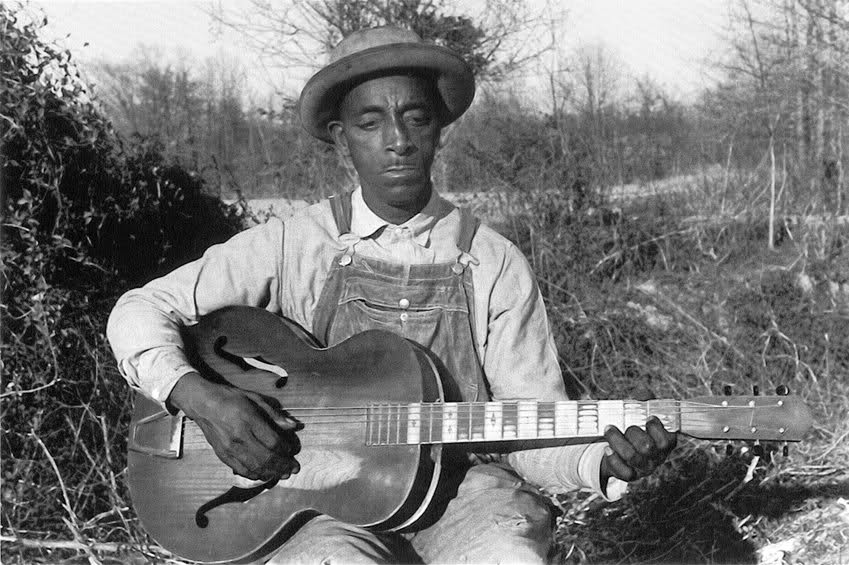
Blues Music
SUMMARY: Blues is a rich and emotive music genre that originated in the Deep South of the United States, characterized by its soulful melodies, storytelling lyrics, and distinctive musical patterns.
Overview
The Blues is a genre that has captivated audiences for centuries, with its roots deeply embedded in the African-American culture. This emotive and expressive music form has evolved over time, incorporating various elements from spirituals, work songs, field hollers, shouts, chants, and rhymed simple narrative ballads. The blues is characterized by its unique sound, which is often described as melancholic, introspective, and raw. Its impact on modern music is undeniable, with the blues influencing genres such as jazz, rhythm and blues, and rock and roll.
The blues is often associated with the hardships and struggles faced by African Americans in the Deep South, particularly during the post-Civil War era. However, its significance extends far beyond its historical context, as it has become a universal language, transcending cultural and geographical boundaries. The blues has been a powerful tool for self-expression, allowing artists to convey their emotions, experiences, and perspectives in a way that is both personal and relatable.
History/Background
The origins of the blues date back to the 1860s, when African Americans in the Deep South began to create music that reflected their struggles, hopes, and dreams. This early blues music was often sung in informal settings, such as on plantations, in churches, and at social gatherings. The blues was heavily influenced by African-American spirituals, which were used as a means of communication and resistance during the era of slavery. These spirituals often contained coded messages and hidden meanings, which were used to convey information and express dissent.
As the blues evolved, it began to incorporate elements from other musical traditions, such as work songs, field hollers, and shouts. These forms of music were used to facilitate labor, communicate with others, and express emotions. The blues also drew inspiration from African-American folklore, mythology, and storytelling traditions. The genre's development was further influenced by the Great Migration, which saw millions of African Americans move from the rural South to urban centers in the North. This migration led to the creation of new blues styles, such as Chicago blues and Delta blues.
Key Information
The blues is characterized by several distinct musical patterns, including the call-and-response pattern, the blues scale, and specific chord progressions. The twelve-bar blues is the most common chord progression used in blues music, consisting of a repeating pattern of twelve bars. Blue notes, which are thirds, fifths, or sevenths flattened in pitch, are also an essential part of the blues sound. The blues shuffle or walking bass reinforces the trance-like rhythm and creates a repetitive effect known as the groove.
Some of the most influential blues musicians include Robert Johnson, Bessie Smith, Ma Rainey, and Muddy Waters. These artists helped to shape the genre and create new styles, such as electric blues and Chicago blues. The blues has also influenced a wide range of other genres, including jazz, rock and roll, and rhythm and blues.
Significance
The blues has had a profound impact on modern music, influencing countless artists and genres. Its significance extends beyond its musical contributions, as it has played a crucial role in shaping American culture and identity. The blues has been a powerful tool for social commentary, allowing artists to address issues such as racism, inequality, and social justice.
INFOBOX:
- Name: Blues
- Type: Music genre
- Date: 1860s
- Location: Deep South, United States
- Known For: Soulful melodies, storytelling lyrics, and distinctive musical patterns
TAGS: African-American culture, Music genre, Soul music, Jazz, Rhythm and blues, Rock and roll, American culture, Social commentary.


