




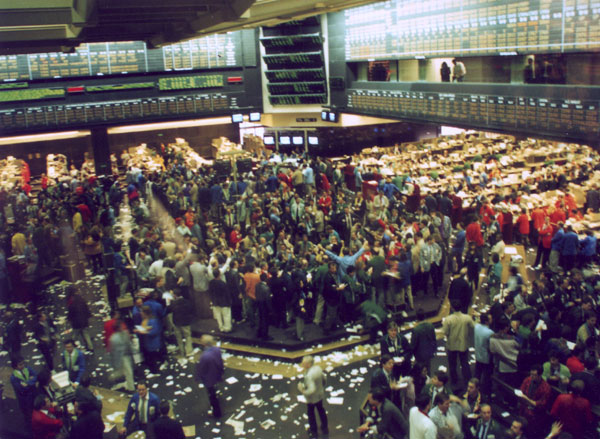
Commodity Trading
Commodity trading is the buying and selling of commodities, which are raw materials or primary products used in the production of goods and services.
Commodity markets are a crucial part of the global economy, providing a platform for buyers and sellers to trade in commodities such as agricultural products, energy products, and metals. The primary sector, which includes these commodities, is distinct from the secondary sector, which involves the manufacturing of goods. Commodity markets can be physical, where commodities are traded in their physical form, or they can be derivatives markets, where traders use contracts to buy or sell commodities at a future date.
The history of commodity trading dates back centuries, with farmers using simple forms of derivative trading to manage price risks. Today, commodity markets are a global phenomenon, with major exchanges such as the Chicago Mercantile Exchange (CME) and the Intercontinental Exchange (ICE) facilitating trades in commodities worth trillions of dollars.
History of Commodity Trading
Commodity trading has a long and complex history, with evidence of trading in commodities dating back to ancient civilizations. In ancient Mesopotamia, for example, traders traded in grains, livestock, and other commodities. In medieval Europe, commodity markets emerged in major cities such as London and Paris, where traders traded in goods such as wool, grain, and spices.
The modern commodity market, however, emerged in the 19th century with the development of futures contracts. Futures contracts are agreements to buy or sell a commodity at a future date, and they provided a way for traders to hedge against price risks. The Chicago Board of Trade (CBOT), established in 1848, was one of the first major exchanges to trade in futures contracts.
Mechanism of Commodity Trading
Commodity trading involves the buying and selling of commodities, which can be physical or derivatives. Physical commodities are traded in their physical form, while derivatives are traded in the form of contracts. The most common types of derivatives used in commodity trading are futures contracts, options on futures, and forwards.
Futures contracts are agreements to buy or sell a commodity at a future date, and they are traded on exchanges such as the CME and ICE. Options on futures are contracts that give the buyer the right, but not the obligation, to buy or sell a commodity at a future date. Forwards are agreements to buy or sell a commodity at a future date, but they are not traded on exchanges.
Applications of Commodity Trading
Commodity trading has a wide range of applications, from price risk management to investment. Farmers, for example, use commodity markets to hedge against price risks, ensuring that they receive a fair price for their crops. Investors, on the other hand, use commodity markets to diversify their portfolios and generate returns.
Commodity trading is also used in the production of goods and services. Manufacturers, for example, use commodity markets to purchase raw materials such as metals, energy products, and agricultural products. The prices of these commodities can have a significant impact on the cost of production, and manufacturers use commodity markets to manage these risks.
Types of Commodities
Commodities can be broadly classified into three categories: agricultural products, energy products, and metals. Agricultural products include grains, livestock, and other crops, while energy products include oil, natural gas, and coal. Metals include gold, silver, copper, and other precious metals.
Agricultural products are traded on exchanges such as the Chicago Board of Trade (CBOT) and the Intercontinental Exchange (ICE). Energy products are traded on exchanges such as the New York Mercantile Exchange (NYMEX) and the ICE. Metals are traded on exchanges such as the London Metal Exchange (LME) and the COMEX.
Risks and Challenges
Commodity trading involves a range of risks and challenges, from price volatility to market manipulation. Price volatility can be a major risk for traders, as commodity prices can fluctuate rapidly in response to changes in supply and demand. Market manipulation, on the other hand, can involve the use of false or misleading information to influence commodity prices.
Traders also face a range of other risks, including liquidity risks, credit risks, and operational risks. Liquidity risks, for example, can occur when there is a lack of buyers or sellers in a particular market, making it difficult to trade. Credit risks, on the other hand, can occur when a trader defaults on a contract or fails to meet their obligations.
INFOBOX:
- Name: Commodity Trading
- Type: Financial Market
- Date: Ancient civilizations
- Location: Global
- Known For: Price risk management, investment, and production of goods and services
TAGS: commodity trading, futures contracts, options on futures, forwards, agricultural products, energy products, metals, price risk management, investment, production of goods and services.


