




Overview
A computer virus is a type of malware that requires user action to activate, such as opening an infected file or email attachment. Once executed, it replicates by inserting its code into other programs, files, or the boot sector of storage devices. Unlike worms or Trojans, viruses cannot spread independently; they rely on human interaction to propagate. Viruses can corrupt data, steal sensitive information, or disrupt system operations, often using payloads—hidden functions that trigger under specific conditions. The term "virus" draws a metaphor from biology, reflecting how these programs "infect" systems and spread to others.Modern viruses often exploit vulnerabilities in software or trick users into enabling macros in documents. For example, the ILOVEYOU virus (2000) used social engineering to spread via email, while CryptoLocker (2013) pioneered ransomware by encrypting files and demanding payment. Antivirus software, heuristic analysis, and behavioral monitoring are common defenses, but new variants continue to evolve, leveraging AI and polymorphic techniques to evade detection.
History/Background
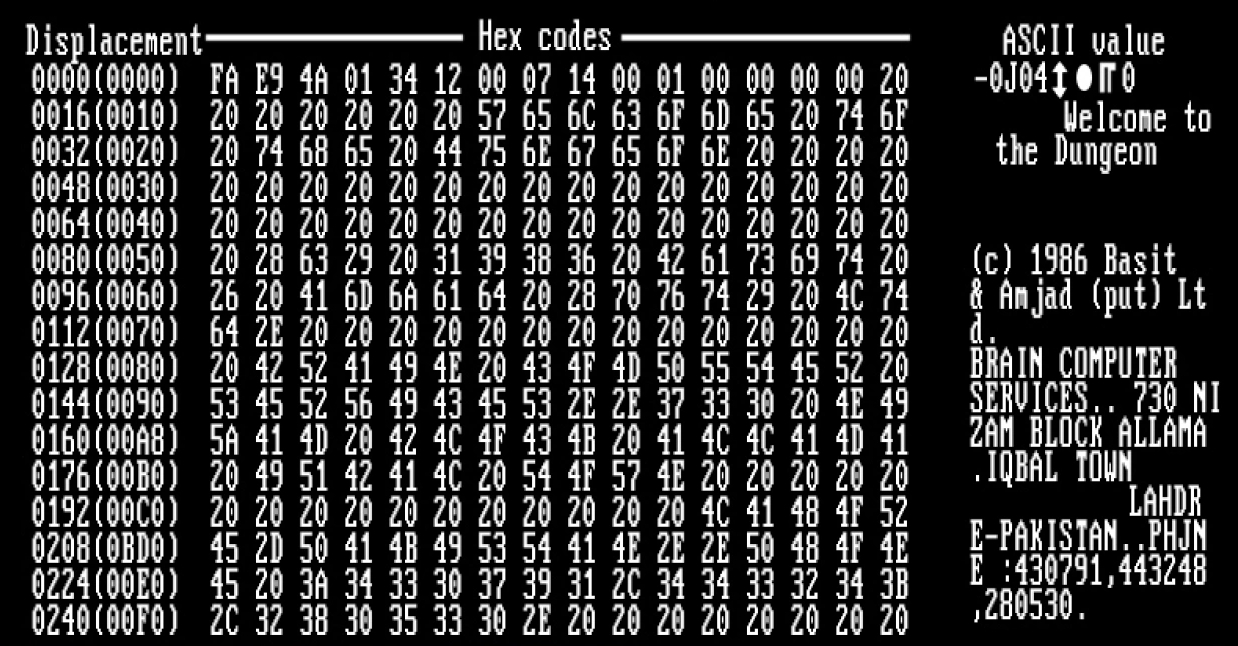
The concept of self-replicating programs dates to 1943, when mathematician John von Neumann theorized "self-replicating machines." The first practical example was Creeper (1971), a harmless experimental program that moved between ARPANET computers, displaying "I'm the creeper, catch me if you can!" The first true virus, Brain (1986), emerged in Pakistan, targeting floppy disks and hiding in boot sectors. Created by the Alvi Brothers to combat piracy, it inadvertently set a precedent for malicious code.The 1980s and 1990s saw a surge in viruses like Michelangelo (1991), which activated on March 6 to erase hard drives, and Melissa (1999), which spread via email. The Morris Worm (1988), though not a virus, highlighted vulnerabilities in networked systems, infecting 6,000 computers and prompting the creation of the first Computer Emergency Response Team (CERT). By the 2000s, viruses became more sophisticated, with Conficker (2008) exploiting Windows flaws to create a botnet of millions of devices.
Key Information
- Replication Method: Attaches to executable files, scripts, or documents; requires user action to spread. - Infection Vectors: Email attachments, malicious downloads, infected USB drives, and compromised websites. - Detection: Antivirus software (signature-based), heuristic analysis, and sandboxing. - Notable Examples: - Brain (1986): First PC virus; 550+ variants. - ILOVEYOU (2000): Infected 10% of global email systems, causing $10 billion in damages. - Stuxnet (2010): State-sponsored virus targeting Iran’s nuclear facilities. - Modern Trends: Polymorphic viruses (changing code to evade detection), ransomware, and AI-driven attacks. - Statistics: Over 350,000 new malware variants detected daily in 2023.Significance
Computer viruses have reshaped cybersecurity, driving innovations in threat detection and system hardening. They underscore the fragility of digital infrastructure, as seen in the WannaCry ransomware attack (2017), which disrupted hospitals, banks, and governments worldwide. The economic impact is staggering: ransomware alone costs businesses $20 billion annually.Beyond financial loss, viruses have raised awareness about user education and software updates. The rise of zero-day exploits—attacks targeting unknown vulnerabilities—has pushed companies to adopt proactive security measures like penetration testing. Additionally, viruses have influenced legal frameworks, such as the Computer Fraud and Abuse Act (CFAA) in the U.S., which criminalizes unauthorized access to systems.


