




**
Overview
Day trading is a form of speculation in securities, commodities, futures, or foreign‑exchange markets where a trader buys and sells a financial instrument within a single trading day. The defining rule is that all positions must be liquidated before the market’s official close, eliminating exposure to overnight price gaps that can arise from news events, earnings releases, or macro‑economic shocks. Because the profit horizon is measured in minutes or hours rather than months or years, day traders rely heavily on technical analysis, real‑time market data, and rapid order execution.The practice attracts a diverse cohort: former floor traders who migrated to electronic platforms, professional proprietary‑trading firms, and retail enthusiasts drawn by the promise of quick gains. However, the allure masks substantial risk. The high turnover means transaction costs—commissions, spreads, and slippage—can erode returns, while the need for constant attention can lead to psychological fatigue. Successful day traders typically combine disciplined risk‑management rules (e.g., a strict 1‑% per‑trade loss limit) with sophisticated tools such as direct‑access trading platforms, co‑location services near exchange data centers, and algorithmic order‑routing.
Day trading differs sharply from buy‑and‑hold or value‑investing strategies, which focus on fundamental analysis and long‑term appreciation. While a buy‑and‑hold investor might tolerate a 10% drawdown over a year, a day trader seeks to avoid any overnight exposure that could produce a price gap—a sudden jump between a market’s close and its next open. This focus on intraday price dynamics drives the popularity of scalping, a sub‑style where traders aim for tiny profit targets (often a few ticks) and execute dozens or hundreds of trades per session, sometimes in milliseconds.
History/Background
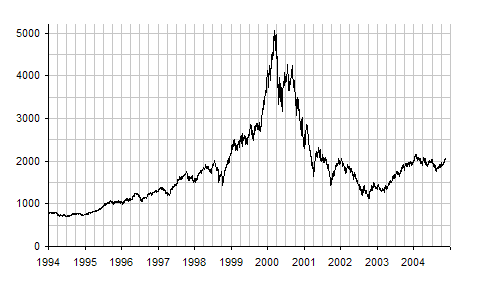
The roots of day trading trace back to the open‑outcry pits of the early 20th‑century exchanges, where floor brokers executed rapid trades by shouting and gesturing. The 1970s saw the advent of electronic communication networks (ECNs), which allowed dealers to match orders without a physical floor. The 1990s brought discount brokerage firms (e.g., E*TRADE, Charles Schwab) that offered individual investors direct market access at low cost, democratizing intraday trading.A pivotal moment arrived in 1998 with the launch of NASDAQ’s Small Order Execution System (SOES), which permitted retail traders to execute small orders at the exchange’s best price, effectively opening the door to high‑frequency speculation. The dot‑com boom of the late 1990s amplified day‑trading volumes, prompting regulators to introduce the Pattern Day Trader (PDT) rule in 2001, requiring a minimum $25,000 equity balance for those who execute four or more day trades within a rolling five‑day period.
The 2000s saw exponential growth in algorithmic and high‑frequency trading (HFT), where computer programs execute trades in microseconds. While HFT firms are distinct from retail day traders, the technology spillover—such as direct‑access platforms, colocation services, and real‑time market depth feeds—has become standard equipment for serious day traders. The 2020‑2021 “meme‑stock” frenzy, driven by social media forums like Reddit’s r/WallStreetBets, highlighted the cultural impact of day trading and prompted renewed scrutiny from the U.S. Securities and Exchange Commission (SEC) and other global regulators.
Key Information
- Typical Instruments: equities, options, futures, forex, exchange‑traded funds (ETFs), and cryptocurrency derivatives. - Core Strategies: scalping, momentum trading, news‑driven trading, and statistical arbitrage. - Execution Speed: professional scalpers may rely on latency‑optimized infrastructure delivering order execution in sub‑millisecond intervals. - Regulatory Framework: In the United States, the FINRA and SEC enforce the Pattern Day Trader rule; many jurisdictions impose minimum capital requirements and reporting obligations. - Risk Management: common rules include a maximum daily loss limit, position‑size caps, and the use of stop‑loss orders to cap adverse moves. - Technology Stack: direct‑access brokers (e.g., Interactive Brokers, Lightspeed), market‑data feeds (Level II order book), charting software (e.g., TradingView, NinjaTrader), and, increasingly, machine‑learning‑based signal generators. - Performance Benchmarks: studies consistently show that the majority of day traders underperform the market after accounting for costs; only a small elite achieve consistent profitability. - Economic Impact: day trading contributes to liquidity and price discovery, but critics argue it can increase volatility and create “noise” that obscures fundamental signals.Significance
Day trading matters because it reshapes how capital flows through modern markets. By providing continuous liquidity, day traders help narrow bid‑ask spreads, enabling other participants—long‑term investors, pension funds, and corporations—to transact more efficiently. Their rapid reaction to news and price anomalies accelerates price discovery, ensuring that market prices reflect information in near‑real time.Conversely, the proliferation of ultra‑fast trading has sparked debate over market stability. Episodes such as the 2010 Flash Crash, where the Dow Jones plunged nearly 1,000 points in minutes, highlighted how algorithmic day‑trading activity can amplify systemic risk. Regulators have responded with circuit‑breaker mechanisms, tighter order‑type restrictions, and enhanced market‑surveillance tools.
From a cultural perspective, day trading epitomizes the democratization of finance: a high‑school graduate with a laptop can, in theory, compete with institutional players. This accessibility fuels both financial empowerment and financial vulnerability, prompting calls for better investor education and transparent cost disclosures. As technology continues to evolve—particularly with artificial intelligence, cloud‑based execution, and tokenized assets—day trading will likely remain a barometer of the tension between market efficiency and speculative excess.
INFOBOX:
- Name: Day Trading
- Type: Intraday Speculative Trading Strategy
- Date: Emerged prominently in the late 1990s (post‑1998 SOES launch)
- Location: Global (major exchanges in the U.S., Europe, Asia)
- Known For: Buying and selling securities within the same trading day to avoid overnight risk
TAGS: day trading, intraday speculation, high‑frequency trading, scalping, pattern day trader rule, market liquidity, financial technology, trading regulation


