
**
## Overview
Economics is a social science that seeks to understand how people make decisions about how to allocate resources, and how those decisions affect the economy as a whole. It is the study of how societies allocate resources, distribute goods and services, and determine the prices of those goods and services in a market-based economy. Economics is a broad field that encompasses a wide range of topics, including microeconomics, macroeconomics, international trade, and public finance.
At its core, economics is concerned with the concept of scarcity, which is the idea that the resources available to an individual or society are limited, and that choices must be made about how to use those resources. Economists use various tools and techniques, such as graphs, tables, and mathematical models, to analyze and understand economic phenomena.
Economics has a significant impact on our daily lives, from the prices of goods and services we buy, to the taxes we pay, to the policies implemented by governments to promote economic growth and stability. Understanding economics can help individuals make informed decisions about their personal finances, and can also provide insights into the broader economic trends and policies that shape our world.
## History/Background
The study of economics has a long and varied history that spans thousands of years. One of the earliest known economists was the ancient Greek philosopher Xenophon, who wrote about the importance of economic self-sufficiency in the 4th century BCE. However, it was not until the 18th century that economics began to emerge as a separate field of study.
Adam Smith, a Scottish philosopher and economist, published his influential book "The Wealth of Nations" in 1776, which is widely considered to be one of the foundational texts of modern economics. Smith's work laid out the concept of the invisible hand, which is the idea that individuals acting in their own self-interest can lead to socially beneficial outcomes.
In the 19th and 20th centuries, economics became a more formalized field of study, with the development of various schools of thought, such as classical economics, Keynesian economics, and Marxist economics. Today, economics is a global field that is studied and practiced by scholars and professionals in many countries around the world.
## Key Information
Some of the key concepts in economics include:
* Supply and demand: the relationship between the quantity of a good or service that producers are willing to sell, and the quantity that consumers are willing to buy.
* Opportunity cost: the cost of choosing one option over another, as measured by the value of the next best alternative.
* Gross Domestic Product (GDP): a measure of the total value of goods and services produced within a country's borders.
* Inflation: a sustained increase in the general price level of goods and services in an economy.
* Unemployment: the number of people who are looking for work but are unable to find it.
Economists also use various tools and techniques to analyze and understand economic phenomena, including:
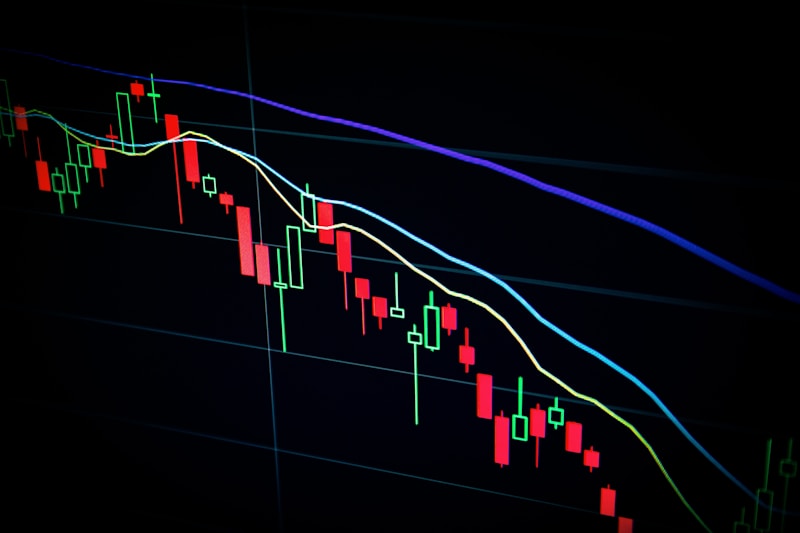
* Graphs and charts: visual representations of economic data.
* Mathematical models: equations and functions that describe economic relationships.
* Econometrics: the application of statistical methods to economic data.
## Significance
Economics has a significant impact on our daily lives, from the prices of goods and services we buy, to the taxes we pay, to the policies implemented by governments to promote economic growth and stability. Understanding economics can help individuals make informed decisions about their personal finances, and can also provide insights into the broader economic trends and policies that shape our world.
In addition, economics has a significant impact on economic development and poverty reduction. Economists have identified various factors that contribute to economic growth and poverty reduction, including:
* Foreign aid: financial assistance provided by governments and organizations to developing countries.
* Trade: the exchange of goods and services between countries.
* Investment: the flow of capital into a country or industry.
* Institutional reform: the strengthening of laws, regulations, and institutions that promote economic growth and stability.
INFOBOX:
- Name: Economics
- Type: Social Science
- Date: Ancient Greece (4th century BCE)
- Location: Global
- Known For: Study of how societies allocate resources and distribute goods and services.
TAGS: Economics, Microeconomics, Macroeconomics, International Trade, Public Finance, Scarcity, Opportunity Cost, Gross Domestic Product, Inflation, Unemployment.