
**
Overview
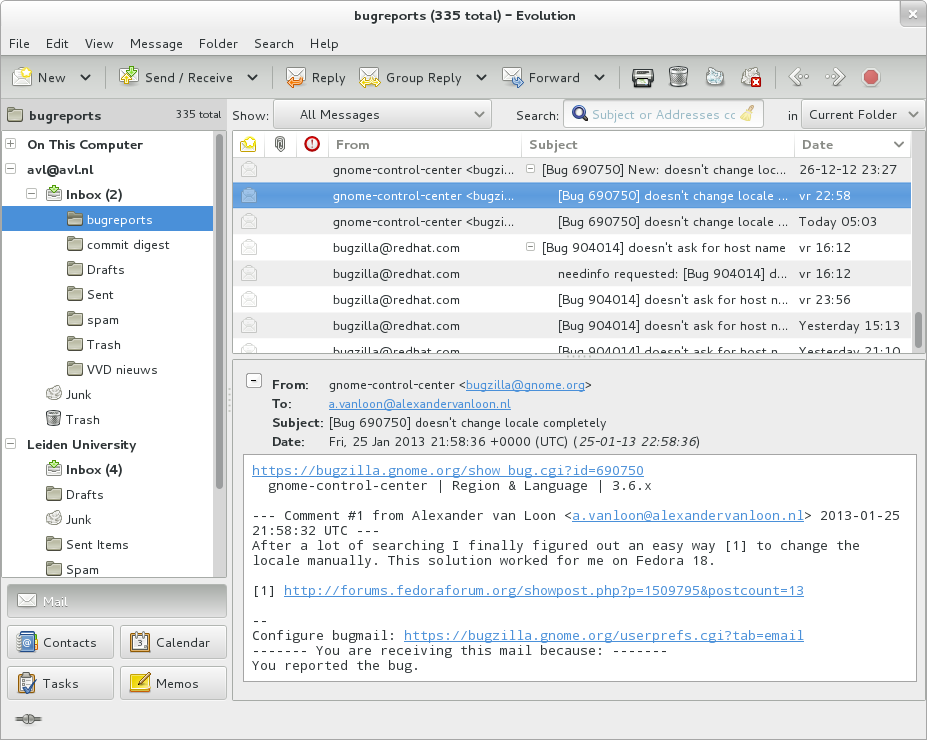
Electronic mail, commonly known as email, is a method of sending and receiving digital messages through electronic devices connected to a computer network—most often the Internet. An email message typically consists of a header (containing the sender, recipient, subject, and routing information) and a body that may include plain text, rich‑text formatting, attachments, or embedded multimedia. Modern email clients—ranging from desktop applications like Microsoft Outlook to web‑based services such as Gmail—present a unified inbox where users can organize, search, and automate messages with filters, labels, and rules.The ubiquity of email stems from its simplicity and open standards. A single email address, formatted as local‑part@domain, serves as a universal identifier that can be used for account recovery, notifications, legal correspondence, and countless automated workflows. Because email operates on a store‑and‑forward model, messages can be queued on intermediate servers, ensuring delivery even when the recipient’s device is offline. This resilience, combined with near‑instantaneous transmission across the globe, has made email the de‑facto backbone of digital communication for both individuals and institutions.
History/Background
The concept of electronic messaging dates back to the 1960s, when researchers at MIT’s Project MAC experimented with a system called CTSS mail (1965), allowing users on the same mainframe to leave notes for one another. In 1971, Ray Tomlinson implemented the first networked email on the ARPANET, introducing the “@” symbol to separate user names from host machines—a convention that persists today. The late 1970s saw the development of SMTP (Simple Mail Transfer Protocol) (RFC 821, 1982), establishing a standardized method for routing messages between servers.The 1980s and early 1990s brought client‑server architectures: POP3 (RFC 1939, 1988) enabled users to download messages to local machines, while IMAP (RFC 3501, 2003) allowed remote, synchronized access. In 1991, MIME (Multipurpose Internet Mail Extensions) (RFC 2045‑2049) expanded email beyond plain ASCII, supporting attachments, non‑Latin scripts, and multimedia. The mid‑1990s marked the commercial explosion of web‑based email—Hotmail launched in 1996, followed by Yahoo! Mail (1997) and Gmail (2004), each introducing larger storage quotas and powerful search capabilities.
Security concerns prompted the adoption of TLS (Transport Layer Security) for encrypted transmission (RFC 5246, 2008) and authentication frameworks such as SPF, DKIM, and DMARC (mid‑2000s to 2015) to combat phishing and spoofing. By the 2010s, email had integrated with cloud services, AI‑driven spam filters, and mobile push notifications, cementing its role in the modern digital ecosystem.
Key Information
- Protocols: SMTP (sending), POP3/IMAP (retrieval), MIME (content encoding). - Address Format: local‑part@domain.tld (e.g., alice@example.com). - Storage: Early accounts offered kilobytes; today, providers routinely grant 15 GB–100 GB per user, with enterprise solutions offering petabyte‑scale archives. - Security: TLS encrypts traffic; SPF validates sending IPs; DKIM signs messages cryptographically; DMARC enforces policy alignment. - Spam Management: Bayesian filters, machine‑learning classifiers, and reputation‑based blacklists block billions of unsolicited messages daily. - Standards Evolution: RFC series (e.g., RFC 5321/5322 for SMTP and message format) continuously refine interoperability, internationalization (RFC 6530), and delivery guarantees. - Usage Statistics: As of 2024, over 4.3 billion email accounts exist globally, with an average of 121 billion emails sent per day. - Integration: Email APIs (SendGrid, Amazon SES) enable automated transactional messages; calendaring (iCalendar) and task management (iMIP) are embedded via standardized extensions.Significance
Email’s impact is profound across virtually every sector. In business, it remains the primary channel for formal communication, contract negotiation, and customer support, often integrated with CRM and ERP systems to streamline workflows. Commerce relies on email for order confirmations, shipping notifications, and marketing campaigns, with personalization engines leveraging user data to boost conversion rates. Government and education use email for official notices, enrollment processes, and emergency alerts, making it a critical component of public‑service infrastructure.Beyond functional utility, email has shaped cultural norms—introducing concepts like “CC” (carbon copy) and “Reply‑All” etiquette, and influencing language with abbreviations such as “FYI” and “EOD.” Its open standards fostered a vibrant ecosystem of independent providers, preventing monopolistic lock‑in and encouraging innovation in security, AI‑driven triage, and cross‑platform synchronization. Even as newer messaging platforms emerge, email’s reliability, archival capabilities, and legal standing as a documented record ensure its continued relevance for decades to come.
INFOBOX:
- Name: Electronic Mail (Email)
- Type: Digital Communication Protocol / Service
- Date: First networked email sent — 1971 (Ray Tomlinson)
- Location: Initially ARPANET (United States)
- Known For: Introducing the “@” address separator and establishing a universal, interoperable messaging system
TAGS: email, digital communication, SMTP, MIME, internet history, cybersecurity, cloud services, messaging standards