




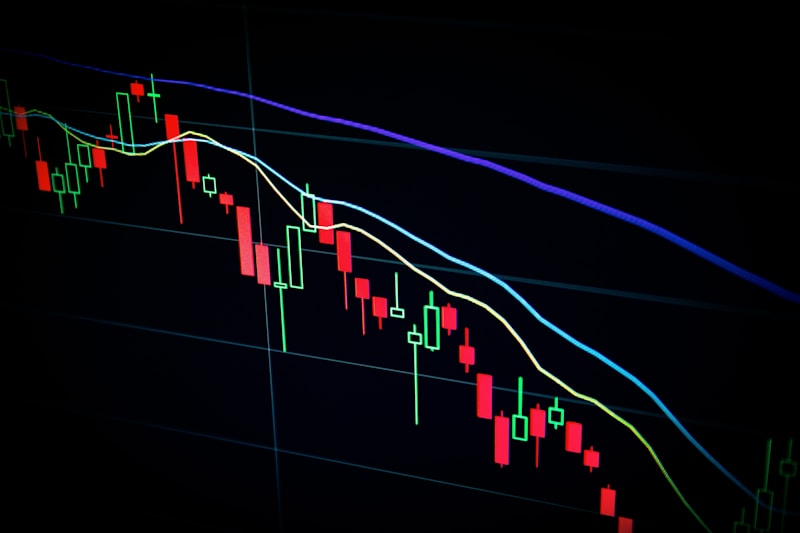
Foreign exchange market is a global, decentralized marketplace where participants trade currencies. It operates 24 hours a day, five days a week, across major financial centers worldwide, and is the largest and most liquid financial market in the world. The market’s size is measured in terms of daily turnover, which exceeded US$6.6 trillion in 2023, dwarfing the combined daily volumes of all other financial markets. The foreign exchange market plays a pivotal role in international trade, capital flows, and monetary policy implementation, while also providing a platform for speculation and hedging.
The market evolved from a fragmented, over‑the‑counter (OTC) system of bilateral agreements among banks and governments into a highly organized, electronic network. The collapse of the Bretton Woods fixed‑exchange‑rate regime in 1971 ushered in a new era of floating rates, and the subsequent liberalization of capital controls in the 1980s and 1990s accelerated the growth of the market. Today, the foreign exchange market is dominated by a small number of large banks, but also includes hedge funds, corporations, central banks, and retail traders. Its structure, participants, and regulatory environment have evolved in response to technological advances, financial crises, and changing macroeconomic conditions.
The foreign exchange market’s significance extends beyond mere currency conversion. It provides the mechanism through which international investors allocate capital, corporations manage currency risk, and governments influence domestic monetary conditions. The market’s depth and liquidity allow for rapid execution of large orders with minimal price impact, which is essential for global economic stability. However, the market also faces criticism for its opacity, susceptibility to manipulation, and the potential for systemic risk, particularly in the context of large, interconnected financial institutions.
History
Early origins
Currency exchange has existed since antiquity, with merchants and traders exchanging goods for foreign coins. The first formalized foreign exchange markets emerged in the 17th and 18th centuries in European cities such as Amsterdam, London, and Paris, where brokers facilitated the trading of gold, silver, and paper currencies. These early exchanges were largely limited to gold and silver bullion and were subject to the constraints of the gold standard.
Bretton Woods and the fixed‑rate era
The Bretton Woods Conference of 1944 established a system of fixed exchange rates, pegging major currencies to the US dollar, which itself was convertible to gold at US$35 per ounce. This arrangement created a stable environment for international trade and investment but also limited the ability of governments to adjust monetary policy independently. The foreign exchange market during this period was largely a system of bilateral agreements among central banks and commercial banks, with limited liquidity.
Transition to floating rates
In 1971, President Richard Nixon announced the suspension of the dollar’s convertibility into gold, effectively ending the Bretton Woods system. This move triggered a shift to floating exchange rates, where currency values are determined by supply and demand in the foreign exchange market. The transition created new opportunities for speculation and hedging, and it also increased the volatility of exchange rates.
Globalization and technological change
The 1980s and 1990s saw a rapid expansion of the foreign exchange market, driven by the liberalization of capital controls, the rise of multinational corporations, and the development of electronic trading platforms. The introduction of the Intercontinental Exchange (ICE) and the use of automated trading algorithms further increased market efficiency and liquidity. By the early 2000s, the foreign exchange market had become a fully electronic, global network, with major trading hubs in London, New York, Tokyo, Hong Kong, and Singapore.
Market Structure
Interbank market
The interbank market is the core of the foreign exchange market, where large banks trade currencies with one another. These transactions typically involve large notional amounts and are conducted over the counter (OTC). The interbank market is characterized by high liquidity, tight spreads, and a high degree of price transparency among participants.
Retail market
Retail traders access the foreign exchange market through brokers that provide electronic trading platforms. These platforms offer a range of currency pairs, including major, minor, and exotic pairs. Retail trading is typically conducted in smaller volumes and is more susceptible to market manipulation and fraud.
Derivative market
The foreign exchange derivatives market includes forwards, futures, options, and swaps. These instruments allow participants to hedge against currency risk or speculate on future exchange rate movements. The derivatives market is regulated by a range of authorities, including the Commodity Futures Trading Commission (CFTC) in the United States and the European Securities and Markets Authority (ESMA) in the European Union.
Participants
Central banks
Central banks play a crucial role in the foreign exchange market by conducting monetary policy, maintaining exchange rate stability, and providing liquidity to the market. Central banks use a range of tools, including open market operations, interest rate policy, and foreign exchange interventions, to influence the value of their currency.
Commercial banks
Commercial banks are the primary intermediaries in the foreign exchange market, providing liquidity to clients and executing trades on behalf of their customers. Banks also use the foreign exchange market to manage their own currency exposure and to generate trading profits.
Corporations
Multinational corporations use the foreign exchange market to hedge against currency risk, to finance international operations, and to manage cash flows. Corporations typically use forwards, options, and swaps to lock in exchange rates and reduce the impact of currency volatility on their financial statements.
Hedge funds and other institutional investors
Hedge funds and other institutional investors use the foreign exchange market to speculate on currency movements and to generate returns. These participants often use high-frequency trading algorithms and other advanced trading strategies to gain an edge in the market.
Trading Mechanisms
Spot market
The spot market is the most liquid segment of the foreign exchange market, where currencies are traded for immediate delivery, typically within two business days. Spot trades are settled in the currency pair’s base and quote currencies, and the exchange rate is determined by supply and demand in real time.
Forward market
The forward market allows participants to lock in an exchange rate for a future date. Forward contracts are typically used by corporations and financial institutions to hedge against currency risk. The forward rate is determined by the spot rate, the interest rate differential between the two currencies, and the time to maturity.
Futures market
The foreign exchange futures market is a standardized, exchange-traded market for currency contracts. Futures contracts are traded on regulated exchanges such as the Chicago Mercantile Exchange (CME) and the Intercontinental Exchange (ICE). Futures contracts are settled in cash, and the exchange rate is determined by the market price of the contract.
Options market
The foreign exchange options market allows participants to buy or sell the right to exchange currencies at a predetermined price. Options contracts are typically used by corporations and financial institutions to hedge against currency risk or to speculate on currency movements.
Regulation
Global regulatory framework
The foreign exchange market is regulated by a range of authorities, including the CFTC in the United States, the ESMA in the European Union, and the Financial Conduct Authority (FCA) in the United Kingdom. These authorities oversee the trading of foreign exchange derivatives, enforce market conduct rules, and monitor systemic risk.
Basel III and liquidity requirements
The Basel III framework imposes liquidity and capital requirements on banks that trade in the foreign exchange market. These requirements are designed to reduce the risk of liquidity shortages and to promote financial stability.
Market transparency and reporting
Regulators require market participants to report large foreign exchange trades to market surveillance authorities. These reports are used to detect potential market manipulation and to monitor systemic risk.
Economic Impact
International trade
The foreign exchange market facilitates international trade by allowing businesses to convert one currency into another. The market’s liquidity and efficiency reduce transaction costs and enable businesses to transact in a wide range of currencies.
Capital flows
The foreign exchange market is a key channel for capital flows between countries. Investors use the market to move capital between domestic and foreign markets, and the market’s liquidity allows for rapid execution of large orders.
Monetary policy
Central banks use the foreign exchange market to influence domestic monetary policy. By buying or selling foreign currencies, central banks can influence the value of their currency, which in turn affects inflation, interest rates, and economic growth.
Risks and Criticisms
Market manipulation
The foreign exchange market is susceptible to manipulation by large participants, particularly in the retail segment. Manipulation can take the form of spoofing, layering, or front‑running, and can distort market prices.
Systemic risk
The foreign exchange market is highly interconnected, and a shock to one participant can quickly spread to other participants. The 2008 financial crisis highlighted the potential for systemic risk in the foreign exchange market, particularly in the derivatives market.
Lack of transparency
The foreign exchange market is largely opaque, with limited public information on market depth, liquidity, and price formation. This lack of transparency can make it difficult for regulators to detect market manipulation or systemic risk.
Future Trends
Technological innovation
Advances in technology, such as blockchain, artificial intelligence, and high-frequency trading, are likely to reshape the foreign exchange market in the coming years. These technologies can improve market efficiency, reduce transaction costs, and increase transparency.
Regulatory changes
Regulators are likely to continue to refine the regulatory framework for the foreign exchange market, with a focus on improving market transparency, reducing systemic risk, and protecting retail investors.
Climate finance
The foreign exchange market is likely to play an increasingly important role in climate finance, as investors seek to finance green projects and transition to a low‑carbon economy. The market may develop new instruments, such as green bonds and climate‑linked derivatives, to support this transition.


