




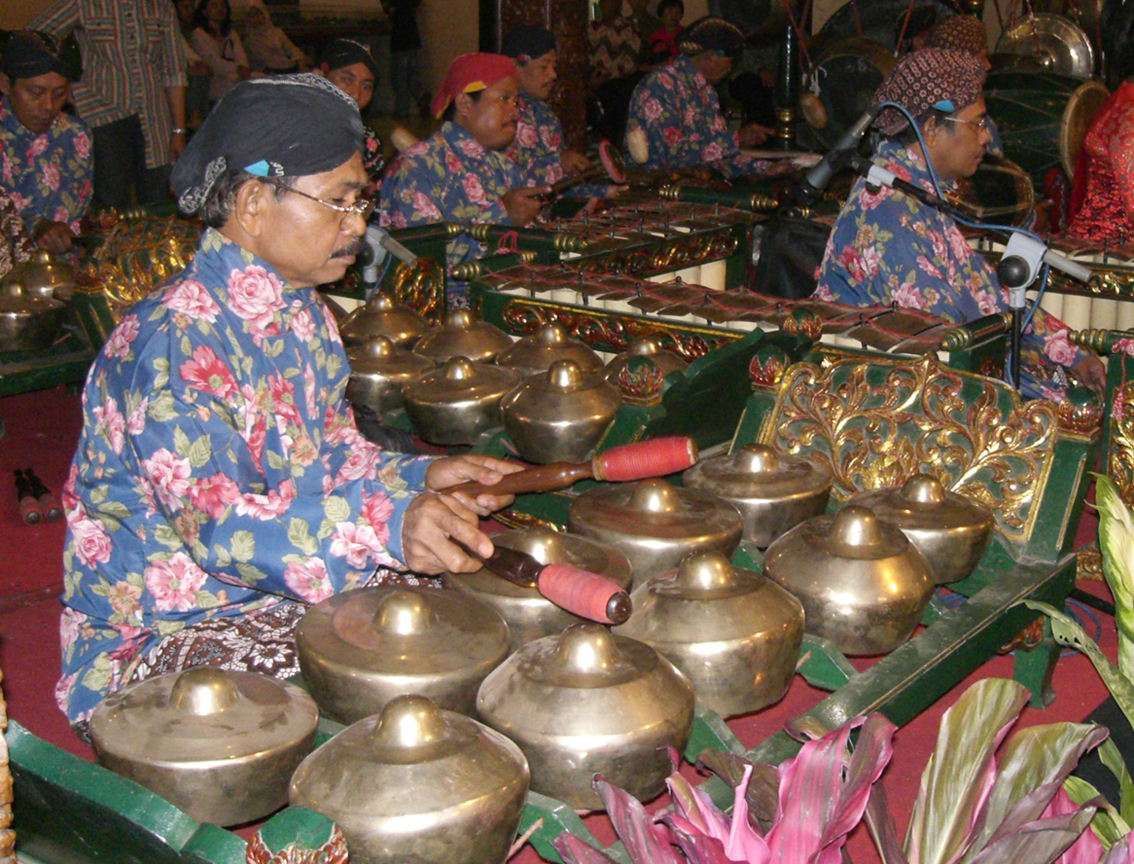
Gamelan
Gamelan is the traditional ensemble music of the Javanese, Sundanese, and Balinese peoples of Indonesia, characterized by its distinctive percussive sound and complex rhythmic patterns. This traditional music has a rich history, with roots dating back to the 8th century, and has evolved over time to incorporate various instruments and styles. Gamelan music is an integral part of Indonesian culture, played during various ceremonies, festivals, and social gatherings. The ensemble typically consists of a combination of metallophones, hand-drums, and other percussion instruments, which create a unique and captivating sound.
In addition to its cultural significance, gamelan music has also had a profound impact on the development of Western classical music. Many Western composers, including Claude Debussy and Béla Bartók, have been inspired by the intricate rhythms and melodies of gamelan music. The ensemble's use of multiple instruments and complex polyrhythms has also influenced the development of jazz and other forms of Western music.
Gamelan music is not limited to Indonesia, as related traditions can be found in other parts of Maritime Southeast Asia. Gamelan melayu, a distinct courtly tradition associated with the Johor–Riau cultural sphere, has been documented since at least the eighteenth century and remains practiced principally in Malaysia.
History
Gamelan music has a long and complex history, with roots dating back to the 8th century. The earliest known gamelan ensembles were found in the temples of Java, where they were used to accompany ritual dances and ceremonies. Over time, gamelan music spread to other parts of Indonesia, including Bali and Sumatra, where it evolved into distinct regional styles.
During the 19th century, gamelan music underwent a significant transformation with the introduction of European instruments, such as the piano and violin. This led to the development of new styles and genres, including the gamelan orchestra, which combined traditional instruments with Western instruments.
Instruments
Gamelan ensembles typically consist of a combination of metallophones, hand-drums, and other percussion instruments. The most common instruments used in gamelan music are:
* Metallophones: These are a type of percussion instrument that consists of a series of metal keys or bars that are struck with a mallet to produce a clear, ringing sound. The most common metallophones used in gamelan music are the saron and the gong.
* Hand-drums: These are a type of percussion instrument that consists of a drumhead stretched over a wooden or metal frame. The kendang is a type of hand-drum that is commonly used in gamelan music.
* Kemanak: This is a banana-shaped idiophone that is commonly used in Balinese gamelan music.
* Gangsa: This is a metallophone that is commonly used in Balinese gamelan music.
* Xylophones: These are a type of percussion instrument that consists of a series of wooden or metal keys that are struck with a mallet to produce a clear, ringing sound.
* Bamboo flutes: These are a type of woodwind instrument that is commonly used in gamelan music.
* Rebab: This is a bowed string instrument that is commonly used in Javanese gamelan music.
* Siter: This is a zither-like instrument that is commonly used in Javanese gamelan music.
Vocalists
In addition to the instruments, gamelan music also features vocalists, known as sindhen for females and gerong for males. These vocalists play an important role in the ensemble, providing a melodic counterpoint to the instrumental music.
Regional Styles
Gamelan music has evolved into distinct regional styles, each with its own unique characteristics and traditions. Some of the most notable regional styles include:
* Javanese gamelan: This style is characterized by its use of complex polyrhythms and intricate melodies.
* Balinese gamelan: This style is characterized by its use of bright, ringing tones and complex rhythms.
* Sundanese gamelan: This style is characterized by its use of simple, repetitive melodies and complex rhythms.
Influence on Western Music
Gamelan music has had a profound impact on the development of Western classical music. Many Western composers, including Claude Debussy and Béla Bartók, have been inspired by the intricate rhythms and melodies of gamelan music. The ensemble's use of multiple instruments and complex polyrhythms has also influenced the development of jazz and other forms of Western music.
Gamelan Melayu
Gamelan melayu is a distinct courtly tradition associated with the Johor–Riau cultural sphere. This tradition has been documented since at least the eighteenth century and remains practiced principally in Malaysia. Gamelan melayu is characterized by its use of complex polyrhythms and intricate melodies, and is often performed during royal ceremonies and other important events.


