
Overview
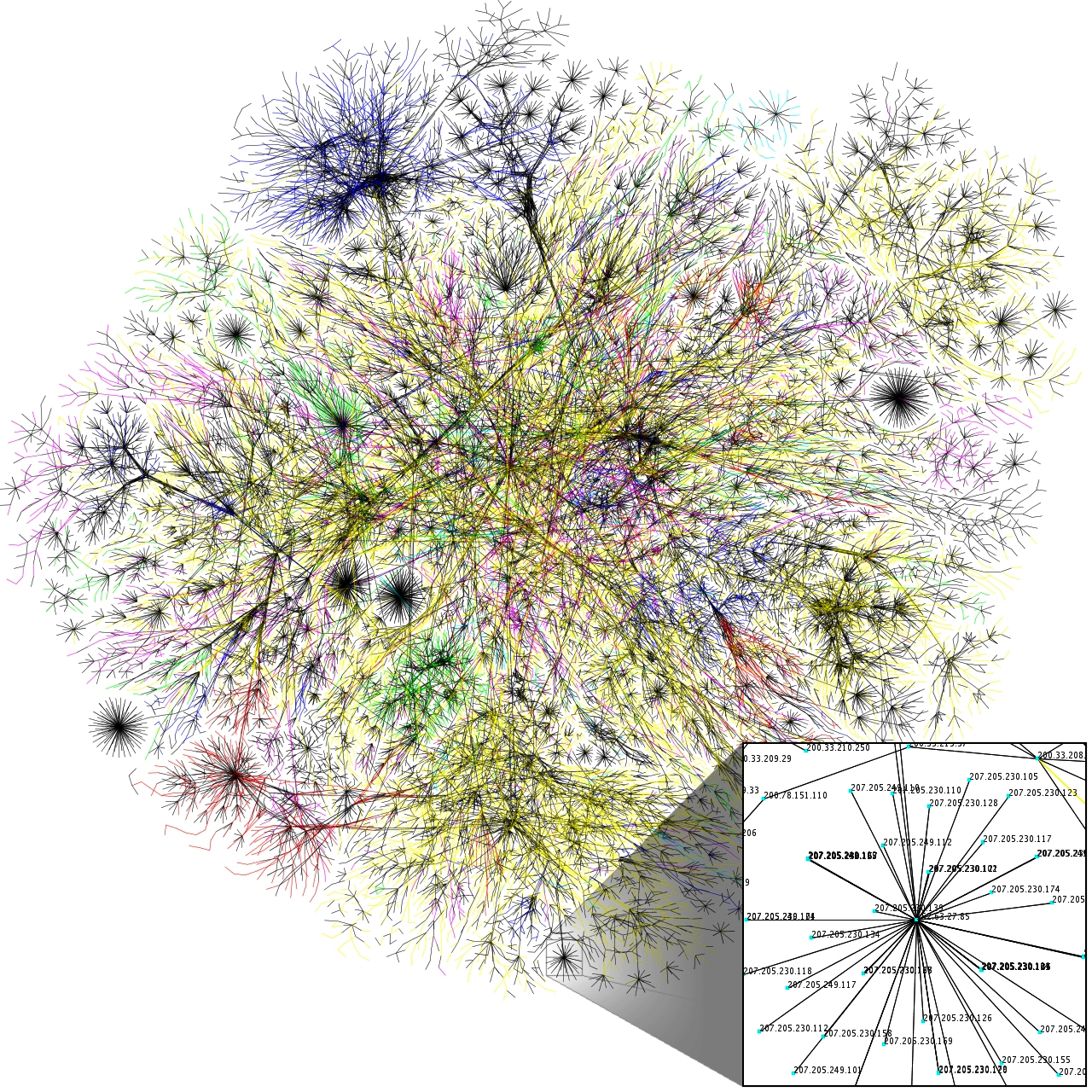
The Internet of Things (IoT) refers to the ecosystem of physical objects—ranging from household appliances to industrial machinery—equipped with sensors, software, and connectivity to communicate and share data over networks. These devices, often termed "smart," can range from simple sensors monitoring temperature to complex systems like autonomous vehicles. IoT bridges the physical and digital worlds, enabling real-time data analysis and automated decision-making. While the term implies Internet connectivity, IoT devices function on private networks or proprietary systems, emphasizing individual addressability over public Internet access.IoT spans multiple domains, including consumer technology (smart homes), healthcare (wearables), agriculture (precision farming), and industry (smart manufacturing). Its growth is driven by advancements in wireless communication, cloud computing, and miniaturized sensors. However, challenges like security vulnerabilities, interoperability, and data privacy remain critical concerns.
History/Background
The concept of IoT traces back to the 1980s, with early examples like a Coke machine at Carnegie Mellon University in 1982, which could report inventory and drink temperatures via the Internet. The term "Internet of Things" was coined by Kevin Ashton in 1999 during a presentation to Procter & Gamble, where he highlighted RFID technology’s potential to connect physical objects to digital systems. Ashton, a British technology pioneer, aimed to emphasize how data from physical objects could optimize supply chains and business processes.The 2000s saw rapid development due to cheaper sensors, wireless networks (Wi-Fi, Bluetooth), and cloud infrastructure. In 2008, the number of connected devices surpassed the global human population, a milestone attributed to Cisco Systems. The 2010s marked IoT’s mainstream adoption, with products like the Nest thermostat (2011) and Fitbit fitness trackers (2007) popularizing consumer IoT. By 2020, IoT had expanded into industrial applications, with "Industry 4.0" leveraging IoT for smart manufacturing.
Key Information
- Device Count: Over 15 billion IoT devices were active globally in 2023, projected to reach 25+ billion by 2030 (Statista). - Protocols: Common communication standards include MQTT (1999), CoAP (2012), and LoRaWAN (2015), optimized for low-power, low-bandwidth environments. - Security Challenges: High-profile attacks like the 2016 Mirai botnet exploited insecure IoT devices to launch DDoS attacks, prompting calls for stricter security standards. - Applications: Smart homes (Amazon Alexa, Google Home), healthcare (remote patient monitoring), agriculture (soil sensors), and smart cities (traffic management systems). - Standards: Efforts like the IoT Security Foundation and IEEE’s IoT Working Group aim to unify protocols and security practices.Significance
IoT has transformed industries by enabling data-driven efficiency, predictive maintenance, and personalized user experiences. In healthcare, wearables monitor vital signs in real time, improving chronic disease management. In agriculture, IoT optimizes water usage and crop yields through precision farming. However, its proliferation raises ethical questions about surveillance and data ownership. The environmental impact of e-waste from IoT devices also demands sustainable design practices.IoT’s legacy lies in its role as a foundational pillar of the digital age, paving the way for emerging technologies like 5G, AI-driven analytics, and edge computing. As devices become more integrated into daily life, balancing innovation with privacy and security will define its future trajectory.