




Islamic Art
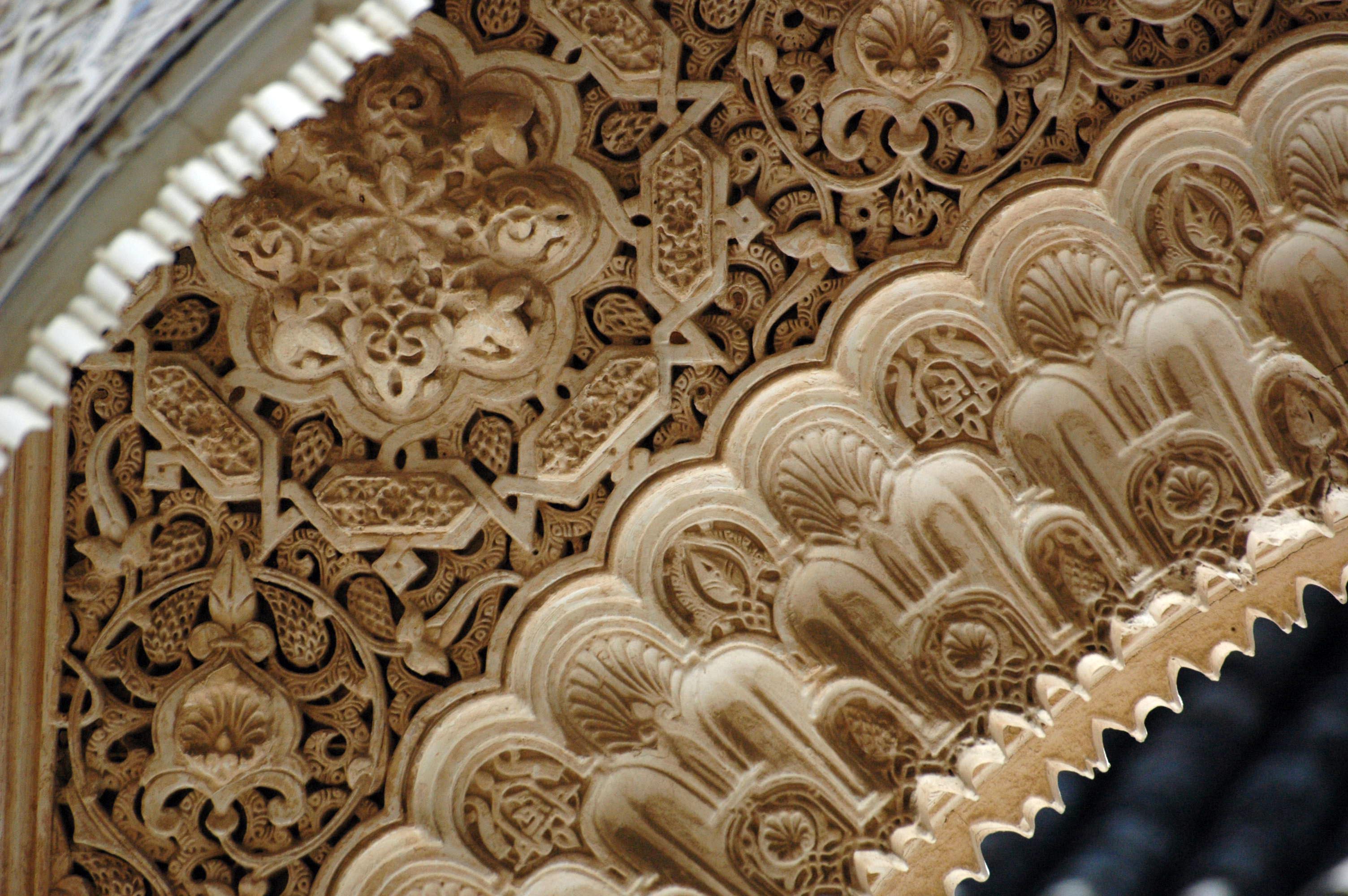
Islamic art is a part of Islamic culture and encompasses the visual arts produced since the 7th century CE by people who lived within territories inhabited or ruled by Muslim populations. Referring to characteristic traditions across a wide range of lands, periods, and genres, Islamic art is a concept used first by Western art historians in the late 19th century. Public Islamic art is traditionally non-representational, except for the widespread use of plant forms, usually in varieties of the spiralling arabesque. These are often combined with Islamic calligraphy, geometric patterns in styles that are typically found in a wide variety of media, from small objects in ceramic or metalwork to large decorative schemes in tiling on the outside and inside of large buildings, including mosques. Other forms of Islamic art include Islamic miniature painting, artefacts like Islamic glass or pottery, and textile arts, such as carpets and embroidery.
Origins and History
Islamic art originated in the 7th century CE, shortly after the advent of Islam. The early Islamic art was heavily influenced by the art of the pre-Islamic Middle East, Byzantine, and Persian traditions. The art of the early Islamic period was characterized by the use of geometric patterns, floral motifs, and calligraphy. The use of these elements was not only aesthetically pleasing but also served a deeper purpose. The geometric patterns and floral motifs were used to symbolize the unity and harmony of the universe, while the calligraphy was used to convey the message of the Quran.
The early Islamic art was also characterized by the use of materials such as marble, stone, and wood. The use of these materials was not only a reflection of the wealth and power of the Islamic rulers but also a way to showcase the beauty and craftsmanship of Islamic art. The early Islamic art was also influenced by the art of the Byzantine Empire, which was characterized by the use of mosaics, frescoes, and other forms of decorative art.
Characteristics and Techniques
Islamic art is characterized by the use of geometric patterns, floral motifs, and calligraphy. The geometric patterns are typically made up of intricate designs that are repeated and varied to create a sense of movement and energy. The floral motifs are often used to symbolize the beauty and wonder of nature. The calligraphy is used to convey the message of the Quran and is often used in conjunction with the geometric patterns and floral motifs.
Islamic art also makes use of a variety of techniques, including tile work, metalwork, and textile arts. The tile work is used to create intricate designs and patterns on the walls and floors of mosques and other buildings. The metalwork is used to create decorative objects such as vases, candlesticks, and other household items. The textile arts are used to create beautiful and intricate designs on fabrics such as carpets, tapestries, and embroidery.
Regional Variations
Islamic art has undergone many regional variations over the centuries. The art of the Middle East, North Africa, and Spain was characterized by the use of geometric patterns, floral motifs, and calligraphy. The art of the Indian subcontinent was characterized by the use of intricate designs and patterns, often made up of gemstones and other precious materials. The art of the Ottoman Empire was characterized by the use of intricate designs and patterns, often made up of gold and other precious materials.
Influence and Legacy
Islamic art has had a profound influence on the development of art and architecture in the Western world. The use of geometric patterns, floral motifs, and calligraphy has been adopted by artists and architects from around the world. The intricate designs and patterns of Islamic art have also been used in the design of buildings, bridges, and other structures.
Islamic art has also had a significant impact on the development of art and architecture in the Islamic world. The use of geometric patterns, floral motifs, and calligraphy has been used to create beautiful and intricate designs on buildings, mosques, and other structures. The art of the Islamic world has also been influenced by the art of other cultures, including the art of China, India, and Europe.
Criticism and Controversy
Islamic art has been the subject of criticism and controversy over the centuries. Some critics have argued that the use of geometric patterns and floral motifs is a form of idolatry, while others have argued that the use of calligraphy is a form of propaganda. The art of the Islamic world has also been criticized for its perceived lack of realism and its emphasis on decorative elements.


