




**
Overview
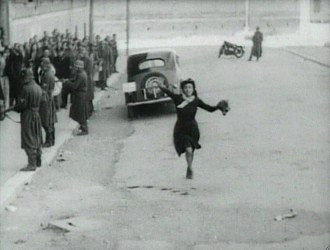
Born from the ashes of World War II, Italian Neorealism reshaped cinema by turning the camera toward the streets, factories, and cramped apartments of a nation struggling to rebuild. Rather than the glossy studio sets of pre‑war melodrama, neorealist directors chose the raw textures of bomb‑scarred neighborhoods, capturing the poverty, oppression, and desperation that defined daily life for millions. Their stories—often centered on the working class, the unemployed, and the displaced—were told with a documentary‑like honesty that made the screen feel like a living, breathing social document.The movement’s aesthetic was deliberately simple: natural lighting, handheld cameras, and a preference for non‑professional actors whose unpolished performances lent an immediacy that professional stars could not match. Yet beneath this apparent simplicity lay a sophisticated moral inquiry. Neorealist filmmakers asked: How does a society recover from devastation? What does dignity look like when basic needs are scarce? Their answers were never didactic; instead, they let ordinary people resist their circumstances, revealing both the fragility and the resilience of the human spirit.
History/Background
The seeds of neorealism were sown during the late Fascist era, when a handful of Italian directors began experimenting with location shooting and socially conscious scripts. The true spark, however, arrived in 1943, when the fall of Mussolini’s regime and the Allied invasion created a vacuum in the Italian film industry. Studios were damaged, resources were scarce, and censorship loosened, forcing filmmakers to improvise.In 1945, Roberto Rossellini’s Rome, Open City (Roma città aperta) premiered, widely regarded as the movement’s manifesto. Shot in the ruins of Rome with a mix of professional and amateur talent, the film’s stark realism captured the urgency of a nation emerging from occupation. Rossellini’s subsequent works—Paisà (1946) and Germany Year Zero (1948)—expanded the scope, exploring the war’s impact across Italy and beyond.
Vittorio De Sica’s Bicycle Thieves (Ladri di biciclette, 1948) cemented neorealism’s global reputation, its heartbreaking narrative of a father’s quest for a stolen bike becoming an archetype of the movement’s emotional power. Meanwhile, Luchino Visconti’s La Terra Trema (1948) and Ossessione (1943) introduced a more lyrical, class‑conscious dimension, drawing inspiration from both Italian literature and the earlier Soviet montage tradition—though, unlike Soviet propaganda, neorealist films emphasized individual survival over collective class struggle.
By the early 1950s, the movement began to wane as Italy’s economy recovered, studios reopened, and audiences craved escapist fare. Nevertheless, its influence persisted, seeding the French New Wave, British Kitchen‑Sink realism, and later, the Italian “commedia all’italiana.”
Key Information
- Timeframe: Roughly 1943–1952, with its most iconic works released between 1945 and 1950. - Core techniques: On‑location shooting, natural lighting, handheld cameras, and the casting of non‑professional actors. - Defining films: Rome, Open City (1945), Bicycle Thieves (1948), La Terra Trema (1948), Shoeshine (Sciuscià, 1946), Umberto D. (1952). - Major auteurs: Roberto Rossellini, Vittorio De Sica, Luchino Visconti, Federico Fellini (early works), and Michelangelo Antonioni (late neorealist phase). - Thematic focus: Post‑war economic hardship, moral ambiguity, the dignity of labor, and the tension between individual agency and oppressive social structures. - Cinematic legacy: Pioneered the use of realist narrative in fiction film, influencing global auteurs such as Jean‑Luc Godard, Satyajit Ray, and Ken Loach.Significance
Italian Neorealism matters because it redefined cinema’s purpose: film became a mirror, not a fantasy, reflecting society’s wounds and hopes. By foregrounding ordinary people, the movement democratized storytelling, proving that compelling drama does not require star power or lavish sets. Its emphasis on social responsibility inspired generations of filmmakers to view the camera as a tool for advocacy and cultural critique.Academically, neorealist works serve as primary visual sources for historians studying post‑war Italy, offering nuanced insight into housing conditions, gender roles, and labor relations that textual archives alone cannot convey. Culturally, the movement helped shape Italy’s post‑war identity, fostering a collective consciousness that recognized both suffering and resilience.
Internationally, neorealism’s aesthetic and ethical principles sparked the French New Wave’s rejection of studio conventions, the British “kitchen‑sink” dramas of the 1950s, and the rise of documentary‑style storytelling in contemporary cinema and television. Even today, streaming platforms showcase neorealist classics as essential viewing, underscoring their timeless relevance and the enduring power of humanist cinema.
INFOBOX:
- Name: Italian Neorealism
- Type: Film movement
- Date: c. 1943 – 1952
- Location: Italy
- Known For: On‑location shooting, non‑professional actors, social realism, post‑war narratives
TAGS: Italian cinema, Neorealism, post‑war film, social realism, Roberto Rossellini, Vittorio De Sica, Luchino Visconti, film history


