




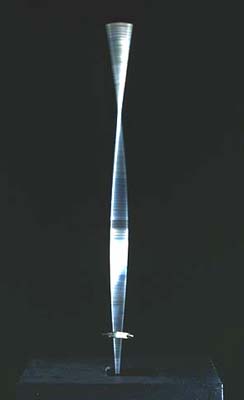
Kinetic Art
Kinetic art is a form of art that contains movement perceivable by the viewer or that depends on motion for its effects. This art form encompasses a wide variety of overlapping techniques and styles, including three-dimensional sculptures and figures such as mobiles that move naturally or are machine operated. From canvas paintings that extend the viewer's perspective of the artwork to incorporate multidimensional movement, to the more contemporary mobiles and sculptures that rely on wind, motors, or the observer for their movement, kinetic art has evolved over time to become a dynamic and captivating art form.
The earliest examples of kinetic art date back to the early 20th century, when artists began experimenting with movement and perspective in their work. However, it wasn't until the 1950s and 1960s that kinetic art began to take shape as a distinct art movement. During this period, artists such as Alexander Calder and Victor Vasarely created mobiles and other kinetic sculptures that used movement and light to create a sense of dynamic energy. These early kinetic artists were influenced by the principles of optics and kinematics, and their work often explored the relationship between movement, light, and perception.
Today, kinetic art continues to evolve and push the boundaries of what is possible with movement and art. From interactive installations that respond to the viewer's presence to large-scale public sculptures that use wind and water to create movement, kinetic art has become a vibrant and dynamic force in the art world.
History
Kinetic art has its roots in the early 20th century, when artists began experimenting with movement and perspective in their work. One of the earliest examples of kinetic art is the Op Art movement, which emerged in the 1950s and 1960s. Op Art artists such as Victor Vasarely and Bridget Riley created works that used movement and light to create a sense of dynamic energy. These artists were influenced by the principles of optics and kinematics, and their work often explored the relationship between movement, light, and perception.
In the 1950s and 1960s, kinetic art began to take shape as a distinct art movement. Artists such as Alexander Calder and George Rickey created mobiles and other kinetic sculptures that used movement and light to create a sense of dynamic energy. These early kinetic artists were influenced by the principles of mechanics and physics, and their work often explored the relationship between movement, light, and perception.
Early Pioneers
Some of the early pioneers of kinetic art include:
- Alexander Calder: A American sculptor and artist who is known for his mobiles and other kinetic sculptures.
- Victor Vasarely: A Hungarian-French artist who is known for his Op Art works and his influence on the development of kinetic art.
- George Rickey: An American sculptor and artist who is known for his kinetic sculptures and his use of movement and light in his work.
Mechanism
Kinetic art often relies on a variety of mechanisms to create movement and dynamic energy. Some of the most common mechanisms used in kinetic art include:
- Wind: Many kinetic sculptures use wind to create movement and dynamic energy.
- Motors: Some kinetic sculptures use motors to create movement and dynamic energy.
- Gravity: Some kinetic sculptures use gravity to create movement and dynamic energy.
- Human Interaction: Some kinetic sculptures use human interaction to create movement and dynamic energy.
Types of Kinetic Art
There are several types of kinetic art, including:
- Mobiles: Mobiles are three-dimensional sculptures that use movement and light to create a sense of dynamic energy.
- Sculptures: Sculptures are three-dimensional artworks that use movement and light to create a sense of dynamic energy.
- Installations: Installations are large-scale artworks that use movement and light to create a sense of dynamic energy.
- Interactive Art: Interactive art is a type of kinetic art that uses human interaction to create movement and dynamic energy.
Applications
Kinetic art has a wide range of applications, including:
- Public Art: Kinetic art is often used in public art installations, where it can be seen by a large audience.
- Museums: Kinetic art is often exhibited in museums, where it can be seen by art enthusiasts and scholars.
- Private Collections: Kinetic art is often collected by private individuals, who appreciate its unique and dynamic qualities.
- Education: Kinetic art is often used in educational settings, where it can be used to teach students about art, science, and technology.
Criticism and Controversy
Kinetic art has been subject to criticism and controversy over the years. Some critics have argued that kinetic art is too focused on movement and light, and that it lacks the depth and substance of other art forms. Others have argued that kinetic art is too dependent on technology, and that it lacks the human touch.


