




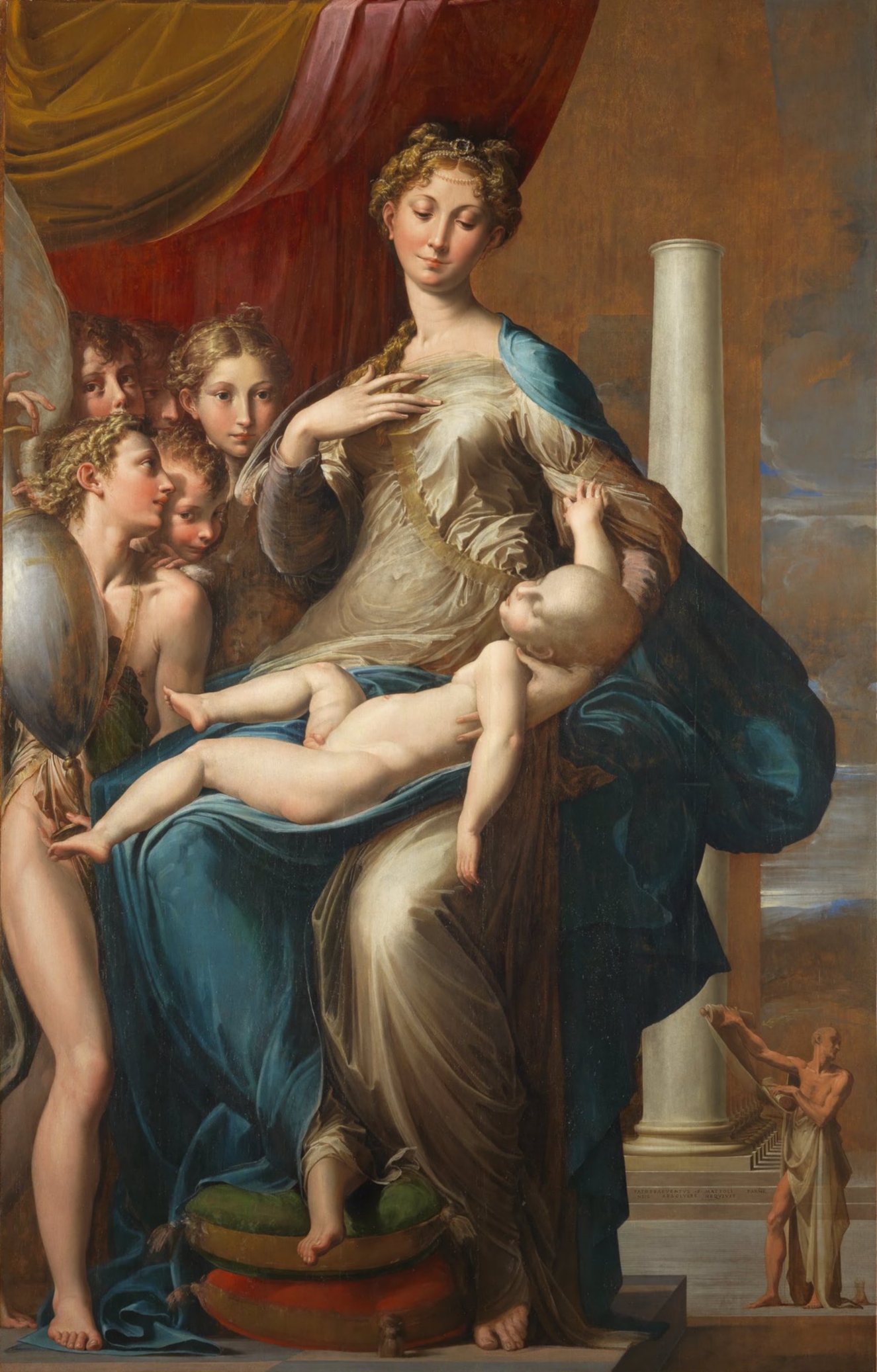
Mannerism
Mannerism is a style in European art that emerged in the later years of the Italian High Renaissance around 1520, spreading by about 1530 and lasting until about the end of the 16th century in Italy, when the Baroque style largely replaced it. Northern Mannerism continued into the early 17th century. Characterized by a sense of tension, instability, and emotional intensity, Mannerism rejected the balance and harmony of the Renaissance style, instead emphasizing distortion, exaggeration, and unconventional composition.
The Mannerist style was a response to the perceived constraints of the Renaissance ideal, which emphasized proportion, perspective, and naturalism. Mannerist artists sought to break free from these conventions, experimenting with new forms, colors, and techniques. This led to a diverse range of styles, from the dramatic and emotive to the abstract and surreal. Mannerism influenced not only visual arts but also literature, music, and architecture, leaving a lasting impact on Western cultural heritage.
Mannerism was not a unified movement, but rather a loose collection of artists and styles that shared a common spirit of innovation and experimentation. Despite its fragmented nature, Mannerism played a crucial role in shaping the course of art history, paving the way for the Baroque and Rococo styles that followed.
Origins
Mannerism emerged in Italy in the early 16th century, particularly in the courts of Florence and Rome. The style was influenced by the works of artists such as Michelangelo and Raphael, who had pushed the boundaries of Renaissance art with their innovative compositions and use of perspective. However, as the Renaissance ideal became increasingly codified, a new generation of artists sought to break free from its constraints.
One of the key figures associated with the emergence of Mannerism was Giulio Romano, a pupil of Raphael who went on to become a prominent artist in his own right. Romano's works, such as his frescoes in the Palazzo Te in Mantua, showcased a new sense of drama and tension, which would become hallmarks of the Mannerist style.
Characteristics
Mannerism is characterized by a range of distinctive features, including:
- Distortion and exaggeration: Mannerist artists often distorted or exaggerated the human form, creating elongated limbs, twisted poses, and unnatural proportions.
- Unconventional composition: Mannerist artists frequently abandoned traditional composition techniques, such as the use of perspective and symmetry, in favor of more experimental and dynamic arrangements.
- Emphasis on emotion: Mannerist art often emphasized the emotional and psychological aspects of a scene, rather than its literal or naturalistic representation.
- Use of color: Mannerist artists frequently used bold, vibrant colors to create a sense of tension and drama.
Influence and Legacy
Mannerism had a profound influence on the development of Western art, paving the way for the Baroque and Rococo styles that followed. Mannerist artists such as El Greco and Tintoretto went on to become prominent figures in the history of art, while others, such as Hans Holbein the Younger, influenced the development of Northern European art.
Mannerism also had a significant impact on literature and music, influencing the works of writers such as Edmund Spenser and John Donne, as well as composers like Orlando di Lasso and Claudio Monteverdi.
Criticism and Controversy
Despite its influence and legacy, Mannerism has also been subject to criticism and controversy. Some art historians have viewed Mannerism as a decadent and self-indulgent style, characterized by a lack of discipline and a focus on novelty and spectacle. Others have seen Mannerism as a necessary response to the constraints of the Renaissance ideal, paving the way for the more expressive and emotive styles that followed.


