




**
Overview
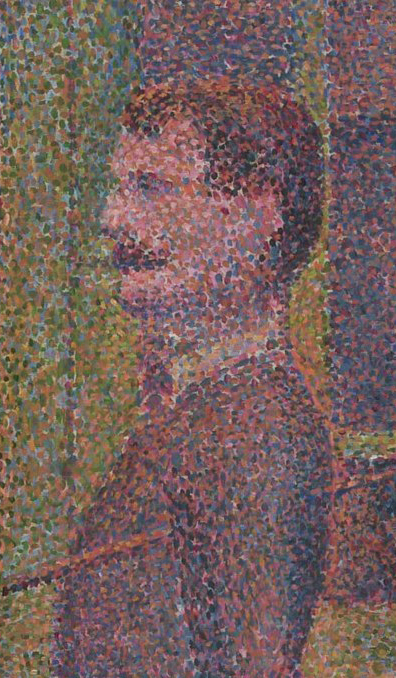
Pointillism burst onto the late‑19th‑century art scene as a daring experiment in visual perception. Rather than mixing pigments on a palette, artists lay down microscopic dots of pure color side by side; when viewed from a distance, the viewer’s eye performs the alchemy, merging the spots into seamless tones and luminous effects. This method creates a shimmering surface that seems to pulse with light, inviting the audience to linger and discover new details as they shift their gaze.
The technique is more than a clever optical trick—it is a philosophical statement about the nature of reality. By emphasizing the individuality of each color particle, Pointillist painters suggested that the whole world is composed of discrete, interacting elements, a notion that resonated with contemporary scientific breakthroughs in optics and color theory. The result is a visual language that feels both scientific and poetic, marrying precision with emotion.
History/Background
Pointillism emerged from the broader Neo‑Impressionist movement, spearheaded by French chemist‑turned‑artist Georges Seurat in the 1880s. Influenced by the scientific writings of Michel Eugène Chevreul and Ogden Rood on simultaneous contrast, Seurat sought a systematic approach to color that would maximize vibrancy and stability. In 1884, he unveiled A Sunday Afternoon on the Island of La Grande Jatte, a monumental canvas composed entirely of meticulously placed dots—a work that would become the iconic manifesto of the style.Following Seurat’s lead, his close associate Paul Signac refined the method, favoring larger, more expressive strokes while preserving the core principle of optical mixing. The technique spread quickly across Europe, inspiring artists such as Henri-Edmond Cross, Camille Pissarro, and later, the Fauves, who borrowed the bright palette but abandoned the strict dotting. By the early 20th century, Pointillism had already left its imprint on poster art, decorative design, and even early cinema, where filmmakers experimented with “dot” patterns to achieve visual texture.
Key Information
- Core Principle: Apply small, separate dots of pure pigment; the viewer’s eye blends them at a distance. - Primary Colors: Artists typically used the three‑color theory (red, blue, yellow) plus white, allowing for a broader spectrum through optical mixing. - Technique: Paint is applied with fine brushes or even stippling tools; the spacing and density of dots control tonal value and depth. - Major Works: A Sunday Afternoon on the Island of La Grande Jatte (Seurat, 1884‑1886), The Port of Saint‑Thomas (Signac, 1901), The Orchard (Cross, 1906). - Scientific Basis: Relies on simultaneous contrast and additive color mixing, concepts later validated by modern colorimetry. - Legacy in Other Media: Influenced pointillist photography, digital pixel art, and contemporary installations that use LED “dots” to create immersive environments. - Notable Practitioners: Georges Seurat, Paul Signac, Henri-Edmond Cross, Camille Pissarro (later works), and later 20th‑century artists like Chuck Close (hyper‑realist dotting) and Yayoi Kusama (polka‑dot installations).Significance
Pointillism reshaped the dialogue between art and science, proving that visual perception could be harnessed as a compositional tool. Its emphasis on systematic color application paved the way for later modernist movements, including Fauvism and Cubism, which both inherited and rebelled against its disciplined approach. In the digital age, the technique’s legacy lives on in pixel‑based media; every screen pixel is a modern echo of Seurat’s dots, reminding us that the smallest units can generate profound visual experiences.Culturally, Pointillism democratized the act of seeing. By demanding that viewers step back to perceive the whole, it encouraged an active, participatory relationship with art—a principle that underpins contemporary interactive installations and virtual reality environments. Moreover, its bright, joyous palette captured the optimism of the Belle Époque, making it a visual emblem of a world eager to blend tradition with scientific progress.
INFOBOX:
- Name: Pointillism (also known as Divisionism)
- Type: Painting technique / Visual art method
- Date: First major works 1884–1886
- Location: Originated in Paris, France
- Known For: Creating images from tiny, distinct dots of pure color that blend optically
TAGS: Pointillism, Neo-Impressionism, Georges Seurat, Paul Signac, optical mixing, color theory, art history, visual perception


