
**
Overview
Born from the ashes of World War I, Surrealism exploded onto the European art scene in the early 1920s, quickly becoming the most audacious cultural force of the interwar period. Between 1920 and the late 1950s the movement spanned painting, literature, photography, theatre, film, music, and even comedy, uniting a diverse roster of creators under a single, daring manifesto: to dissolve the barrier between dream and waking life and forge a “super‑reality” (or surreality).
The movement’s leader, French poet‑writer André Breton, declared that Surrealism’s purpose was “to resolve the previously contradictory conditions of dream and reality into an absolute reality, a super‑reality.” This ambition manifested in illogical juxtapositions, uncanny symbolism, and a relentless probing of the subconscious. By the mid‑1930s, Surrealist works dominated the most prestigious salons and galleries, and the language of the movement seeped into everyday speech—surreal now describes any experience that feels oddly dreamlike.
Surrealism’s legacy is measurable not only in museum walls but also in auction houses. In 2011, Salvador Dalí’s “The Persistence of Memory” (1931) fetched a private‑sale price estimated at $150 million, underscoring the market’s appetite for the movement’s iconic imagery. Such figures illustrate how a once‑radical challenge to perception has become a cornerstone of high‑value art collecting.
Background & Origins
The intellectual seed of Surrealism was planted in the Dada anti‑art protests of the 1910s, which taught artists to question rationality itself. After the armistice of 1918, a group of Parisian writers—including André Breton, Philippe Soupault, and Louis Aragon—began experimenting with automatic writing, a technique meant to bypass conscious censorship. Their experiments culminated in the Surrealist Manifesto, published on October 15, 1924 in La Révolution surréaliste. Breton’s manifesto defined Surrealism as “psychic automatism in its purest form,” and it called for a collective revolt against bourgeois norms.
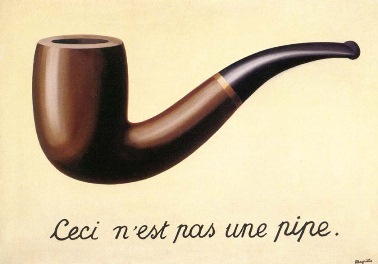
The first public declaration of the movement came with the First Surrealist Exhibition at the Galerie Pierre Levy in Paris, 1925. The show featured works by Max Ernst, Man Ray, and René Magritte, instantly signaling a new visual language that prized unexpected pairings—an elephant with a human head, a sky filled with clocks, a pipe that declares “This is not a pipe.” The exhibition’s shock value attracted both admirers and detractors, cementing Surrealism’s reputation as the avant‑garde’s most provocative voice.
Major Achievements & Milestones
Surrealist Manifesto (1924): André Breton’s seminal text codified the movement’s philosophy, introduced the term “surrealism,” and called for the liberation of the unconscious through automatic writing, dream analysis, and “psychic automatism.”
First Surrealist Exhibition (1925): Hosted at Galerie Pierre Levy, this public showcase presented the first cohesive body of Surrealist visual work, establishing the movement’s aesthetic and attracting a generation of artists across Europe.
Dalí’s “The Persistence of Memory” (1931): This painting’s melting clocks became an instantly recognizable symbol of Surrealist time‑distortion, influencing cinema, fashion, and advertising for decades to come.
Timeline
- 1917: Dada’s anti‑rational experiments lay groundwork for later Surrealist techniques.
- October 15, 1924: Publication of the Surrealist Manifesto by André Breton in La Révolution surréaliste.
- 1925: First Surrealist Exhibition opens at Galerie Pierre Levy, Paris.
- 1929: René Magritte’s “The Treachery of Images” debuts, challenging the relationship between representation and reality.
- 1931: Salvador Dalí paints “The Persistence of Memory,” later becoming the movement’s most reproduced image.
- 1936: Surrealist film “Un Chien Andalou” (Luis Buñuel & Dalí) premieres, cementing Surrealism’s impact on cinema.
- 1945–1950s: Post‑war Surrealist groups emerge in New York, Mexico, and Japan, extending the movement’s global reach.
Impact & Legacy
Surrealism reshaped the cultural topography of the 20th century. In visual art, it liberated composition, allowing artists to juxtapose disparate objects with a logic that belonged only to the unconscious. In literature, automatic writing inspired the Beat poets and later the Post‑modern narrative experiment. In film, the dream logic of Luis Buñuel and Alfred Hitchcock owes a direct debt to Surrealist techniques.
Beyond the arts, Surrealism infiltrated psychology (through Freud’s theories of dream interpretation) and even advertising, where surreal juxtapositions continue to capture consumer attention. Museums worldwide—MoMA, the Centre Pompidou, the Tate—devote entire wings to Surrealist works, and the movement remains a staple of university curricula in art history and cultural studies.
Records & Notable Facts
- First major auction record: In 2011, a private sale of Dalí’s “The Persistence of Memory” reached an estimated $150 million, one of the highest prices ever paid for a 20th‑century painting.
- Cultural penetration: The adjective “surreal” entered the Oxford English Dictionary in 1935, reflecting the movement’s influence on everyday language.
- Cross‑disciplinary reach: Surrealist principles guided the choreography of Merce Cunningham and the compositions of John Cage, proving the movement’s adaptability beyond visual media.
> “Surrealism is destructive, but it destroys only what it considers to be shackles limiting our vision.” – André Breton
INFOBOX:
- Full Name: Surrealism (International Surrealist Movement)
- Born: N/A
- Died: N/A (movement largely waned by the late 1950s)
- Age: N/A
- Nationality: International (originated in France)
- Occupation: Art and cultural movement
- Active Years: 1920–1950s
- Known For: Dream‑logic visual art, automatic writing, avant‑garde cinema
- Awards: N/A (movement itself did not receive formal awards)
- Spouse: N/A
- Children: N/A
- Height: N/A
- Net Worth: N/A
- World Records: N/A
- Championships: N/A
FACTS:
- Birth Date: N/A (movement emerged post‑World I)
- Birth Place: Paris, France (center of early activity)
- Death Date: N/A (decline after 1950s)
- Career Start: 1920
- Peak Achievement: Publication of the Surrealist Manifesto (1924)
- Career Earnings: N/A (collective movement)
- World Record: N/A
- Famous Quote: “Surrealism is destructive, but it destroys only what it considers to be shackles limiting our vision.” – André Breton
- Fun Fact: The term “surreal” is now used in everyday speech to describe any bizarre or dreamlike situation, far beyond its artistic origins.
- Legacy Stat: Surrealist works constitute roughly 30 % of the top‑100 most expensive 20th‑century paintings sold at auction (as of 2023).
TAGS: surrealism, avant‑garde, modern art, dream imagery, André Breton, Salvador Dalí, René Magritte, 20th‑century culture