




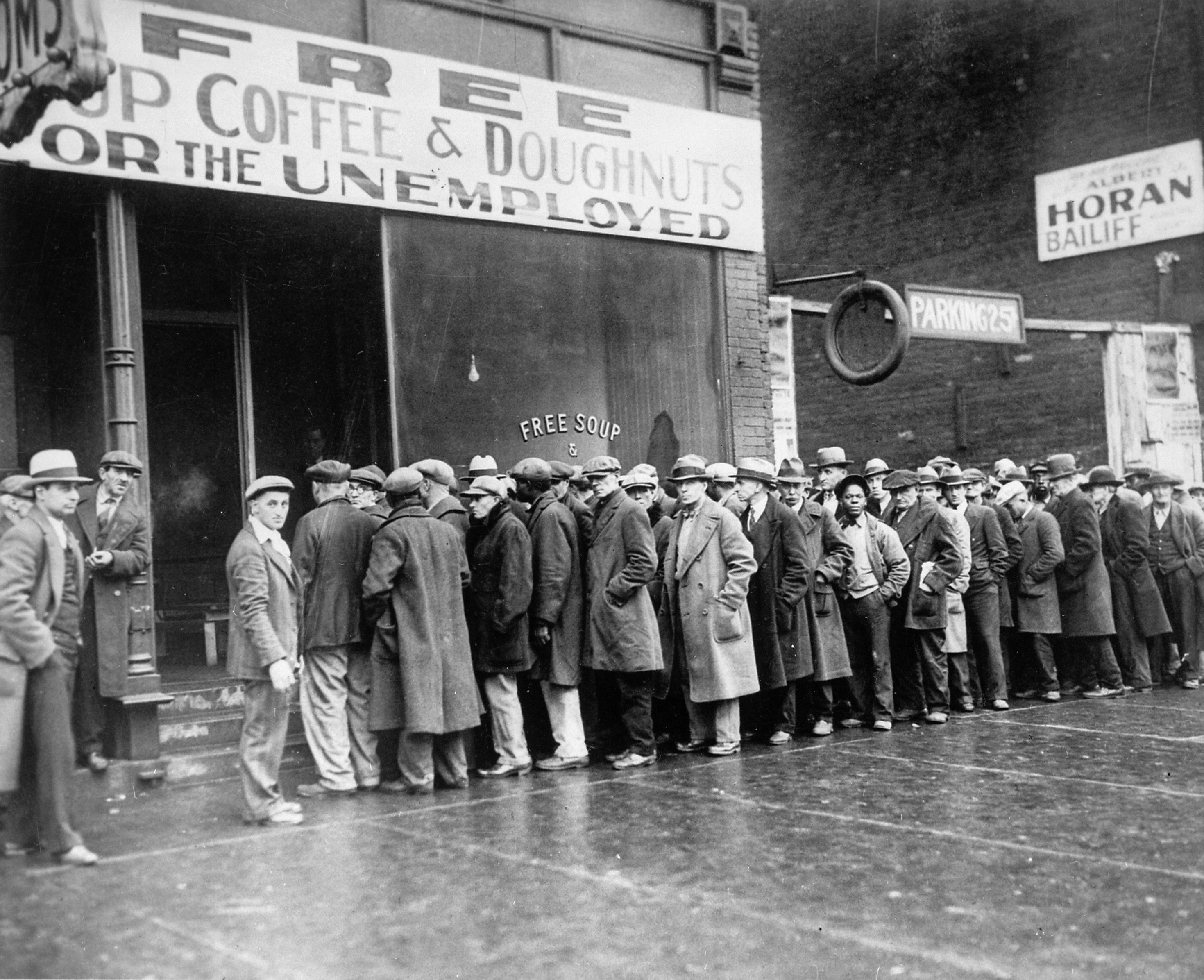
The Great Depression
The Great Depression was a severe global economic downturn that lasted from 1929 to 1939, characterized by high rates of unemployment and poverty, drastic reductions in industrial production and international trade, and widespread bank and business failures around the world.
The Great Depression began in the United States, the largest economy in the world, with the devastating Wall Street crash of 1929 often considered the beginning of the Depression. The economic contagion spread rapidly to other countries, including the United Kingdom and Germany, which were among the hardest hit. The global economic downturn had a profound impact on the lives of millions of people, leading to widespread poverty, homelessness, and despair.
The Great Depression was a complex and multifaceted phenomenon that was caused by a combination of factors, including the stock market crash of 1929, the collapse of international trade, and the failure of the banking system. The Depression also had a profound impact on the global economy, leading to a significant decline in industrial production, a sharp increase in unemployment, and a massive decline in international trade.
Causes
The causes of the Great Depression are complex and multifaceted, and can be attributed to a combination of factors, including:
Stock Market Crash of 1929
The stock market crash of 1929 is often considered the beginning of the Great Depression. On October 24, 1929, also known as Black Thursday, stock prices began to fall rapidly, leading to a massive loss of wealth for investors. The crash was triggered by a combination of factors, including overproduction, underconsumption, and excessive speculation in the stock market.
Collapse of International Trade
The collapse of international trade was another major factor that contributed to the Great Depression. The global economy was heavily dependent on international trade, and the collapse of trade led to a sharp decline in economic activity. The Smoot-Hawley Tariff Act of 1930, which raised tariffs on imported goods, further exacerbated the problem by reducing international trade.
Failure of the Banking System
The failure of the banking system was another major factor that contributed to the Great Depression. Many banks had invested heavily in the stock market and had loaned money to speculators, who were unable to pay back their loans when the market crashed. This led to a massive loss of confidence in the banking system, and many banks failed, leading to a sharp decline in economic activity.
Effects
The effects of the Great Depression were far-reaching and devastating. Some of the key effects include:
Unemployment
Unemployment soared during the Great Depression, with millions of people losing their jobs. In the United States, unemployment peaked at 25% in 1933, while in the United Kingdom, it peaked at 22%. In Germany, unemployment peaked at 30%.
Poverty
Poverty was another major effect of the Great Depression. Millions of people were forced to live in poverty, with many families unable to afford basic necessities such as food and shelter.
Industrial Production
Industrial production declined sharply during the Great Depression, with many factories closing and many workers losing their jobs.
International Trade
International trade declined sharply during the Great Depression, with many countries imposing protectionist policies such as tariffs and quotas.
Response
The response to the Great Depression was varied and often ineffective. Some of the key responses include:
New Deal
The New Deal was a series of programs and policies implemented by President Franklin D. Roosevelt in the United States to address the Great Depression. The New Deal included programs such as the Works Progress Administration, the Civilian Conservation Corps, and the Federal Emergency Relief Administration.
Monetary Policy
Monetary policy was another key response to the Great Depression. Central banks around the world, including the Federal Reserve in the United States, implemented expansionary monetary policies to stimulate economic activity.
Fiscal Policy
Fiscal policy was also used to respond to the Great Depression. Governments around the world, including the United States, implemented expansionary fiscal policies, including tax cuts and increased government spending.
INFOBOX:
- Name: The Great Depression
- Type: Economic downturn
- Date: 1929-1939
- Location: Global
- Known For: Severe global economic downturn, high rates of unemployment and poverty, drastic reductions in industrial production and international trade
TAGS: Great Depression, Economic downturn, Unemployment, Poverty, Industrial production, International trade, New Deal, Monetary policy, Fiscal policy, Stock market crash, Banking system, Protectionism


