




Overview
Vinyl records, often simply called records or LPs, are flat discs of polyvinyl chloride (PVC) that capture sound in a continuous, analog groove. The groove begins near the outer edge and spirals inward, encoding the waveform of the original performance. When a stylus (needle) rides the groove on a turntable, it vibrates in sync with the recorded sound waves, sending an electrical signal to an amplifier and ultimately producing audible music. This tactile, physical medium stands in stark contrast to the intangible nature of digital files, offering listeners a ritualistic experience—unwrapping the sleeve, placing the needle, and hearing the warm, nuanced tones that many audiophiles describe as “organic” and “alive.”Beyond its technical function, the vinyl record has become a cultural icon. Its large album artwork serves as a canvas for visual artists, while the act of flipping a record side‑by‑side with a friend evokes communal listening rituals. From jazz clubs in the 1940s to indie record stores today, vinyl continues to shape how we discover, share, and cherish music, proving that analog can coexist—and even thrive—in a digital age.
History/Background
The story of vinyl records begins with Thomas Edison’s phonograph in 1877, which used tinfoil-wrapped cylinders to capture sound. By the late 1880s, Emile Berliner introduced the flat disc format, paving the way for mass‑produced records. Early discs were made of shellac and played at 78 rpm, limiting playback time to about three minutes per side. The post‑World II era saw the advent of vinyl as a material, offering greater durability and quieter playback. In 1948, Columbia Records launched the 33 ⅓ rpm long‑play (LP), extending listening time to 20‑30 minutes per side and revolutionizing album-oriented music. RCA Victor responded in 1949 with the 45 rpm single, ideal for hit songs and jukeboxes.The 1960s and 1970s marked vinyl’s golden age, as rock, soul, and folk artists embraced the LP’s expansive canvas for concept albums and elaborate cover art. By the late 1970s, however, compact discs (CDs) began to erode vinyl’s market share, promising crystal‑clear sound and convenience. Yet the 1990s and early 2000s saw a surprising resurgence: collectors, DJs, and a new generation of listeners gravitated back to vinyl for its tactile charm and sonic character, sparking a renaissance that continues today.
Key Information
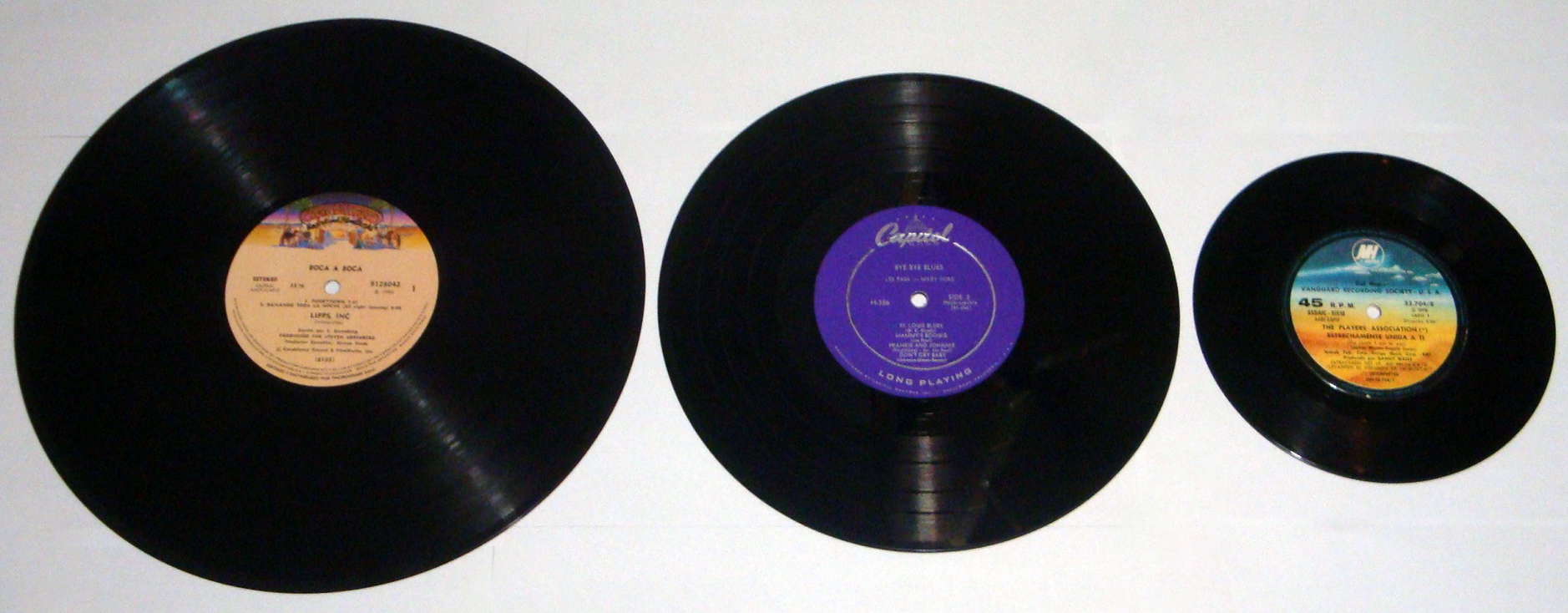
- Material: Primarily polyvinyl chloride (PVC), sometimes mixed with additives for flexibility. - Standard Speeds: 33 ⅓ rpm (LP), 45 rpm (single), and historic 78 rpm (shellac). - Sizes: 12‑inch (most LPs), 10‑inch (EPs and some singles), 7‑inch (standard singles). - Groove Types: Stereo (dual‑channel) grooves introduced in 1958; mono grooves persisted for certain releases. - Playback Equipment: Turntable with a calibrated motor, tonearm, stylus (commonly diamond‑tipped), and cartridge. - Audio Fidelity: Frequency response typically 20 Hz–20 kHz; dynamic range around 70 dB, with a characteristic “warmth” due to harmonic distortion and surface noise. - Collectibility: Rare pressings, colored vinyl, picture discs, and limited editions command high prices on the secondary market. - Cultural Impact: Album art, liner notes, and physical packaging have become integral to an artist’s visual identity, influencing graphic design and fashion trends.Significance
Vinyl records are more than a playback medium; they are a cultural artifact that bridges sound, visual art, and social ritual. Their resurgence underscores a broader desire for tangible experiences in an increasingly virtual world. Vinyl’s influence extends to DJ culture, where the tactile control of scratching and beat‑matching birthed hip‑hop and electronic dance music. Moreover, the format’s physicality has inspired contemporary artists to experiment with unconventional pressings—from scented vinyl to etched sidewalls—blurring the line between music and sculpture.Economically, the vinyl market has become a vital revenue stream for independent labels and legacy artists alike, with global sales surpassing 30 million units annually in the 2020s. Educationally, vinyl offers a hands‑on lesson in analog physics, illustrating how mechanical vibrations translate into audible sound without digital conversion. In sum, vinyl records embody a timeless blend of technology, artistry, and community, ensuring their relevance for future generations of listeners and creators.


