




**
Overview
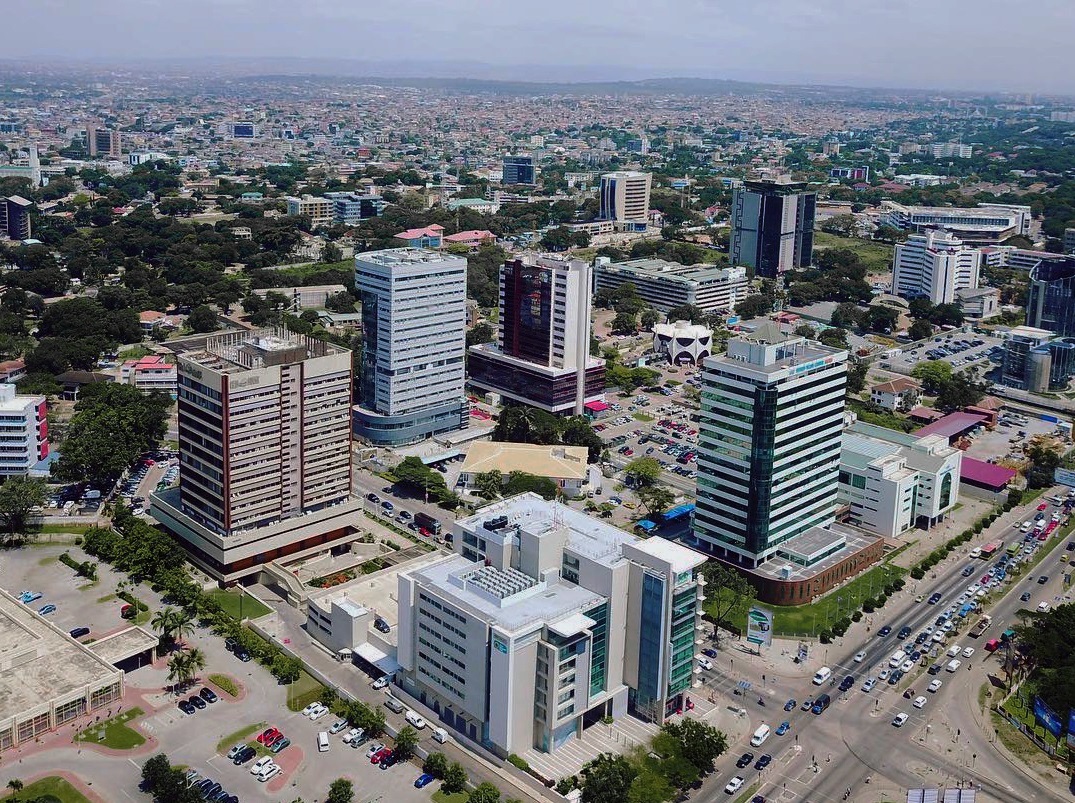
Accra, the capital and largest city of Ghana, sits on the southern edge of West Africa, hugging the Gulf of Guinea. Though the official Accra Metropolitan District now covers just 20.4 km² and houses 284,124 residents (2021 census), the name “Accra” is commonly used to describe the broader urban agglomeration that stretches across the Greater Accra Region. This region spans 3,245 km² and is home to roughly 5.46 million people, making it the nation’s most densely populated and economically dynamic area.The city’s skyline is a mosaic of colonial-era structures, such as the Kwame Nkrumah Mausoleum, and gleaming high‑rise offices that host multinational corporations, embassies, and tech start‑ups. Streets pulse with the rhythm of market traders in Makola Market, street food vendors serving kelewele and chinchinga, and the occasional beat of highlife music spilling from open‑air venues. Accra’s coastal location gifts it a tropical climate, with warm temperatures year‑round and a brief rainy season that refreshes its mangrove‑lined beaches, notably Labadi Beach and Kokrobite.
Beyond its economic clout, Accra is a cultural crossroads. The city hosts the annual Chale Wote Street Art Festival, the Accra International Film Festival, and a thriving fashion scene that showcases Ghanaian designers on the global stage. Its universities, such as the University of Ghana’s Accra campus, attract scholars from across Africa, reinforcing the city’s reputation as an intellectual hub.
History/Background
Accra’s origins trace back to a cluster of Ga fishing villages that dotted the coastline in the 15th century. The name “Accra” likely derives from the Akan word Nkran, meaning “ants,” a reference to the bustling activity of early settlers. In 1471, Portuguese explorers erected a fort at São Jorge da Mina (modern Elmina), establishing the first European foothold nearby; later, the Dutch and British built their own forts along the coast, including Fort James (now the James Fort museum) in Accra.The city’s strategic harbor made it a focal point of the trans‑Atlantic slave trade, a dark chapter memorialized at the Kumasi‑Accra Slave Route. After the British formally declared the Gold Coast a colony in 1874, Accra grew as an administrative center. In 1957, when Ghana achieved independence under Kwame Nkrumah, Accra was designated the national capital, a status it retains today.
Rapid urbanization accelerated after independence, especially in the 1960s and 1970s, when rural migrants flocked to the city seeking employment. The original Accra Metropolitan District covered 199.4 km² and housed 1,782,150 people by the 2021 census. In 2008, the district was subdivided into 13 local government districts—12 municipal districts and the reduced Accra Metropolitan District—to improve governance and service delivery. The 20.4 km² core, now officially the City of Accra, was granted city status, distinguishing it from surrounding municipalities.
Key Information
- Population (2021): 284,124 (Accra Metropolitan District); 5.46 million (Greater Accra Region). - Area: 20.4 km² (city proper); 199.4 km² (pre‑2008 metropolitan area); 3,245 km² (Greater Accra Region). - Governance: Managed by the Accra Metropolitan Assembly (AMA); the wider capital area is overseen by 12 municipal assemblies. - Economy: Hub for finance, telecommunications, tourism, and creative industries; home to the Ghana Stock Exchange and headquarters of major banks. - Transport: Kotoka International Airport (the nation’s busiest gateway), a growing network of highways, and a nascent Accra Light Rail project. - Education & Culture: Hosts the University of Ghana, Accra Technical University, and numerous cultural institutions like the National Museum of Ghana. - Landmarks: Independence Square, Jamestown Lighthouse, Makola Market, Osu Castle, and the historic Fort Christiansborg (now the presidential palace).Significance
Accra’s importance extends far beyond its administrative role. Economically, it drives over 30 % of Ghana’s GDP, acting as a magnet for foreign direct investment and a launchpad for West African startups. Its ports and airport make it a logistical gateway to the ECOWAS (Economic Community of West African States) market, linking landlocked neighbors to global trade routes.Culturally, Accra is a living laboratory of African urbanism, where traditional Ga customs coexist with contemporary art movements. The city’s festivals and galleries have positioned it as a beacon of African creativity, influencing fashion, music, and film across the continent. Moreover, Accra’s diplomatic concentration—hosting over 70 embassies—underscores its role in regional politics and peacekeeping initiatives.
Socially, the city grapples with challenges typical of fast‑growing metropolises: housing shortages, traffic congestion, and environmental pressures on its coastal ecosystems. Yet, innovative urban planning efforts, such as the Accra Sustainable City Initiative, aim to transform these challenges into opportunities for green infrastructure, affordable housing, and resilient climate adaptation.
In sum, Accra is not merely Ghana’s capital; it is a dynamic engine of economic growth, a crucible of cultural expression, and a strategic hub shaping West Africa’s future.
INFOBOX:
- Name: Accra
- Type: Capital city / Metropolitan district
- Date: Established as capital of independent Ghana, 1957 (modern city status, 2008)
- Location: Southern coast of Ghana, Gulf of Guinea, West Africa
- Known For: Political capital, economic powerhouse, cultural hub, historic forts
TAGS: Ghana, Capital cities, West Africa, Urbanization, History, Culture, Economy, Tourism


