




**
Overview
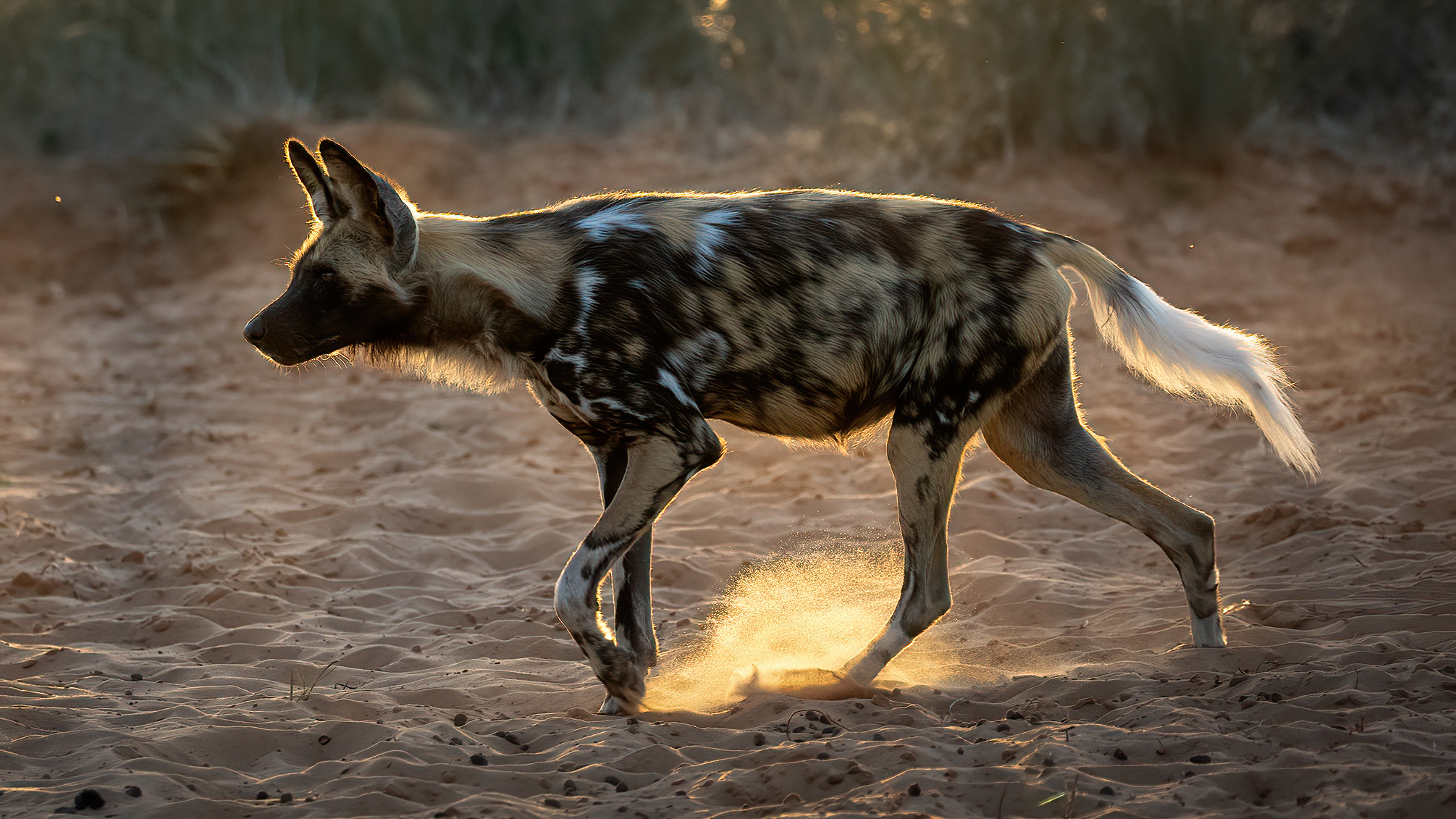
The African wild dog is the largest wild canine on the African continent, weighing 18–36 kg and standing 60–80 cm at the shoulder. Its most striking feature is a mottled coat of yellow, black, white, and reddish patches that varies from individual to individual, giving each animal a “painted” appearance. Unlike members of the genus Canis, the wild dog possesses a hyper‑carnivorous dentition—large, blade‑like carnassials and reduced molars—optimised for slicing flesh rather than grinding plant material. The species also lacks dewclaws on the hind limbs, a rare trait among canids that reflects its evolutionary divergence.African wild dogs live in highly cooperative packs that can number from 6 to over 30 individuals. Pack dynamics are fluid; juveniles often disperse to form new groups, while older members may be adopted into neighboring packs. This social structure underpins their renowned hunting efficiency: coordinated chases can exhaust prey, allowing the pack to take down animals up to three times their own size, such as impalas, wildebeest calves, and even young zebras. Vocal communication—high‑pitched whistles, chirps, and growls—helps maintain cohesion across the savanna’s open terrain.
Conservation status is precarious. The International Union for Conservation of Nature (IUCN) lists the African wild dog as Endangered, with fewer than 7,000 individuals remaining in fragmented populations across 30 + countries. Threats include habitat loss, human‑wildlife conflict, infectious diseases (e.g., rabies, canine distemper), and competition with larger predators like lions and hyenas. Despite these challenges, the species serves as a flagship for ecosystem health, as its presence often indicates robust prey bases and functional predator guilds.
History/Background
Fossil evidence places the lineage of Lycaon deep in the Pliocene, roughly 2–3 million years ago, when Africa’s expanding grasslands favored cursorial predators with endurance hunting strategies. Genetic studies suggest that the African wild dog diverged from other canids around 1.7 million years ago, a split that coincides with the emergence of its distinctive dental morphology. Early European explorers recorded sightings in the late 18th century, referring to the animal as the “Cape hunting dog.” By the early 20th century, naturalists such as C. G. B. G. (G. B. B. G.) documented pack behavior, laying groundwork for modern ethology.The 1970s marked a turning point when the species’ rapid decline became evident, prompting the first coordinated conservation programs. In 1979, the African Wild Dog Conservation Programme (AWDCP) was launched in Botswana, focusing on anti‑poaching patrols and community outreach. The 1990s saw the introduction of vaccination campaigns against rabies and distemper, dramatically reducing mortality in several reserves. Recent advances in GPS collar technology have enabled researchers to map long‑distance dispersal routes, revealing previously unknown corridors essential for genetic exchange.
Key Information
- Scientific name: Lycaon pictus - Taxonomic family: Canidae; sole extant member of the genus Lycaon - Physical traits: Large rounded ears, lack of hind dewclaws, 6–7 teeth per side in the upper jaw (vs. 8 in Canis), and a coat pattern unique to each individual. - Social structure: Packs are matriarchal; the dominant female leads hunts and breeding. Litters average 10–20 pups, with communal pup‑rearing. - Diet: Strict hypercarnivore; prey includes medium‑sized ungulates (impala, gazelle), small mammals, and occasionally carrion. - Reproduction: Breeding occurs once a year; gestation lasts ~70 days. Pups are born blind and rely on pack members for food and protection. - Distribution: Historically ranged across sub‑Saharan Africa; now confined to protected areas in Botswana, Zimbabwe, Tanzania, Kenya, South Africa, and a few West African pockets. - Conservation status: Endangered (IUCN); population trend decreasing. - Major threats: Habitat fragmentation, human‑wildlife conflict (livestock predation), disease transmission from domestic dogs, competition with lions and hyenas.Significance
The African wild dog epitomizes the intricate balance of African savanna ecosystems. Its cooperative hunting model provides a living laboratory for studying social cognition, communication, and collective decision‑making in mammals. Ecologically, the species helps regulate herbivore populations, preventing overgrazing and promoting plant diversity. Culturally, the painted dog holds a place in indigenous folklore and modern conservation narratives, symbolizing resilience and the need for collaborative stewardship.From a conservation perspective, protecting the African wild dog yields umbrella benefits for a suite of sympatric species, including antelopes, birds of prey, and smaller carnivores. Successful vaccination and community‑based livestock compensation schemes have demonstrated that human‑wildlife coexistence is achievable, offering a template for other threatened predators worldwide. Moreover, the species’ genetic distinctiveness—its unique dentition and lack of dewclaws—adds irreplaceable evolutionary heritage to the planet’s biodiversity.
INFOBOX:
- Name: African wild dog (Lycaon pictus)
- Type: Mammalian carnivore, social pack hunter
- Date: First scientific description 1823 (Cuvier)
- Location: Sub‑Saharan Africa (savannas, woodlands, semi‑desert)
- Known For: Highly coordinated pack hunting; distinctive “painted” coat; sole extant member of genus Lycaon
TAGS: African wild dog, Lycaon pictus, conservation, hypercarnivore, pack hunting, endangered species, African savanna, wildlife disease mitigation


