Science Editor
8 views
3 min read
Jun 14, 2026
Overview
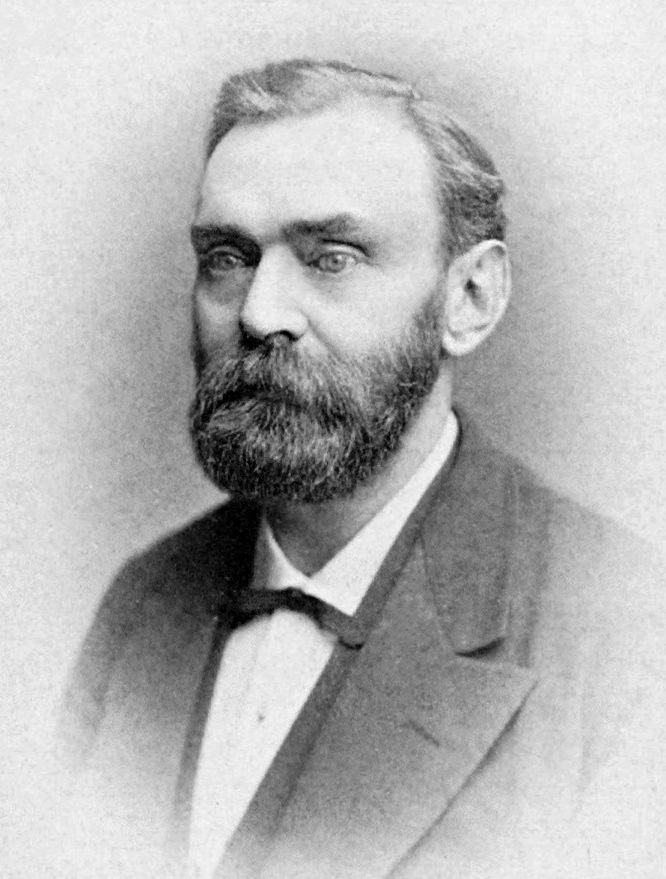
Alfred Bernhard Nobel (1833-1896) was the archetype of the 19th-century scientific entrepreneur: part experimental genius, part industrial titan. By combining a chemist’s curiosity with an engineer’s precision and a businessman’s ambition, he transformed nitroglycerin from a dangerously unstable liquid into the first safe, controllable high explosive—dynamite—patented in 1867. The invention reshaped mining, tunneling, and warfare, generating a fortune that Nobel ultimately channeled into the world’s most prestigious awards. Holding 355 patents across 20 countries, Nobel’s restless creativity spanned explosives, synthetic rubber, and even early rocket propellants, yet his posthumous gift of the Nobel Prizes eclipsed all his technical triumphs.History/Background
Born 21 October 1833 in Stockholm, Sweden, Alfred grew up in a family of inventors—his father Immanuel Nobel pioneered naval mines for the Russian military. After the family’s bankruptcy, 9-year-old Alfred moved with his father to St. Petersburg, where private tutors taught him chemistry, literature, and engineering in five languages. At 18 he left for the United States to study chemical engineering; four years later he returned to Stockholm and began experimenting with nitroglycerin. A catastrophic 1864 explosion killed his younger brother Emil and four workers, prompting Stockholm authorities to ban nitroglycerin within city limits. Nobel responded by moving production to a barge on Lake Mälaren, where he discovered that kieselguhr (diatomaceous earth) stabilized the explosive into a moldable paste—dynamite. Global patents followed within months, and by 1873 Nobel had built 16 factories across Europe and America. A lifelong pacifist horrified by military uses of his inventions, Nobel wrote in an 1895 will—penned at the Swedish-Norwegian Club in Paris—that 94 % of his estate should fund annual prizes for those who “have conferred the greatest benefit on mankind.” He died of a cerebral hemorrhage on 10 December 1896 in San Remo, Italy, leaving 31 million kronor (≈ $265 million today).Key Information
- Dynamite: 1867 patent combined nitroglycerin (75 %) with kieselguhr (25 %) to produce a shock-resistant explosive 5× more powerful than gunpowder; detonated with Nobel’s 1866 mercury fulminate blasting cap.
- Gelignite & Ballistite: 1875 gelignite blended nitroglycerin with nitrocellulose for waterproof mining; 1887 ballistite was the first smokeless powder adopted by British artillery.
- Patent portfolio: 355 patents in explosives, optics, biology, and metallurgy; filed in Sweden, UK, France, Germany, and USA.
- Industrial empire: 90 factories in 20 countries; Nobel’s Trust managed 1,000 km of railways, iron mines, and oilfields in Baku (Branobel) producing 50 % of world’s oil by 1880s.
- Nobel Prizes: Established 1895; first awarded 10 December 1901 in Physics, Chemistry, Medicine, Literature, and Peace; Economics added 1968. Each 2023 prize is 11 million SEK (≈ $1 million).
- Personal quirks: Wrote poetry in English and Swedish; corresponded with Bertha von Suttner (1905 Peace laureate); avoided publicity, once saying “my home is where I work, and I work everywhere.”Significance
Nobel’s legacy lies less in blowing things up than in lifting humanity up. Dynamite accelerated the Industrial Revolution—cutting the 4.75 km St. Gotthard Tunnel in Switzerland from an estimated 30 years to 11—but also mechanized warfare. Recognizing this paradox, Nobel used his wealth to incentivize knowledge that benefits all. The Nobel Prizes have since honored 1,000+ laureates, from Marie Curie (Physics 1903, Chemistry 1911) to Malala Yousafzai (Peace 2014), shaping global research agendas and public discourse. The term “Nobel laureate” has become shorthand for peak human achievement, while the prizes’ 120-year continuity offers a rare institutional memory in a fast-changing world. In effect, Nobel turned the destructive power of explosives into a perpetual engine for creativity and peace.