




**
Overview
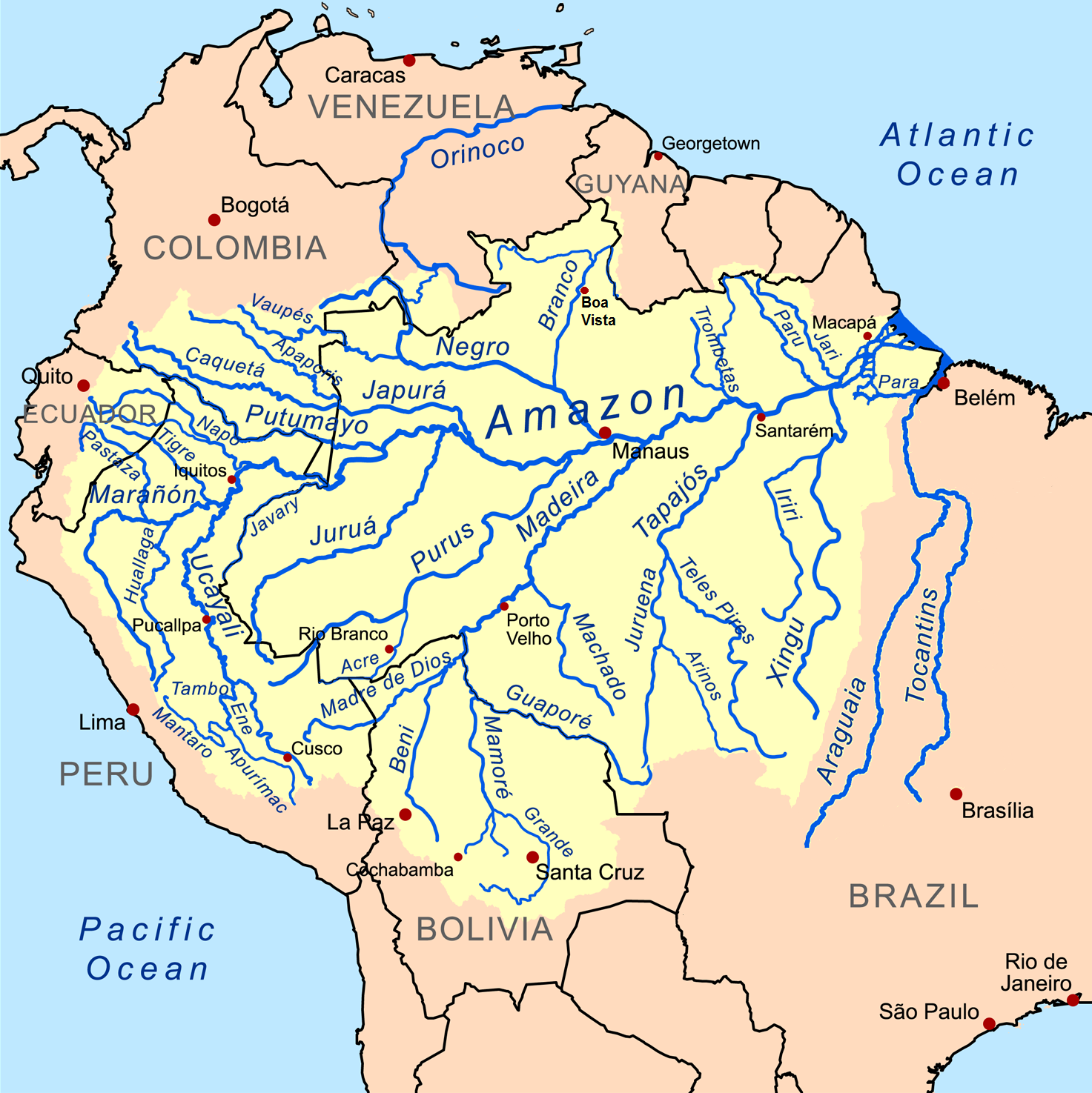
The Amazon Basin, often called the “lungs of the planet,” is a colossal hydrological system that captures rainwater from the Andes to the Atlantic Ocean. Covering roughly 7 million square kilometres—about 40 % of the South American continent—it encompasses dense rainforests, floodplain savannas, and towering mountain foothills. The basin’s centerpiece, the Amazon River, stretches over 6 400 km, making it the second‑longest river on Earth and the largest by discharge, delivering an average of 209 000 m³ s⁻¹ of fresh water to the ocean each second.The region’s climate is equatorial, with annual precipitation exceeding 2 000 mm in many locales, fostering unparalleled biodiversity. More than 10 % of all known species—ranging from jaguars and pink river dolphins to countless insects and epiphytes—call the basin home. Human presence is equally diverse: Indigenous peoples such as the Yanomami, Kayapo, and Asháninka have inhabited the forest for millennia, while burgeoning cities like Manaus, Belém, and Iquitos serve as economic hubs for timber, fisheries, and increasingly, ecotourism.
History/Background
Geologically, the Amazon Basin began forming during the Cretaceous period, when the ancient South American plate collided with the Caribbean plate, creating the Andes and redirecting water flow eastward. Over the past 10 million years, the basin has oscillated between wet and dry phases, shaping its complex mosaic of terra firme forests, varzea floodplains, and igapó black‑water swamps.European contact commenced in the early 16th century, with Spanish explorer Francisco de Orellana becoming the first known European to navigate the entire length of the Amazon River in 1541–1542. The subsequent centuries saw the rise of rubber extraction (the “rubber boom” of the late 1800s to early 1900s), which brought both economic growth and severe exploitation of Indigenous labor. In the mid‑20th century, the construction of the Trans‑Amazonian Highway and the Belo Monte Dam sparked intense debate over development versus conservation. International attention peaked in the 1990s with the Amazonia Summit (1992) and the UN‑Rio Earth Summit (1992), which codified the basin’s global ecological importance and spurred the creation of numerous protected areas.
Key Information
- Area: ~7 million km² (≈ 2.7 million sq mi) - Countries: Brazil (≈ 60 % of basin), Peru, Colombia, Bolivia, Ecuador, Venezuela, Guyana, Suriname, French Guiana - Population: ~30 million people (≈ 15 % of Brazil’s total) - River Length: Amazon River ~6 400 km; major tributaries include the Madeira, Negro, Xingu, Tapajós, and Juruá - Biodiversity: > 40 000 plant species, 2 200 fish species, 1 300 bird species, 430 mammal species - Carbon Storage: Forests store ≈ 100 billion tons of carbon, acting as a critical buffer against climate change - Economic Activities: Sustainable timber, Brazil nut harvesting, fisheries, hydroelectric power (e.g., Itaipu Dam), and growing ecotourism sector - Threats: Deforestation (≈ 17 % loss since 1970), illegal mining, climate‑induced droughts, and infrastructure projects that fragment habitatsSignificance
The Amazon Basin’s influence extends far beyond its geographic boundaries. Its massive carbon sequestration capacity helps regulate global climate, while the continuous release of water vapor fuels atmospheric circulation patterns that affect rainfall in North America, Africa, and even the Indian subcontinent. Ecologically, the basin serves as a living laboratory for evolutionary biology, offering insights into species adaptation and ecosystem resilience.Culturally, the basin is a cradle of Indigenous knowledge systems that have stewarded the forest for thousands of years, providing sustainable practices now being integrated into modern conservation strategies. Economically, the basin underpins Brazil’s export economy through commodities like açaí, cocoa, and timber, while also presenting opportunities for green finance and carbon credit markets.
In the political arena, the Amazon Basin is a focal point of international environmental diplomacy. Agreements such as the Paris Climate Accord and the Amazon Cooperation Treaty Organization (ACTO) reflect a collective acknowledgment that protecting this watershed is essential for planetary health. The basin’s future hinges on balancing development needs with rigorous preservation, making it a barometer for humanity’s ability to coexist with nature.
INFOBOX:
- Name: Amazon Basin
- Type: River drainage basin / tropical rainforest ecosystem
- Date: Formed over the past 10 million years (modern configuration solidified ~2 million years ago)
- Location: Northern South America, spanning Brazil, Peru, Colombia, Bolivia, Ecuador, Venezuela, Guyana, Suriname, and French Guiana
- Known For: Largest tropical watershed, unparalleled biodiversity, critical carbon sink, cultural heritage of Indigenous peoples
TAGS: Amazon River, rainforest, biodiversity, climate change, South America, Indigenous cultures, hydroelectric power, deforestation


