




Overview
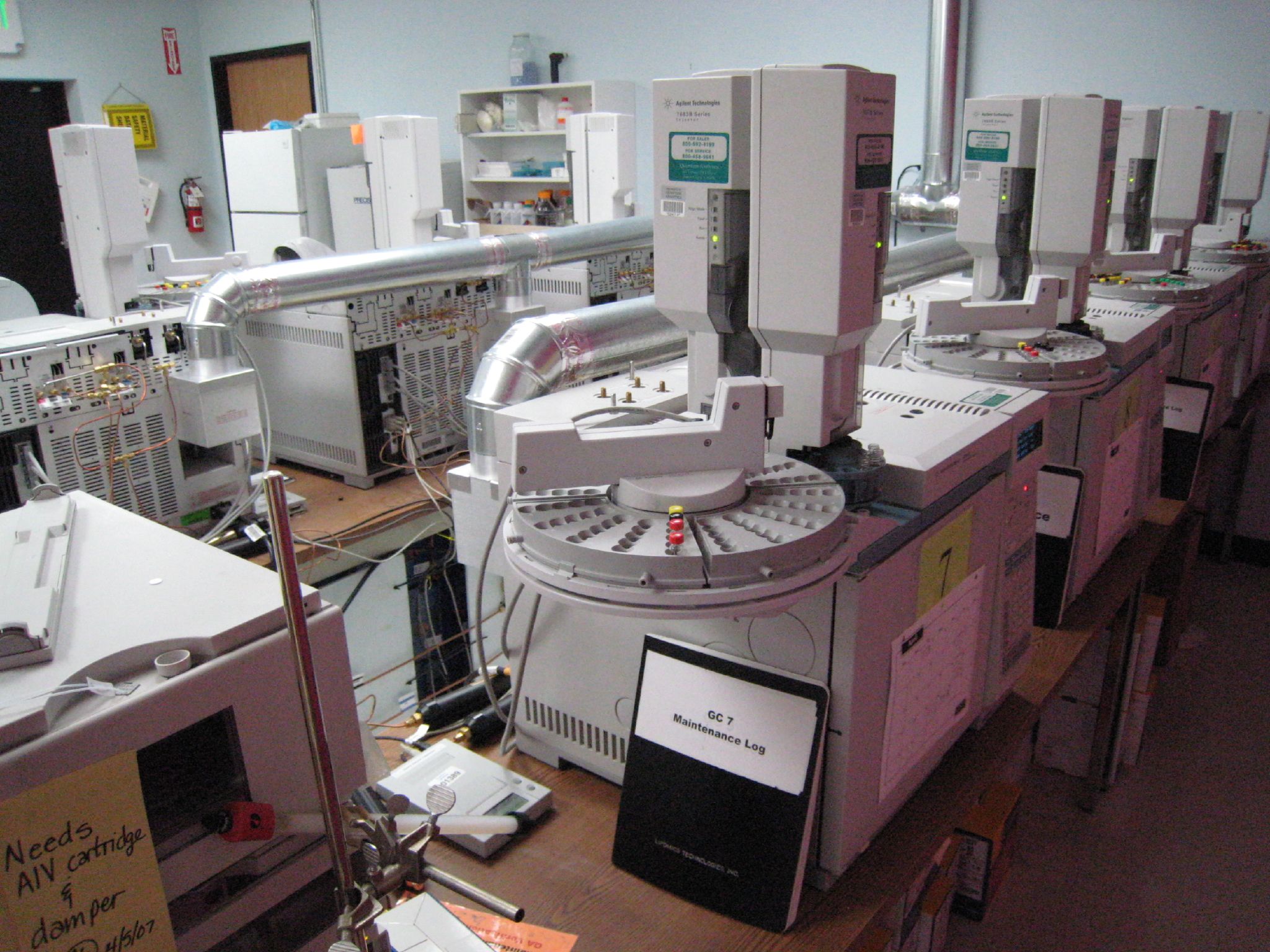
Analytical chemistry is a cornerstone of modern science, bridging theoretical chemistry with practical applications to determine the chemical composition of matter. It addresses two primary objectives: qualitative analysis (identifying what substances are present) and quantitative analysis (measuring how much of each substance exists). This field is vital in industries ranging from pharmaceuticals to environmental monitoring, ensuring product safety, regulatory compliance, and scientific discovery.The discipline employs a blend of traditional wet-chemistry methods—such as titration and gravimetric analysis—and cutting-edge instrumental techniques like chromatography, spectroscopy, and mass spectrometry. For example, gas chromatography-mass spectrometry (GC-MS) can separate and identify volatile compounds in a mixture, while nuclear magnetic resonance (NMR) spectroscopy reveals molecular structures. Analytical chemists also develop new methodologies to tackle emerging challenges, such as detecting trace pollutants in water or analyzing biomarkers in blood.
History/Background
Analytical chemistry’s roots trace back to the 18th century, when scientists like Robert Boyle and Antoine Lavoisier laid the groundwork for systematic chemical analysis. Lavoisier’s 1789 Traité Élémentaire de Chimie standardized quantitative methods, emphasizing precise measurements. The 19th century saw the rise of volumetric analysis, with Karl Friedrich Mohr’s 1855 work on titration establishing foundational protocols.The 20th century revolutionized the field through instrumental innovations. In 1906, J.J. Thomson’s development of mass spectrometry enabled atomic and molecular identification. Chromatography, pioneered by Mikhail Tsvet in 1906 and later refined by Archer Martin (who won the 1952 Nobel Prize), allowed separation of complex mixtures. The 1950s–1970s introduced high-performance liquid chromatography (HPLC) and infrared spectroscopy, while the 21st century has seen advancements in nanoscale analysis and bioanalytical techniques.
Key Information
Analytical chemistry relies on core methodologies: - Chromatography: Separates components based on differential mobility (e.g., gas chromatography, HPLC). - Spectroscopy: Uses light-matter interactions to identify substances (e.g., UV-Vis, IR, NMR). - Electrochemistry: Measures electrical properties, such as pH or ion concentration, via electrodes. - Mass Spectrometry: Determines molecular mass and structure by ionizing samples.Quantitative techniques include gravimetric analysis (measuring mass changes) and volumetric analysis (titration with known reagents). Modern tools like inductively coupled plasma mass spectrometry (ICP-MS) can detect elements at parts-per-trillion (ppt) levels, critical for environmental and forensic studies.
The field also emphasizes analytical validation, ensuring accuracy (closeness to true value), precision (repeatability), and sensitivity (detection limits). For instance, the limit of detection (LOD) for a drug in blood might be 0.1 ng/mL, while the limit of quantification (LOQ) is 0.5 ng/mL.
Significance
Analytical chemistry underpins advancements in healthcare, environmental science, and technology. In medicine, it enables early disease detection via biomarker analysis (e.g., glucose levels in diabetes management). Environmental agencies use it to monitor pollutants like lead in drinking water (U.S. EPA standard: 0.015 mg/L). In forensics, techniques like GC-MS identify trace evidence, such as explosives or narcotics, with high specificity.The field also drives innovation in materials science, ensuring the purity of semiconductors used in electronics and the consistency of pharmaceuticals. For example, the U.S. Food and Drug Administration (FDA) mandates rigorous analytical testing to confirm drug formulations meet 90–110% of labeled potency.



