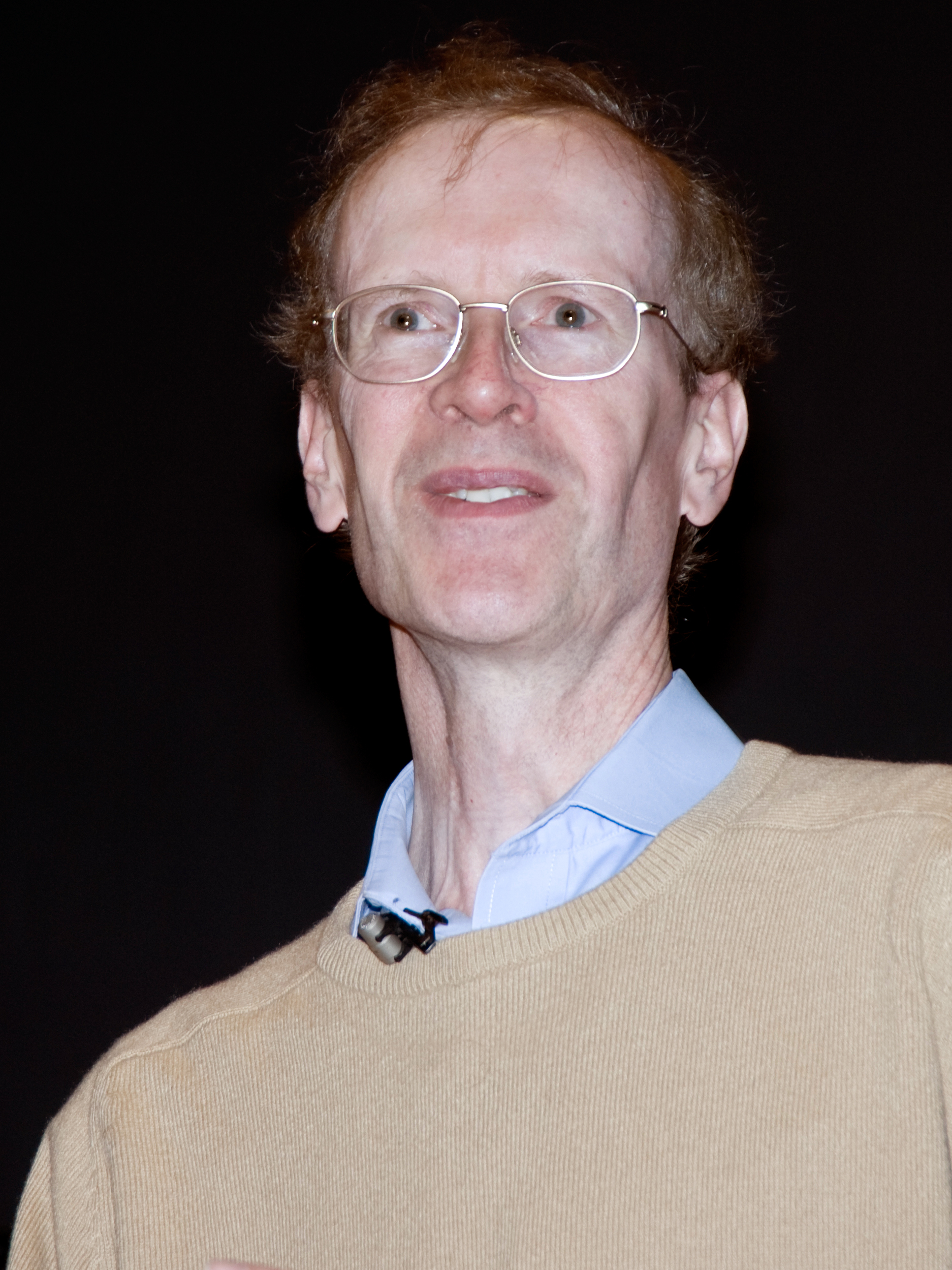
Sir Andrew Wiles is the British number theorist who conquered Fermat’s Last Theorem after a 358-year quest, transforming modern mathematics in the process.
Felix Numbers
Mathematics Editor
11 views3 min readOct 19, 2026
Overview
Andrew Wiles’ name is synonymous with one of the most romantic stories in mathematics: a ten-year secret labor that ended with a 1994 proof of Fermat’s Last Theorem, a statement so simple it can be written in the margin of a book yet so subtle it had eluded the world’s sharpest minds since 1637. His achievement fused two vast continents of mathematics—modular forms and elliptic curves—into a single bridge, the so-called modularity theorem for semistable elliptic curves, and opened new highways between algebraic geometry, representation theory, and Iwasawa theory. Beyond the headline, Wiles has spent four decades cultivating a garden of ideas around special values of L-functions, Galois representations, and the deep anatomy of numbers, guiding a generation of students who now carry the torch.
History/Background
Pierre de Fermat’s tantalizing marginal note—“I have discovered a truly marvelous proof of this, which this margin is too narrow to contain”—seeded centuries of obsession. By the 1980s the problem had been whittled down to a single missing link: prove that every semistable elliptic curve is modular. Wiles, then at Princeton, isolated himself for seven years, working only with his former student Richard Taylor. A 1993 lecture in Cambridge announced victory, but a subtle gap in the Euler system argument emerged; the epilogue required a further year of intense collaboration and a decisive flash of insight—replace the problematic Euler system with an enhanced class-number criterion. On 19 September 1994 the corrected manuscript was complete, closing the book on a 358-year mystery.
Key Information
- Fermat’s Last Theorem: For any integer n > 2, the equation xⁿ + yⁿ = zⁿ has no non-trivial integer solutions. Wiles proved this by establishing the modularity of semistable elliptic curves over ℚ.
- The Modularity Bridge: His main theorem states that every semistable elliptic curve E/ℚ is modular, i.e., its L-function equals the L-function of a weight-2 Hecke eigenform. This implies Fermat via the 1986 ε-conjecture of Frey–Ribet.
- Awards Cascade: 2016 Abel Prize (≈ $700k), 2017 Copley Medal, 1997 MacArthur “genius” Fellowship, 1998 Fields Medal silver plaque (special age exemption), 2000 KBE knighthood, 2018 Regius Chair—the first ever in mathematics at Oxford.
- Institutional Footprint: Royal Society Research Professor at Oxford (2011– ), Princeton professor (1982–2011), founding director of the Oxford Centre for Number Theory (2011).
- Mentorship: 30+ PhD students including Manjul Bhargava, recipient of the 2014 Fields Medal.
Significance
Wiles’ proof did more than settle a historical curiosity; it re-oriented number theory around the Langlands program, showing that hidden symmetries link disparate objects like elliptic curves and modular forms. Techniques he pioneered—deformation theory of Galois representations, Taylor–Wiles patching, and the study of Hecke algebras—have become standard tools, powering proofs of Serre’s conjecture, the Sato–Tate conjecture, and progress toward the Birch–Swinnerton-Dyer conjecture. Public imagination was equally stirred: his story features in documentaries, bestselling books, and even a stage play, turning the phrase “mathematical celebrity” into an oxymoron no more. In classrooms worldwide the narrative of relentless intellectual persistence offers a counterpoint to instant-gratification culture, while the technical edifice he built continues to support the next generation of arithmetic geometers.
Tip: double-click any word in this article for an instant definition from the NerdDictionary.