




Axolotl
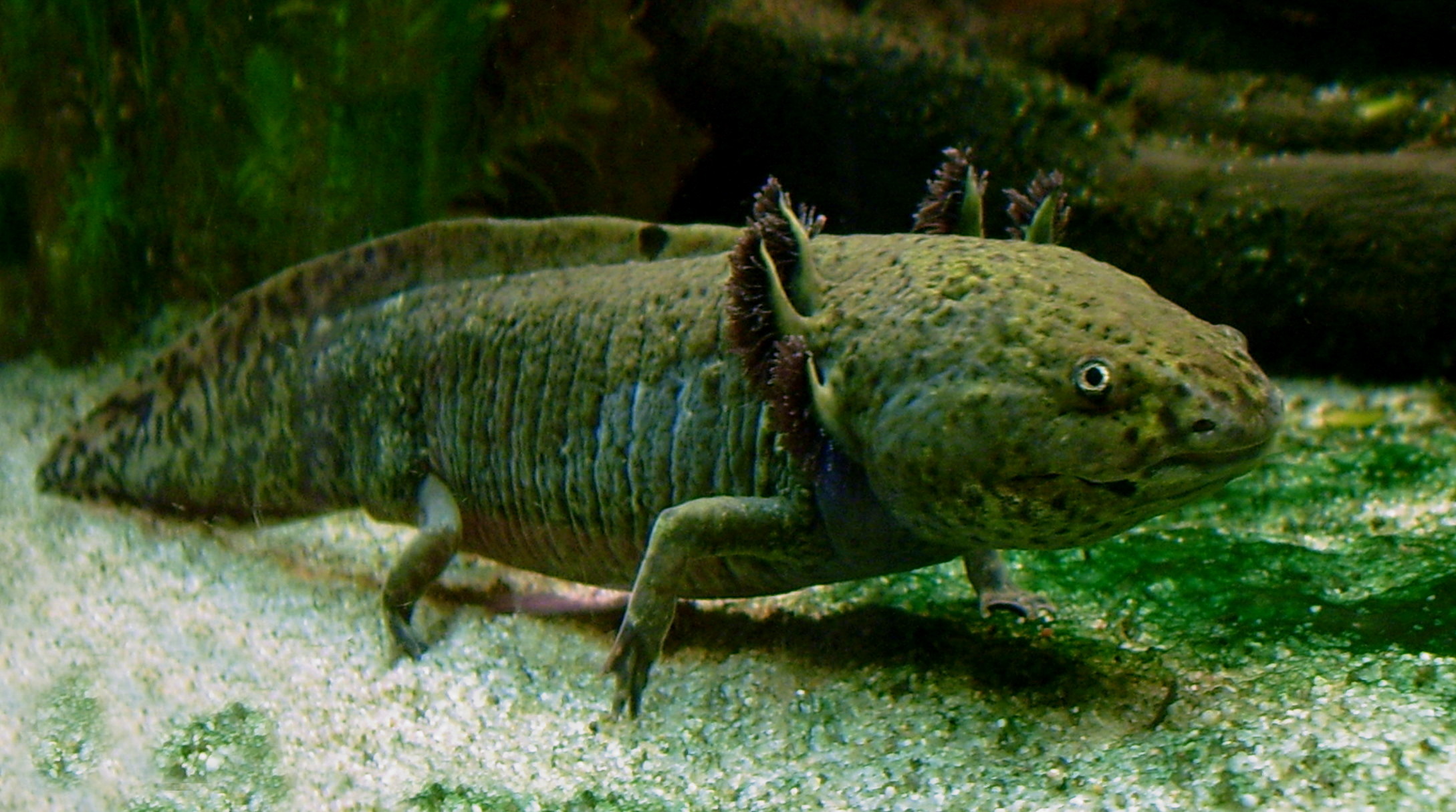
The axolotl (Ambystoma mexicanum) is a species of mole salamander that is native to Mexico and is known for its unique ability to remain in its larval stage throughout its life, a process called neoteny.
The axolotl is a fascinating creature that has captured the imagination of scientists and animal enthusiasts alike. It is a fully aquatic salamander, meaning that it lives its entire life in water, and is characterized by its feathery gills, which it uses to breathe. The axolotl is also known for its ability to regrow its limbs, eyes, and parts of its brain, making it a popular subject of study in the fields of regenerative biology and tissue engineering.
Despite its unique characteristics, the axolotl is facing a number of threats in the wild, including habitat loss, pollution, and overcollection for the pet trade. As a result, conservation efforts are underway to protect this species and its habitat.
Taxonomy and Evolution
The axolotl is a member of the family Ambystomatidae, which includes a number of other mole salamanders. It is thought to have evolved from a terrestrial ancestor that lived in Mexico during the Pleistocene era. The axolotl's unique ability to remain in its larval stage is thought to have evolved as an adaptation to its aquatic environment, where it is able to feed on a variety of aquatic animals and plants.
The axolotl's scientific name, Ambystoma mexicanum, reflects its Mexican origin and its classification as a member of the genus Ambystoma. The genus Ambystoma includes a number of other mole salamanders that are found in North America, including the tiger salamander and the spotted salamander.
Phylogenetic Relationships
The axolotl is thought to be most closely related to the tiger salamander (Ambystoma tigrinum), with which it shares a number of morphological and genetic characteristics. However, the axolotl is distinct from the tiger salamander in a number of ways, including its ability to regrow its limbs and its unique gill structure.
Habitat and Distribution
The axolotl is found in the wild in Mexico, where it inhabits a variety of aquatic environments, including lakes, rivers, and canals. It is thought to have been introduced to other parts of the world, including the United States and Europe, through the pet trade.
In its natural habitat, the axolotl is found in areas with slow-moving water and a soft, muddy substrate. It is a carnivorous species, feeding on a variety of aquatic animals, including insects, crustaceans, and small fish.
Conservation Status
The axolotl is listed as an endangered species by the International Union for Conservation of Nature (IUCN), due to a number of threats in the wild, including habitat loss, pollution, and overcollection for the pet trade. Conservation efforts are underway to protect this species and its habitat, including the establishment of protected areas and the development of sustainable fishing practices.
Biology and Behavior
The axolotl is a unique and fascinating creature that has captured the imagination of scientists and animal enthusiasts alike. It is a fully aquatic salamander, meaning that it lives its entire life in water, and is characterized by its feathery gills, which it uses to breathe.
The axolotl is a carnivorous species, feeding on a variety of aquatic animals, including insects, crustaceans, and small fish. It is also known for its ability to regrow its limbs, eyes, and parts of its brain, making it a popular subject of study in the fields of regenerative biology and tissue engineering.
Regenerative Biology
The axolotl's ability to regrow its limbs, eyes, and parts of its brain has made it a popular subject of study in the fields of regenerative biology and tissue engineering. Scientists are studying the axolotl's regenerative abilities in order to develop new treatments for human injuries and diseases.
Human Interaction
The axolotl has been kept as a pet for many years, and is a popular subject of study in the fields of biology and medicine. However, the axolotl is facing a number of threats in the wild, including habitat loss, pollution, and overcollection for the pet trade.
In addition to its use as a pet, the axolotl is also used in scientific research, including studies of regenerative biology and tissue engineering. The axolotl's unique characteristics make it an ideal subject for these types of studies.
Cultural Significance
The axolotl has a number of cultural and symbolic meanings, including its use as a symbol of regeneration and renewal in Mexican culture. The axolotl is also a popular subject of art and literature, and has been featured in a number of works of fiction.
INFOBOX:
- Name: Axolotl (Ambystoma mexicanum)
- Type: Mole salamander
- Date: Native to Mexico
- Location: Mexico, introduced to other parts of the world
- Known For: Unique ability to regrow its limbs, eyes, and parts of its brain
TAGS: Axolotl, mole salamander, neoteny, regenerative biology, tissue engineering, conservation, endangered species, Mexico, aquatic animal, carnivorous species, carnivorous salamander.


