
Overview
Rising from the northern Ethiopian highlands in the early centuries CE, the Kingdom of Aksum fused African and South-Arabian traditions into a dynamic commercial and cultural force. Its rulers commanded armies across the Red Sea, minted gold and silver coins that circulated from India to Spain, and erected monolithic stelae whose engineering still puzzles archaeologists. At its zenith (3rd–7th centuries CE) Aksum controlled territories stretching from the Nubian frontier to the Yemenite highlands, channeling ivory, frankincense, and African captives toward Mediterranean and Persian Gulf markets.Aksum’s adoption of Christianity around 340 CE under King Ezana forged a national church whose liturgy in Geʿez, the kingdom’s written language, still underpins modern Ethiopian Orthodoxy. Long-distance trade, monumental architecture, and a literate court elite gave Aksum a profile more akin to contemporary Rome or Persia than to stereotypical “sub-Saharan” polities, challenging outdated notions of African isolation.
History/Background
Aksum emerges archaeologically atop the earlier Dʿmt polity (c. 8th–5th c. BCE) and Sabaean commercial colonies. By the 1st century CE, the port of Adulis (near modern Massawa) linked the highland capital to Roman Egypt and India; the Periplus of the Erythraean Sea already lists “Zoskales” of Aksum as a shrewd merchant king. Under kings Endubis (c. 270–300) and Ezana (fl. 320s–360s) the realm expanded into Sudanese Alodia and Yemen, using a fleet of sewn-plank vessels and war elephants.Aksum’s Yemenite wars (3rd–6th c.) opened access to Indian Ocean tariffs but also brought conflict with Himyarite Jews and Sasanian Persia. The 7th-century Muslim conquests closed Red Sea routes, while Beja and Bedouin raids sapped royal revenues. Capital shifted south to Kubar (c. 9th c.) and the court fragmented into rival highland kingdoms; yet the Zagwe and later Solomonic dynasties claimed Aksumite descent, preserving its ecclesiastical and imperial traditions.
Key Information
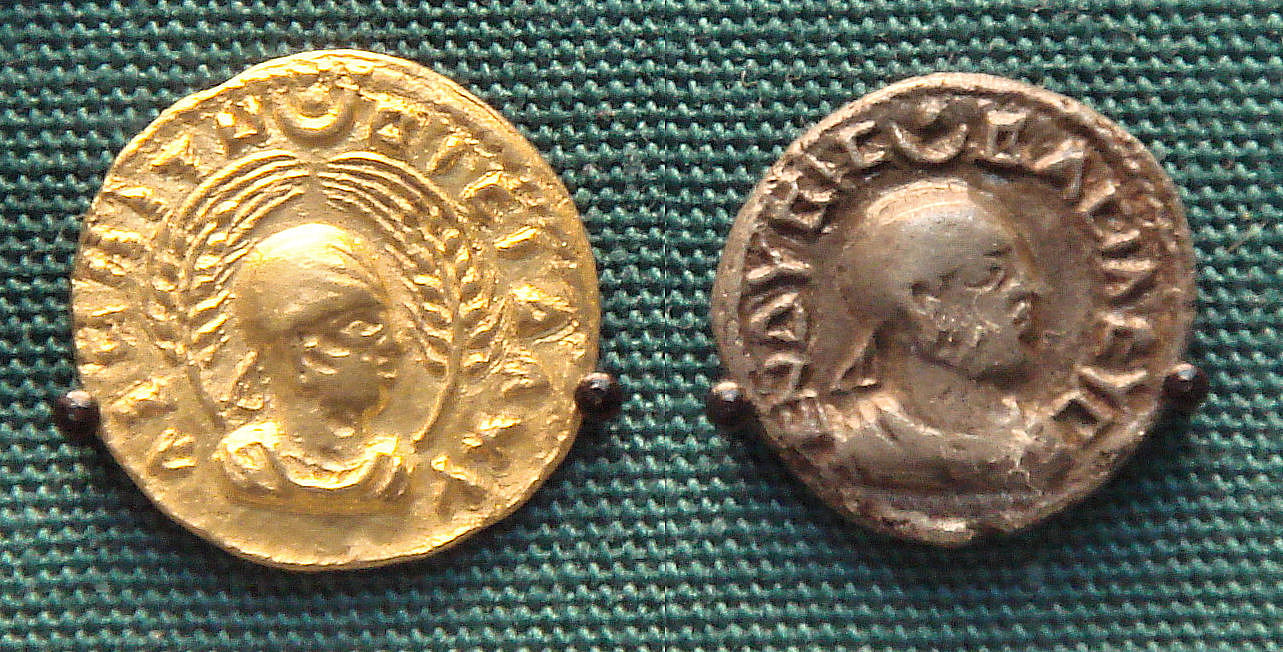
• Monetary economy: Aksum was the first sub-Saharan state to mint its own coins—gold, silver, and bronze—bearing kings’ effigies and, after Ezana, the Cross. Hoards found in India and Sri Lanka testify to commercial reach. • Engineering marvels: The 33-m “Great Stele” and other obelisks, carved to resemble multi-storied palaces, weigh over 500 t; quarrying and erecting them required iron tools, timber sledges, and earthen ramps. • Literacy & law: Geʿez, written in a modified South-Arabian script, produced royal inscriptions, land charters, and the 6th-century Aksumite collection of ecclesiastical canons. • Religious pivot: Syrian missionaries Frumentius and Edesius converted King Ezana; the dynasty adopted Christianity decades before Rome’s official toleration, making Ethiopia the second oldest Christian realm after Armenia. • Global diplomacy: Aksum sent embassies to Byzantium (c. 350) and Persia, sheltered early Muslim refugees (615 CE), and received Byzantine gifts of relics and craftsmen, underscoring its intercontinental stature.Significance
Aksum reshaped Afro-Eurasian networks by funneling African commodities into Mediterranean and Indian circuits, while its coinage offered a stable medium for Red Sea exchange. Its Christianization created a non-Chalcedonian church that insulated Ethiopia from later Islamic expansion yet fostered unique liturgical arts—crosses, illuminated manuscripts, and rock-hewn churches. Architecturally, the stelae anticipate medieval European monoliths, and the 6th-century palace of Taʾakha Maryam reveals basilica-style halls and bath-fed gardens, blending Roman, Arabian, and local motifs.Modern Ethiopia and Eritrea invoke Aksum as a symbol of African achievement and religious continuity; the Ark of the Covenant tradition at Aksum’s cathedral of St. Mary of Zion links contemporary faith to an imperial past. For historians, Aksum dismantles the myth of Africa lacking complex states, demonstrating instead a literate, maritime empire whose legacy persists in language, faith, and national identity.