



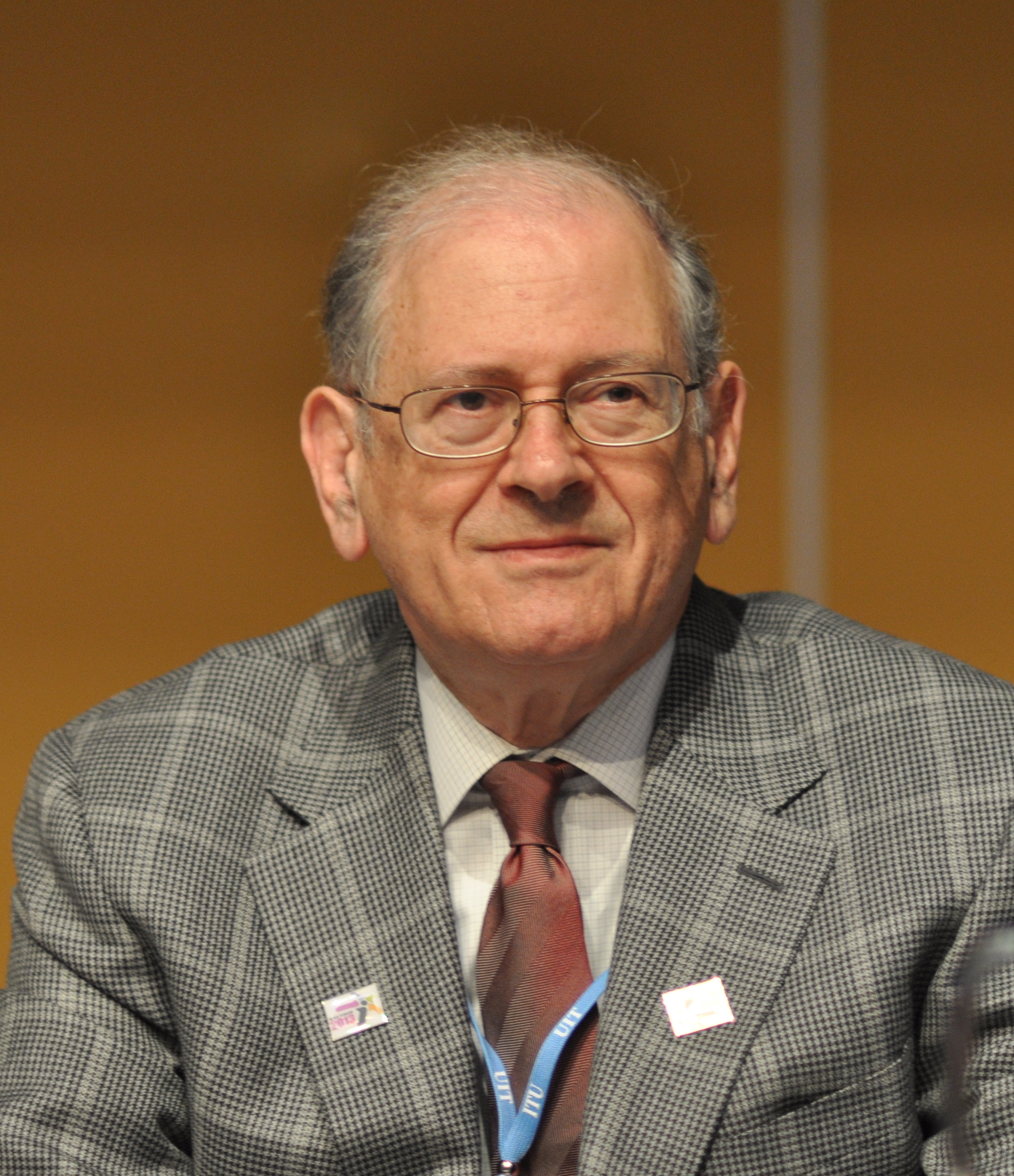

**
Overview
Robert Elliot Kahn, commonly known as Bob Kahn, is a pioneering figure in computer networking whose work laid the technical groundwork for the global Internet. Born on December 23 1938 in Brooklyn, New York, Kahn earned a B.S. in electrical engineering from City College of New York (1960) and an M.S. from Princeton University (1962). After a stint at the Institute for Defense Analyses, he joined the U.S. Department of Defense’s Advanced Research Projects Agency (ARPA), where he would meet his future collaborator, Vint Cerf. Together they authored the seminal TCP/IP specification in 1974, a set of protocols that abstracted network communication into a flexible, layered model. Their design enabled disparate computer systems to interoperate, turning a collection of isolated research networks into a single, routable “network of networks.”
Kahn’s influence extends beyond the original protocol design. He served as the first Director of the Internet Architecture Board (IAB), guided the development of early Internet standards, and later became a senior vice president at MCI and a senior advisor at Google. His career reflects a rare blend of deep technical insight and strategic vision, helping to steer the Internet from a government‑funded experiment to a commercial and societal cornerstone.
History/Background
- Early career (1960‑1972): After graduate school, Kahn worked on digital signal processing and satellite communications at the Bell Telephone Laboratories and later at ARPA’s Information Processing Techniques Office (IPTO). During this period he contributed to the ARPANET project, the first packet‑switching network, which demonstrated that data could be broken into packets and routed independently. - Collaboration with Vint Cerf (1973‑1978): In 1973, Kahn tasked Cerf with designing a host‑to‑host protocol for the ARPANET. Their joint paper, “A Protocol for Packet Network Interconnection,” presented the Transmission Control Program, later split into TCP (reliable transport) and IP (addressing/routing). The TCP specification (RFC 675) was published in December 1974, and the IP specification (RFC 791) followed in September 1981. - Standardization and deployment (1979‑1990): Kahn chaired the Internet Activities Board (IAB), overseeing the transition of TCP/IP from research labs to the broader academic community. By January 1 1983, the U.S. Department of Defense mandated TCP/IP as the standard protocol for all ARPANET hosts, a watershed moment that accelerated global adoption. - Later career (1990‑present): Kahn co‑founded Corporation for National Research Initiatives (CNRI), served as President of the Internet Society (ISOC) (1992‑1995), and later joined MCI as Vice President of Network Services. In 2004, he joined Google as a senior advisor, focusing on Internet architecture and policy.Key Information
- Full name: Robert Elliot Kahn - Born: December 23 1938, Brooklyn, New York, USA - Education: B.S. Electrical Engineering – City College of New York (1960); M.S. Electrical Engineering – Princeton University (1962) - Major achievements: Co‑inventor of TCP/IP; First Director of the Internet Architecture Board; Co‑founder of CNRI; President of the Internet Society (1992‑1995) - Awards: 1997 Turing Award (with Vint Cerf); 2002 National Medal of Technology; 2004 Presidential Medal of Freedom (awarded 2024) - Publications: “A Protocol for Packet Network Interconnection” (1974); numerous RFCs (e.g., RFC 675, RFC 791) and scholarly articles on networking and security. - Patents: Holds several patents related to packet switching, network routing, and secure communications.Significance
Bob Kahn’s work is the backbone of every digital interaction today—from streaming video to financial transactions, from remote surgery to the Internet of Things. By abstracting network communication into a layered protocol suite, TCP/IP made it possible for any device with an IP address to communicate, regardless of hardware or operating system. This universality spurred the explosive growth of the World Wide Web in the 1990s and enabled the globalization of information.Kahn’s vision of an open, interoperable network also shaped Internet governance. As the first IAB director, he championed open standards, decentralized control, and collaborative development, principles that continue to guide bodies like the Internet Engineering Task Force (IETF). His advocacy for network neutrality and privacy has informed policy debates worldwide.
Beyond technology, Kahn’s legacy is cultural: he helped transform the Internet into a public utility, democratizing access to knowledge and fostering new economic models. The TCP/IP stack remains remarkably resilient; even as new protocols (e.g., QUIC, IPv6) evolve, they build directly on Kahn’s original design. In short, without Bob Kahn’s contributions, the modern digital age—as we know it—would not exist.
INFOBOX:
- Name: Robert Elliot Kahn
- Type: Electrical Engineer / Internet Pioneer
- Date: Born December 23 1938 (key milestones: 1974 TCP proposal, 1983 TCP/IP adoption)
- Location: United States (Brooklyn, New York)
- Known For: Co‑inventor of TCP/IP, architect of the modern Internet
TAGS: Internet, TCP/IP, Vint Cerf, Networking, Computer Science, ARPANET, Turing Award, Internet Architecture Board


