




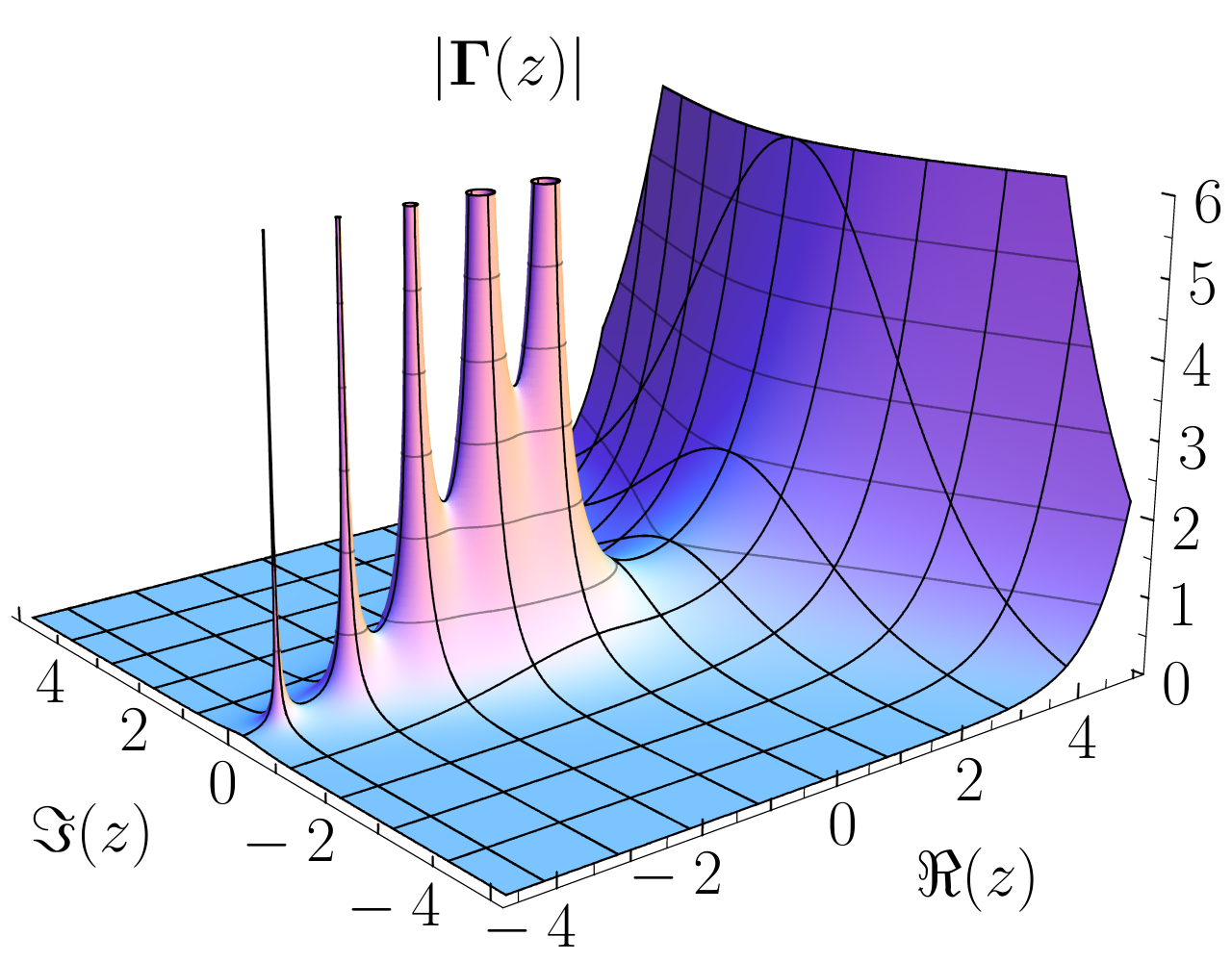
Overview
Complex analysis, the study of functions involving complex numbers, extends calculus to the complex plane, unlocking tools to solve problems intractable with real-number methods. Central to this field are holomorphic functions (complex-differentiable functions), which satisfy the Cauchy-Riemann equations and exhibit remarkable properties like infinite differentiability and representation by power series. Key techniques include contour integration, residue calculus, and conformal mappings, which preserve angles and are vital in modeling fluid flow and electromagnetic fields.The field bridges pure and applied mathematics. For instance, the residue theorem simplifies real integrals by evaluating complex contours, while analytic continuation extends functions like the Riemann zeta function, pivotal in number theory. Applications span physics (quantum mechanics, aerodynamics) and engineering (signal processing, control systems), demonstrating its versatility.
History/Background
The roots of complex analysis trace back to the 16th century, when Italian mathematician Gerolamo Cardano began using imaginary numbers to solve cubic equations. However, the formal development emerged in the 18th and 19th centuries. Leonhard Euler (1707–1783) laid foundational work, introducing complex exponentials and Euler’s formula $ e^{i\theta} = \cos\theta + i\sin\theta $.The 19th century saw explosive growth. Augustin-Louis Cauchy (1789–1857) formulated the Cauchy integral theorem (1814) and Cauchy integral formula, establishing rigorous methods for complex integration. Bernhard Riemann (1826–1866) revolutionized the field with his 1851 dissertation on complex functions, introducing Riemann surfaces to visualize multi-valued functions. Karl Weierstrass (1815–1897) later provided an alternative approach using power series, solidifying the field’s analytical rigor.


