Absolute Magnitude
Absolute magnitude is an astronomical measure of a celestial object’s intrinsic brightness, standardized to a uniform distance for direct luminosity comparisons.




Formulas, theorems, mathematicians and mathematical concepts

Absolute magnitude is an astronomical measure of a celestial object’s intrinsic brightness, standardized to a uniform distance for direct luminosity comparisons.

Abstract algebra is a branch of mathematics that studies algebraic structures such as groups, rings, and fields, focusing on their properties and relationships.

** Actuarial mathematics is the branch of applied mathematics that uses probability, statistics, and financial theory to evaluate and manage risk in insurance, pensions, finance, and a growing array of other fields. **CONTENT:** ## Overview Actuarial mathematics blends **probability theory**, **stochastic processes**, and **financial economics** to quantify uncertain future events—most commonly the timing and magnitude of insurance claims, pension benefits, or investment returns. At its core lies the **actuarial present value** (APV), the expected discounted value of a random cash flow: \[ \text{APV}=E\!\left[\sum_{t=1}^{\infty} \frac{C_t}{(1+i)^t}\right], \] where \(C_t\) denotes the random payment at time \(t\) and \(i\) is the assumed interest rate. By modeling \(C_t\) with appropriate probability distributions (e.g., Poisson for claim counts, log‑normal for loss severity), actuaries can construct **loss reserves**, price insurance premiums, and design **pension funding strategies** that remain solvent under a wide range of scenarios. Beyond traditional insurance, modern actuaries apply these tools to **healthcare analytics**, **climate risk**, **cyber‑security insurance**, and even **behavioral economics**. The discipline’s hallmark is its rigorous blend of **theoretical mathematics** with **real‑world data**, producing quantitative insights that guide corporate governance, regulatory compliance, and public policy. ## History/Background The roots of actuarial mathematics trace back to the 17th‑century **life tables** of John Graunt and Edmond Halley, who first estimated mortality rates from parish records. In 1762, **James Dodson** proposed the first scientific method for life insurance pricing, laying groundwork for the **Society for Equitable Assurances on Lives and Survivorships** (the “Equitable”) founded in 1762—often cited as the world’s first mutual life insurer. The 19th century saw the formalization of **probability theory** by Laplace and the introduction of the **compound Poisson process** by de Finetti, which became essential for modeling aggregate claims. The establishment of the **Institute of Actuaries** in London (1848) and the **American Society of Actuaries** (1949) institutionalized professional standards and education. A pivotal moment arrived in the 1970s with the advent of **financial economics**: the **Black‑Scholes‑Merton** option pricing model (1973) and the **Capital Asset Pricing Model** (CAPM) provided a bridge between actuarial liability valuation and market‑based discounting. This era birthed **modern actuarial science**, integrating stochastic calculus, Monte Carlo simulation, and dynamic financial analysis (DFA). In the 21st century, big data, machine learning, and climate modeling have expanded the actuarial toolkit, prompting new specializations such as **enterprise risk management (ERM)** and **actuarial data science**. ## Key Information - **Core Models:** Survival models (e.g., Gompertz, Makeham), loss distribution approach (LDA), credibility theory, and stochastic differential equations for asset‑liability modeling. - **Regulatory Frameworks:** Solvency II (EU), Risk‑Based Capital (RBC) in the U.S., and International Financial Reporting Standard 17 (IFRS 17) dictate how actuarial valuations are reported and capitalized. - **Professional Credentials:** Designations such as **Fellow of the Society of Actuaries (FSA)**, **Chartered Enterprise Risk Analyst (CERA)**, and **Fellow of the Institute and Faculty of Actuaries (FIA)** certify mastery of actuarial mathematics. - **Software & Tools:** R, Python, SAS, and specialized platforms like **Moody’s Analytics** and **Prophet** enable large‑scale simulations and scenario testing. - **Key Achievements:** Development of the **actuarial present value** formula, creation of **risk‑adjusted discount rates**, and pioneering of **dynamic solvency testing** that allows insurers to assess capital adequacy under stressed market conditions. ## Significance Actuarial mathematics underpins the financial stability of societies by ensuring that **insurance contracts** are priced fairly, **pension plans** remain funded, and **financial institutions** can withstand catastrophic losses. Its quantitative rigor supports **regulatory oversight**, protecting policyholders from insolvency and fostering public confidence in risk‑transfer mechanisms. The discipline’s influence extends to **public health**, where actuarial models forecast disease incidence and guide vaccination strategies, and to **environmental policy**, where climate‑risk actuarial assessments inform the pricing of catastrophe bonds and the design of resilient infrastructure. By translating uncertainty into measurable metrics, actuarial mathematics enables decision‑makers to allocate capital efficiently, price risk accurately, and design products that balance profitability with social welfare. **INFOBOX:** - Name: Actuarial Mathematics - Type: Applied Mathematical Discipline - Date: Originated in the 17th century (formalized 1762) - Location: Global (major hubs in London, New York, Tokyo, Sydney) - Known For: Quantitative assessment of risk for insurance, pensions, and finance **TAGS:** actuarial science, risk management, insurance mathematics, pension funding, stochastic modeling, financial economics, solvency regulation, actuarial data science

Actuarial science is a mathematical discipline that quantifies financial risk across industries, enabling informed decision-making through statistical analysis and predictive modeling.
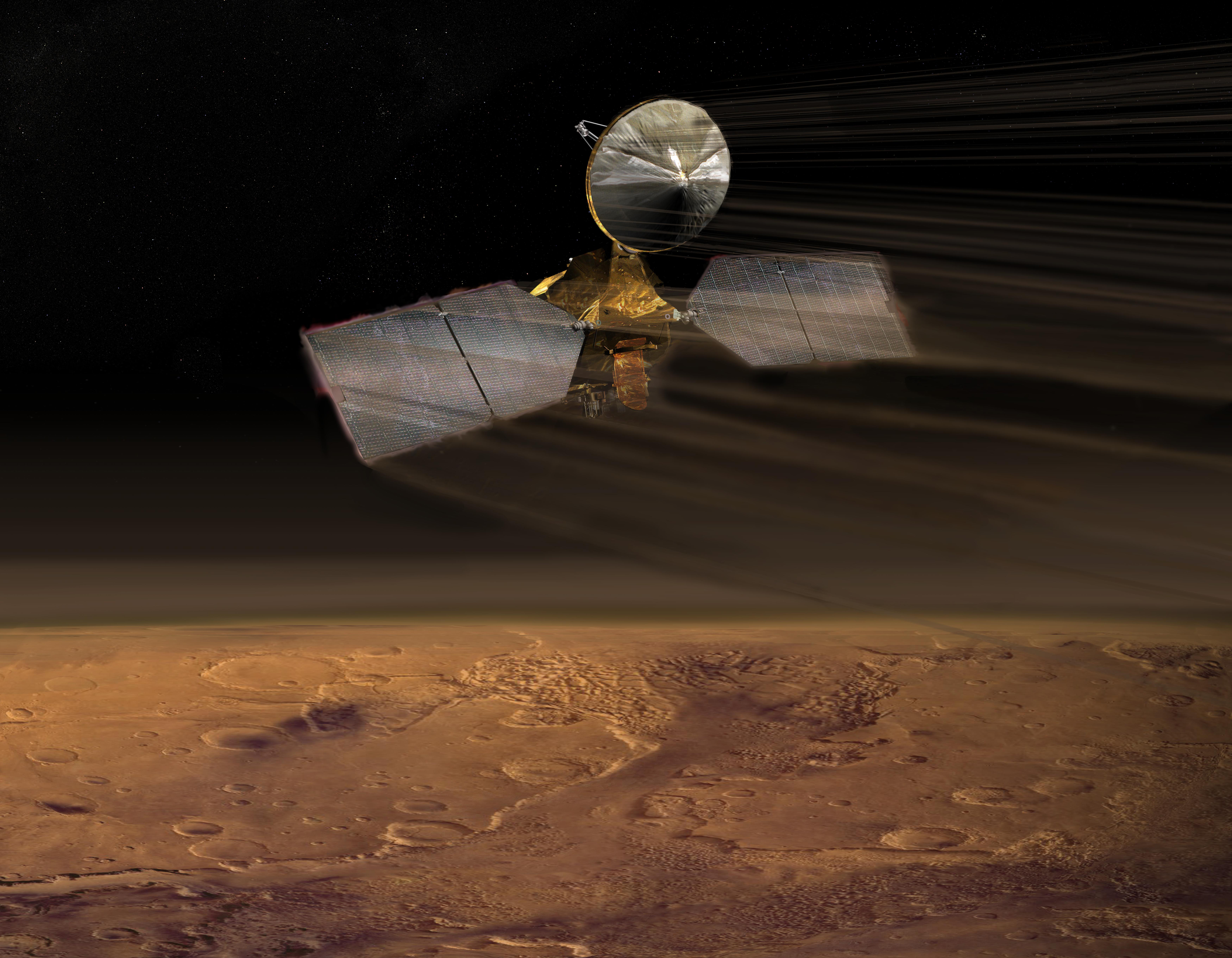
Aerobraking is a spaceflight maneuver that utilizes atmospheric drag to slow down a spacecraft and reduce its orbit, requiring less fuel than traditional propulsion methods. ## Overview Aerobraking is a crucial technique used in space exploration to reduce the high point of an elliptical orbit, making it possible for spacecraft to enter a stable, low-orbit trajectory around a celestial body with an atmosphere. This maneuver involves flying the spacecraft through the atmosphere at the low point of its orbit (periapsis), where atmospheric drag slows it down, gradually reducing its orbital velocity. By exploiting the atmospheric drag, aerobraking allows spacecraft to achieve a lower orbit without expending large amounts of fuel, which would be necessary using traditional propulsion methods. Aerobraking is often used when a spacecraft requires a low orbit after arriving at a body with an atmosphere, such as a planet or moon. This technique is particularly useful for spacecraft that need to enter a stable orbit for scientific research, communication, or exploration purposes. By reducing the high point of the orbit, aerobraking enables spacecraft to achieve a more stable and efficient orbit, which is essential for extended missions. ## History/Background The concept of aerobraking dates back to the 1960s, when NASA scientists first proposed using atmospheric drag to slow down spacecraft. However, it wasn't until the 1990s that aerobraking became a viable technique for space exploration. The first successful aerobraking mission was the Mars Global Surveyor (MGS), which entered orbit around Mars in 1997. The MGS spacecraft used aerobraking to reduce its orbit from 6,500 km to 350 km, demonstrating the effectiveness of this technique. Since then, aerobraking has been used in several space missions, including the Mars Reconnaissance Orbiter (MRO) and the Mars Science Laboratory (Curiosity Rover). These missions have successfully utilized aerobraking to enter stable orbits around Mars, enabling scientists to conduct extensive research and exploration. ## Key Information - **Key Dates:** 1960s (concept proposal), 1990s (first successful mission), 1997 (Mars Global Surveyor) - **Orbit Reduction:** Aerobraking can reduce the high point of an elliptical orbit by up to 90% - **Fuel Savings:** Aerobraking can save up to 90% of fuel compared to traditional propulsion methods - **Atmospheric Conditions:** Aerobraking requires a specific atmospheric density and temperature profile to be effective - **Spacecraft Design:** Aerobraking requires a spacecraft design that can withstand atmospheric drag and heat generated during entry ## Significance Aerobraking has revolutionized space exploration by providing a fuel-efficient method for entering stable orbits around celestial bodies with atmospheres. This technique has enabled scientists to conduct extensive research and exploration on Mars and other planets, expanding our understanding of the solar system. Aerobraking has also opened up new possibilities for space missions, allowing spacecraft to enter orbits that were previously inaccessible. INFOBOX: - Name: Aerobraking - Type: Spaceflight maneuver - Date: 1960s (concept proposal), 1990s (first successful mission) - Location: Various celestial bodies with atmospheres (Mars, Venus, etc.) - Known For: Fuel-efficient method for entering stable orbits around celestial bodies with atmospheres TAGS: Spaceflight, Aerodynamics, Atmospheric Science, Space Exploration, Mars Exploration, Planetary Science, Spacecraft Design, Orbital Mechanics

The Alcubierre drive is a theoretical faster-than-light travel concept that manipulates spacetime by contracting space ahead of a spacecraft and expanding it behind, proposed in 1994 by physicist Miguel Alcubierre as a solution to Einstein’s field equations.
Algebra, the cornerstone of modern mathematics, generalizes arithmetic through variables and abstract structures, enabling solutions to complex problems across science, engineering, and economics.

Algebraic geometry is a mathematical discipline that studies the solutions of polynomial equations through geometric and algebraic methods, bridging abstract algebra with geometric intuition.
Analytic geometry, or coordinate geometry, is the study of geometric properties using coordinate systems, bridging algebra and geometry through equations and coordinates.
Antitrust law is a legal framework designed to prevent anti-competitive practices, promote fair market competition, and protect consumers from monopolistic abuses.

Apparent magnitude quantifies the observed brightness of celestial objects from Earth, influenced by their intrinsic luminosity, distance, and light absorption by interstellar or atmospheric material.
A global survey of how mathematics fuels innovation, solves problems, and enriches societies through diverse real‑world applications.
**Applications** refers to the practical uses and implementations of mathematical concepts, theories, and models in various fields, including science, engineering, economics, and social sciences.
Applications refer to the practical uses and implementations of mathematical concepts, theories, and models in various fields, including science, engineering, economics, and social sciences.
Applications refer to the practical uses and implementations of mathematical concepts, theories, and techniques in various fields, including science, engineering, economics, and more.