
Overview
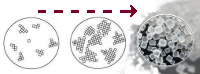
Crystallization is a fundamental process in nature and industry, resulting in solids with a highly ordered, repeating atomic or molecular structure. Unlike amorphous solids (e.g., glass or rubber), crystalline materials exhibit long-range order, giving them distinct physical properties such as cleavage planes, defined melting points, and anisotropic behavior. This transformation occurs through various mechanisms, including precipitation from solution, freezing of a liquid, or deposition from a gas (e.g., sublimation). The process is governed by thermodynamics and kinetics, with the final crystal structure depending on conditions like cooling rate, solute concentration, and impurity levels.Crystallization plays a critical role in both natural and synthetic systems. For example, snowflakes form through vapor deposition, while salt crystals emerge from evaporated seawater. In industrial settings, crystallization is vital for producing pharmaceuticals, semiconductors, and food products. The quality of the resulting crystal—its size, purity, and shape—can drastically affect the performance of the final material.
History/Background
The study of crystallization dates back to ancient civilizations, which observed natural crystals like quartz and used evaporation to harvest salts. However, systematic scientific inquiry began in the 17th century. Robert Boyle (1627–1691) conducted early experiments on crystallization from solutions, documenting how solubility and temperature influence solid formation. In the 19th century, René Just Haüy proposed that crystals are built from repeating unit cells, laying the foundation for modern crystallography.A pivotal moment came in 1912, when Max von Laue demonstrated that X-rays could diffract off crystals, revealing their atomic structure. This discovery, later refined by the Bragg父子 (William Henry and William Lawrence Bragg), enabled scientists to determine crystal lattices at the atomic level. The International Union of Crystallography was founded in 1949 to standardize research in the field.
Key Information
- Types of Crystallization: Primary crystallization forms the initial solid phase (e.g., ice from water), while secondary crystallization involves further growth or phase changes. - Nucleation and Growth: Crystallization begins with nucleation, where clusters of molecules form stable nuclei. Growth occurs as these nuclei attract more molecules. Slow cooling or evaporation typically yields larger, well-formed crystals. - Industrial Applications: Over 50% of pharmaceuticals are crystalline, with purity and polymorphism (multiple crystal structures of the same compound) directly impacting drug efficacy. - Natural Examples: Diamonds form under high-pressure conditions deep in Earth’s mantle, while basalt columns in places like the Giant’s Causeway result from slow cooling of lava. - Measurement: Crystal quality is assessed using techniques like X-ray diffraction, differential scanning calorimetry (DSC), and optical microscopy.Significance
Crystallization underpins advancements in material science, chemistry, and engineering. In technology, silicon wafers for semiconductors require near-perfect single crystals to ensure electronic performance. In energy, perovskite solar cells rely on precise crystallization for efficiency. The process also shapes Earth’s geology, forming minerals that store carbon and influence tectonic activity.Economically, crystallization is a cornerstone of the $1.2 trillion global pharmaceutical industry, where controlling crystal morphology ensures consistent drug dosing. Environmentally, understanding ice crystal formation in clouds aids climate modeling. The legacy of crystallization research extends to space exploration, as NASA studies crystal growth in microgravity to improve materials for satellites and spacecraft.