Overview
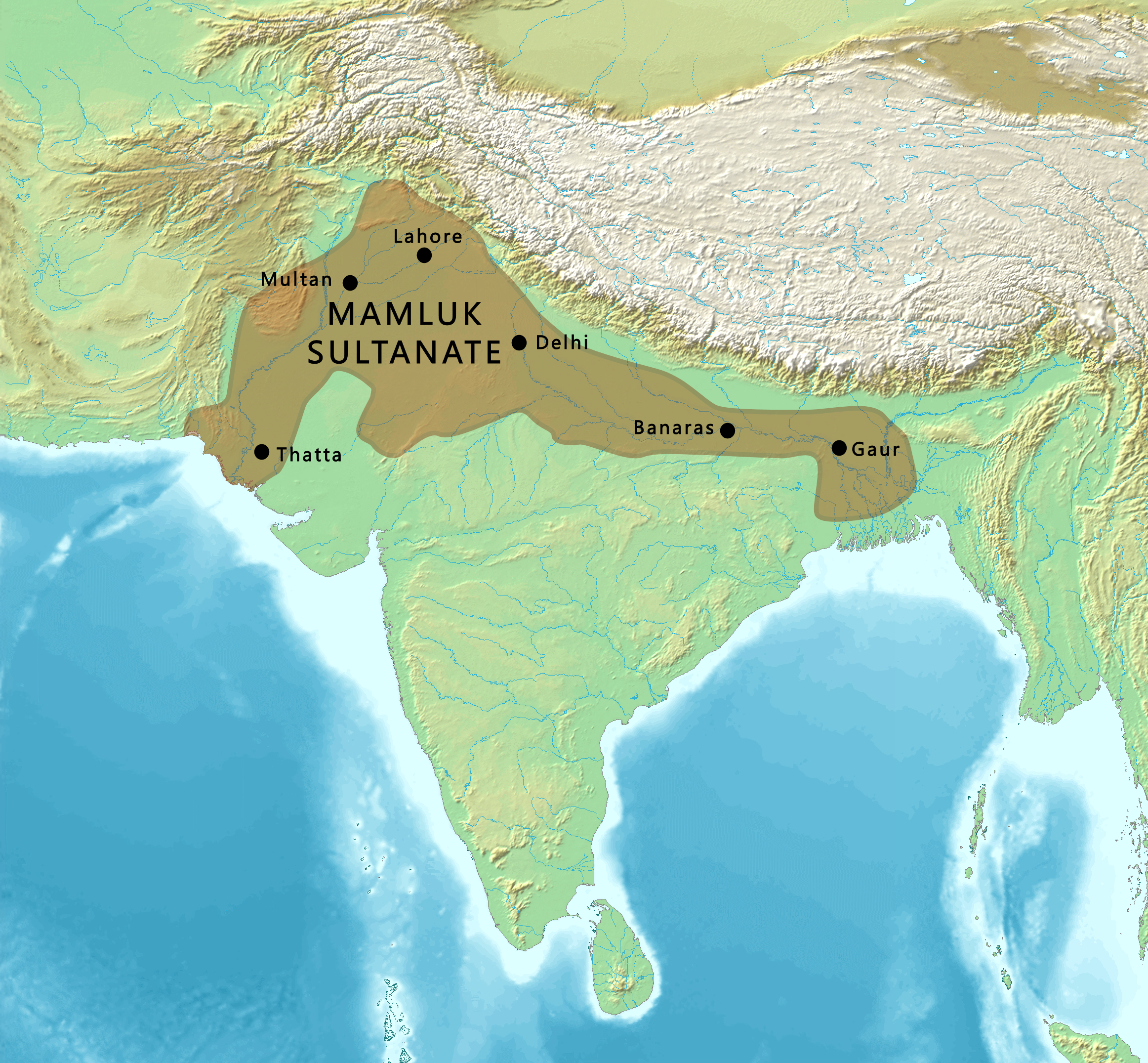
The Delhi Sultanate was not a single dynasty but a 320-year period during which five successive Turkic and Afghan houses—Mamluk, Khalji, Tughlaq, Sayyid and Lodi—used Delhi as their capital to project power across the Indo-Gangetic plain and, at moments, from the Deccan plateau to the foothills of the Himalaya. Though Persian-speaking sultans claimed universal sovereignty, their realm remained a mosaic of crown lands, tributary rajas, and semi-autonomous iqtaʿ holders. By integrating Islamic political idioms with Indian fiscal and military practices, the Sultanate created a hybrid administrative culture that outlived every individual ruler and prepared the ground for the later Mughal synthesis.Geographically, the Sultanate’s core lay in the upper Gangetic doab, the fertile wedge between the Yamuna and Ganga whose surplus grain and trade routes financed monumental architecture, cavalry armies, and a literate bureaucracy. From this corridor the sultans pushed southward, briefly planting token garrisons in Madurai and Warangal, while fending off Mongol incursions from the north-west and rebellions by Rajput lineages within the interior. The result was a polity that was territorially elastic—sometimes shrinking to little more than the Delhi–Lahore axis, at other times stretching to the Godavari river—but always culturally expansive, disseminating Persian as the language of record, coining the silver tanka that became the subcontinent’s standard currency, and sponsoring a new Indo-Islamic architectural vocabulary of arches, domes and minarets.
History/Background
The Sultanate’s roots lie in the Ghurid expansion of the 1190s, when the Afghan warlord Muʿizz al-Din Muhammad Ghuri defeated the Rajput confederacy at Tarain (1192) and installed former slave-commander Qutb al-Din Aibak as viceroy in Delhi. After Ghuri’s assassination (1206) Aibak declared independence, inaugurating the Mamluk or “Slave” dynasty. Mamluk sultans consolidated the conquest by demolishing Hindu temples, re-using their stonework for mosques such as Delhi’s Quwwat al-Islam, and granting iqtaʿs to mounted archers who collected land-revenue in exchange for cavalry service. Internal factionalism and the Mongol irruptions of the 1240s–60s nevertheless kept the early Sultanate precarious.The Khalji revolution (1290) brought a new social base: Turkic tribal clans from Afghanistan’s Khalaj tribe who welcomed Indian Muslims and even Hindu military engineers into service. Under ʿAlaʾ al-Din Khalji (r. 1296-1316) the Sultanate reached its greatest territorial extent: Rajasthan was cowed by sieges of Chittor, the Yadava capital Devagiri was forced into tributary status, and the Deccan campaign (1308-11) carried Turkish cavalry to the tip of the peninsula. ʿAlaʾ al-Din also introduced price-control edicts, a network of market inspectors, and the first standing army paid in cash rather than land-grants—administrative experiments that impressed even the later Mughals.
The Tughlaqs (1320-1414) inherited this expansive machinery but over-reached: Muhammad bin Tughlaq (r. 1325-51) shifted the capital to Daulatabad in the Deccan, debased the coinage, and launched failed campaigns in Tibet and Central Asia, provoking provincial rebellions that splintered the realm. By the time Timur sacked Delhi (1398) the Sultanate had fractured into regional kingdoms—Jaunpur, Malwa, Bengal, Gujarat, and the Bahmanids—each owing only nominal allegiance to Delhi. The Sayyid (1414-51) and Lodi (1451-1526) dynasties revived the Sultanate’s authority in the north-west, but as a confederacy rather than a unitary empire. The arrival of Mughal guns at Panipat (1526) ended the last Lodi sultan and closed the Delhi Sultanate era.