




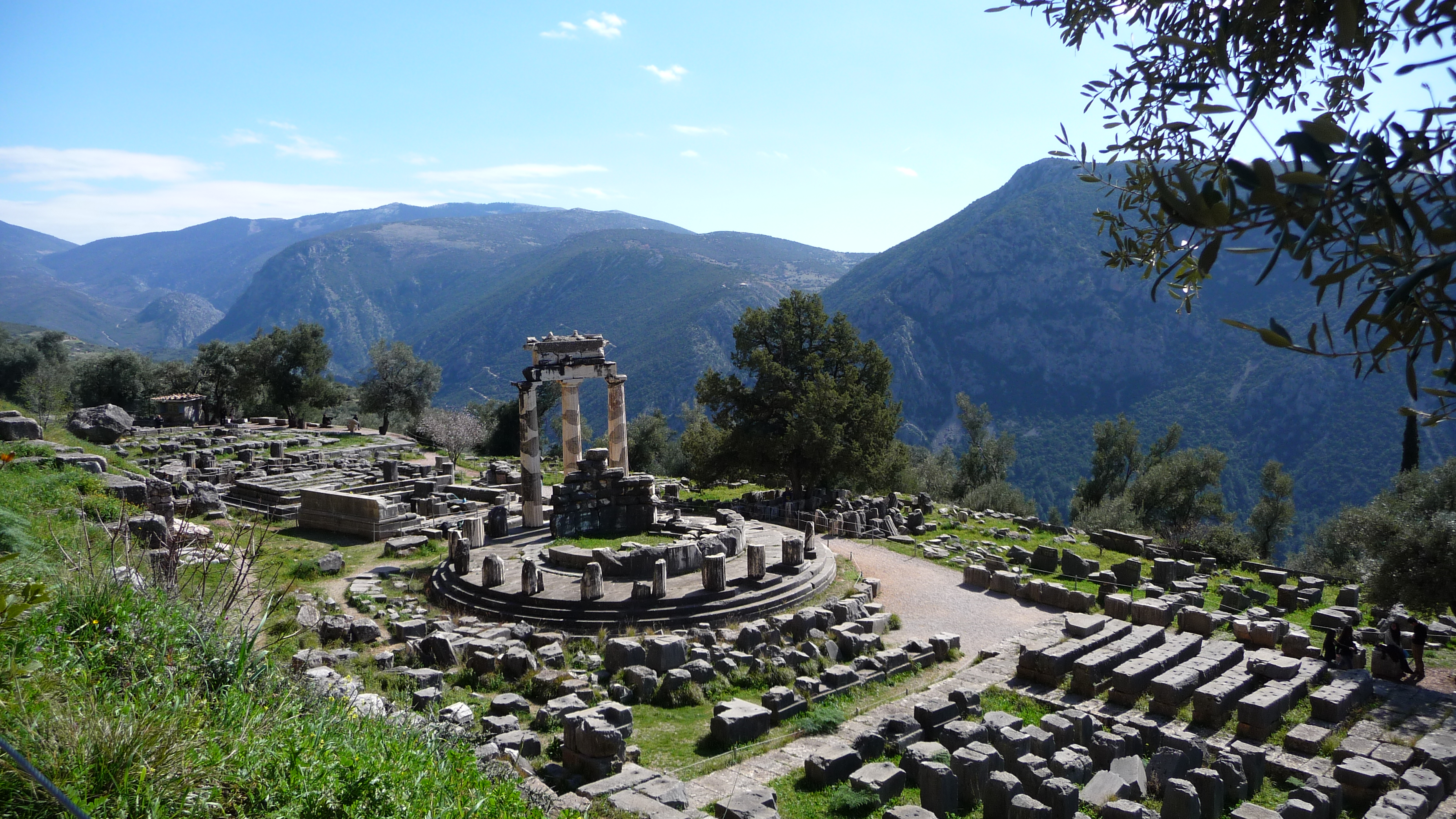
Overview
Delphi, nestled on the slopes of Mount Parnassus in central Greece, is a place of breathtaking beauty and profound historical significance. The site has been inhabited since the Neolithic period, with evidence of human presence dating back to around 4000 BC. As a sacred precinct, Delphi was dedicated to the worship of Apollo, the Greek god of prophecy, music, and poetry, and was considered a place of great spiritual power. The natural setting of Delphi, with its stunning views of the surrounding mountains and valleys, added to its mystique and allure.The ancient Greeks believed that Delphi was the center of the world, marked by the stone monument known as the Omphalos of Delphi, which translates to "navel" in Greek. This concept was not just geographical, but also symbolic, representing the connection between the earthly and divine realms. The Omphalos was a powerful symbol of Delphi's importance, and the site became a major pilgrimage destination, attracting visitors from all over the ancient world. The precinct was also home to numerous temples, theaters, and other buildings, including the famous Temple of Apollo, which housed the oracle Pythia.
Delphi's rich history and cultural significance are still palpable today, with the site attracting millions of visitors each year. The ruins of the ancient precinct are a testament to the ingenuity and craftsmanship of the ancient Greeks, with many of the original structures still standing, albeit in a state of ruin. As a UNESCO World Heritage Site, Delphi is recognized for its outstanding cultural and historical value, and efforts are being made to preserve and protect the site for future generations.
History/Background
The history of Delphi dates back to the 8th century BC, when the site was first inhabited by the ancient Greeks. The precinct was initially dedicated to the worship of the earth goddess Gaia, but later became associated with Apollo, who was said to have slain the python that lived in the area. The oracle Pythia, who was believed to be the mouthpiece of Apollo, was a powerful figure in ancient Greek society, and her prophecies were sought by kings, queens, and other prominent individuals. Delphi's importance grew over time, and the site became a major center of culture, politics, and spirituality in the ancient world.The development of Delphi was influenced by various factors, including the rise of the city-state of Athens, which played a significant role in the site's history. The Athenians were major patrons of Delphi, and their influence can be seen in the architecture and art of the precinct. Delphi's golden age was during the 5th and 4th centuries BC, when the site was at the height of its power and influence. However, the precinct was eventually abandoned, and the site was left to ruin. It wasn't until the 19th century that Delphi was rediscovered, and excavations began to uncover the secrets of this ancient sacred precinct.
Key Information
Delphi is home to numerous important landmarks, including the Temple of Apollo, the Theater of Dionysus, and the Castalian Spring. The Temple of Apollo, which was built in the 5th century BC, was the main temple of the precinct and housed the oracle Pythia. The theater, which dates back to the 3rd century BC, was used for performances and festivals in honor of Dionysus, the god of wine and theater. The Castalian Spring, which is located near the temple, was a sacred spring that was believed to have healing properties.The population of Delphi during its heyday is estimated to have been around 10,000 people, although the site was capable of accommodating many more visitors during peak periods. The area of the precinct is approximately 200 hectares, with the site stretching for over 1 kilometer along the slopes of Mount Parnassus. Delphi's cultural significance extends beyond its historical importance, with the site representing a unique blend of natural beauty, spiritual power, and cultural heritage.


