




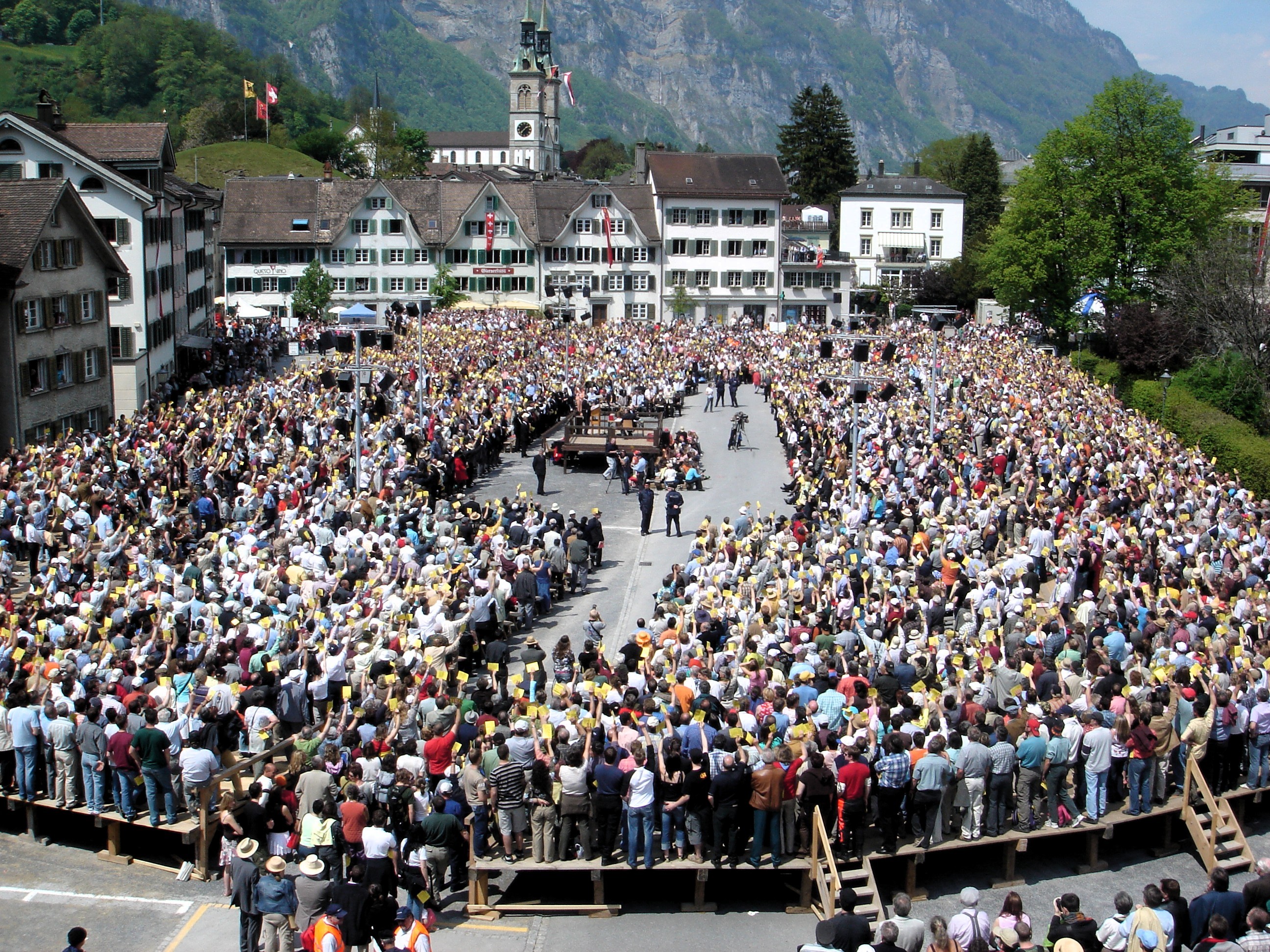
Direct Democracy
Direct Democracy is a form of democracy in which the electorate directly decides on policy initiatives, without elected representatives as proxies, as opposed to the representative democracy model which occurs in the majority of established democracies. This system of governance has been a subject of interest and debate among theorists, philosophers, politicians, and social critics throughout history. The theory and practice of direct democracy and participation as its common characteristic have been explored in the works of influential thinkers such as Jean-Jacques Rousseau, John Stuart Mill, and G.D.H. Cole.
Direct democracy is often contrasted with representative democracy, where citizens elect representatives to make decisions on their behalf. While representative democracy is the dominant form of democracy in most countries, direct democracy has been implemented in various forms and to varying degrees throughout history. The advantages of direct democracy include increased citizen participation, more direct accountability of elected officials, and the ability to make decisions without the influence of intermediaries. However, critics argue that direct democracy can be time-consuming, prone to manipulation, and may not be feasible for large and complex societies.
The concept of direct democracy has been explored in various contexts, including ancient Greece, the Swiss cantons, and modern-day initiatives such as referendums and citizen-led initiatives. The implementation of direct democracy has been influenced by factors such as the size and complexity of the society, the level of civic engagement, and the availability of technology to facilitate participation.
History
The concept of direct democracy dates back to ancient Greece, where citizens participated in the decision-making process through the Agora, a public assembly where citizens would gather to discuss and vote on laws and policies. This system of governance was characterized by the direct participation of citizens in the decision-making process, without the need for intermediaries. The Agora was an essential part of the Athenian democracy, and it played a crucial role in the development of Western democracy.
In the modern era, the concept of direct democracy has been influenced by the Swiss cantons, which have implemented various forms of direct democracy, including referendums and citizen-led initiatives. The Swiss system of direct democracy is characterized by the use of referendums to decide on major policy initiatives, as well as the ability of citizens to propose and vote on laws through citizen-led initiatives.
Mechanism
The mechanism of direct democracy can take various forms, including:
* Referendums: a direct vote by citizens on a specific policy initiative or law.
* Citizen-led initiatives: a process by which citizens can propose and vote on laws.
* Town hall meetings: a public forum where citizens can discuss and vote on local issues.
* Online platforms: digital platforms that facilitate citizen participation and decision-making.
The mechanism of direct democracy can be influenced by factors such as the size and complexity of the society, the level of civic engagement, and the availability of technology to facilitate participation.
Applications
Direct democracy has been applied in various contexts, including:
* Local governance: direct democracy has been used in local governments to decide on issues such as zoning, taxation, and public services.
* National governance: direct democracy has been used in national governments to decide on major policy initiatives, such as constitutional amendments and laws.
* International governance: direct democracy has been used in international organizations, such as the United Nations, to facilitate citizen participation and decision-making.
Criticisms and Challenges
Direct democracy has been criticized for various reasons, including:
* Time-consuming: direct democracy can be time-consuming, as citizens must participate in the decision-making process.
* Prone to manipulation: direct democracy can be prone to manipulation, as special interest groups may influence the decision-making process.
* Not feasible for large and complex societies: direct democracy may not be feasible for large and complex societies, as it can be difficult to facilitate participation and decision-making.
INFOBOX:
- Name: Direct Democracy
- Type: Form of democracy
- Date: Ancient Greece (5th century BCE)
- Location: Global
- Known For: Increased citizen participation, direct accountability of elected officials
TAGS: Democracy, Representative democracy, Referendums, Citizen-led initiatives, Town hall meetings, Online platforms, Local governance, National governance, International governance.



