




Overview
Discrete mathematics explores mathematical structures that are fundamentally separate and distinct, such as integers, graphs, and logical statements. Unlike continuous mathematics—which deals with smooth, unbroken systems like real numbers and calculus—discrete math examines objects that can be enumerated or counted. Its focus on countable sets makes it indispensable in fields requiring precise modeling, such as computer science, cryptography, and operations research. Key areas include combinatorics (the study of counting and arrangement), graph theory (networks of nodes and edges), and logic (formal reasoning systems).The discipline contrasts sharply with continuous mathematics. For example, while calculus analyzes motion and change through real numbers, discrete math investigates patterns in finite or infinite but countable systems. This distinction is critical in applications like algorithm design, where discrete structures underpin data organization and processing.
History/Background
The roots of discrete mathematics trace back to ancient civilizations, with early number theory and combinatorial problems appearing in Babylonian and Indian mathematics. However, the field emerged as a distinct discipline in the 18th century. In 1736, Leonhard Euler solved the Seven Bridges of Königsberg problem, laying the groundwork for graph theory. The 19th century saw George Boole formalize symbolic logic, while Georg Cantor’s set theory in the 1870s provided tools to analyze infinite and finite collections.The 20th century marked discrete mathematics’ rise as a cornerstone of modern science. Alan Turing’s 1936 work on computability linked discrete logic to computer science, and the development of information theory by Claude Shannon in 1948 relied heavily on discrete probability and combinatorics. The advent of digital computers in the mid-20th century further accelerated demand for discrete methods, cementing its role in algorithm design, coding theory, and network analysis.
Key Information
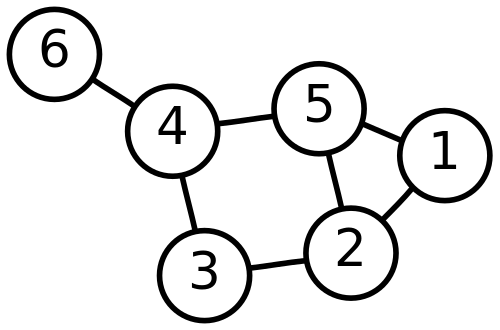
Discrete mathematics encompasses several core subfields: - Combinatorics: Studies permutations, combinations, and arrangements (e.g., the pigeonhole principle). - Graph Theory: Analyzes networks, with applications in social media analysis and traffic optimization. - Logic and Set Theory: Provides formal frameworks for proofs and foundational mathematics. - Number Theory: Explores properties of integers, critical for cryptography (e.g., RSA encryption). - Algorithms and Complexity: Classifies problems by solvability and efficiency (e.g., P vs. NP problem).Notable achievements include the Four Color Theorem (1976), proven using computational methods, and the development of error-correcting codes by Richard Hamming in 1950. Discrete optimization techniques, like the simplex algorithm (1947), revolutionized operations research.



