Overview
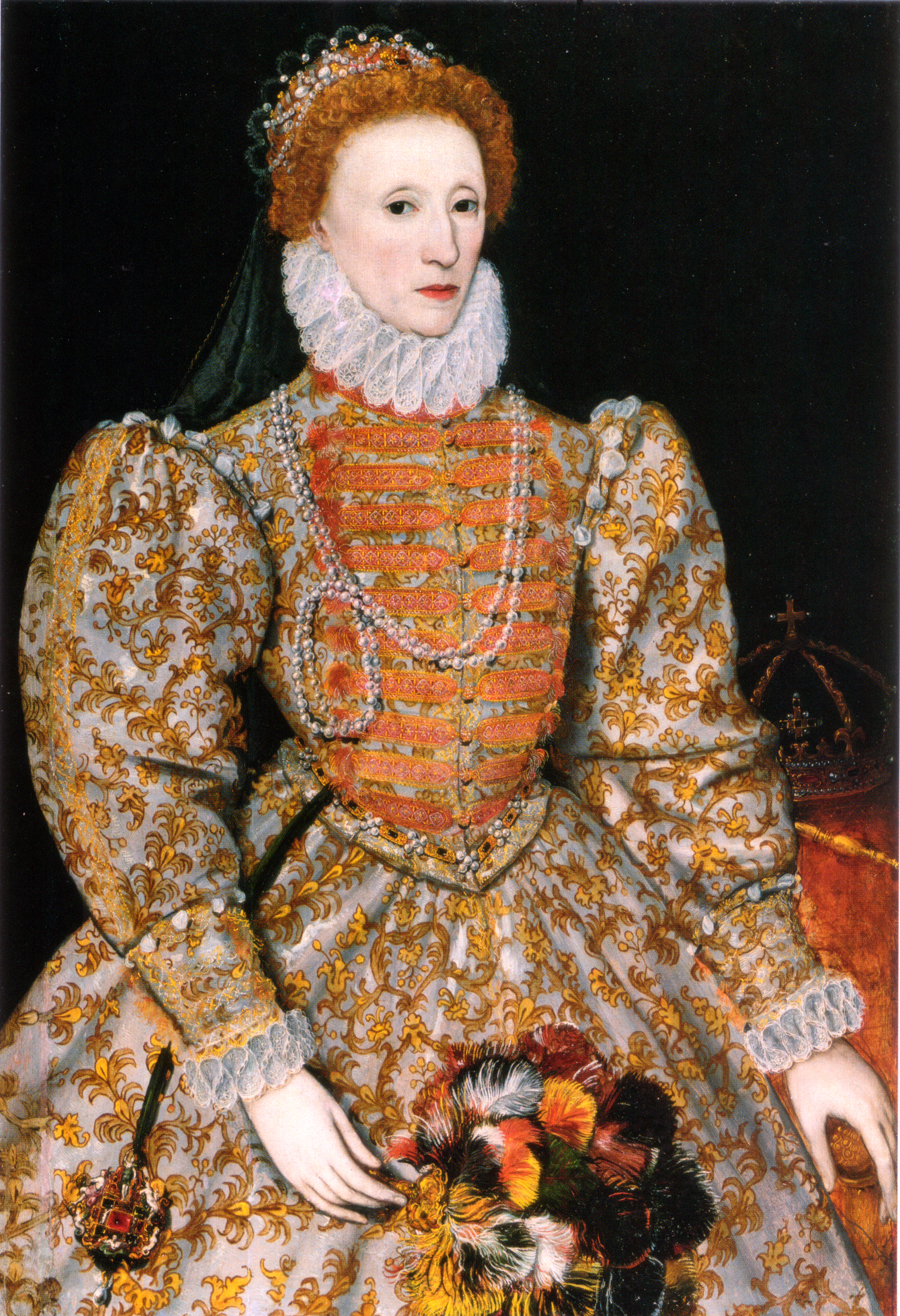
Elizabeth I’s accession on 17 November 1558 ended a decade of religious convulsion that had seen England swing from Protestant radicalism under Edward VI to Catholic restoration under Mary I. The twenty-five-year-old daughter of Anne Boleyn inherited a kingdom diplomatically isolated, financially exhausted, and internally fractured, yet she transformed those liabilities into the raw material for a national myth. By refusing to marry and thus turning her unmarried state into a political philosophy—Gloriana, the wedded bride of her people—she forged a charismatic monarchy that balanced Protestant zeal at home against Catholic threats from abroad. The result was an era whose very name, “Elizabethan,” evokes swaggering confidence: the defeat of the Spanish Armada, the circumnavigation of the globe by Francis Drake, and a literary renaissance that produced Marlowe, Spenser, and Shakespeare.History/Background
Elizabeth was born at Greenwich Palace on 7 September 1533, a disappointment to Henry VIII who had hoped for a male heir. Her mother’s execution in 1536 rendered Elizabeth technically illegitimate, yet her formidable education in classical languages, theology, and statecraft—directed by Cambridge humanists—equipped her with the intellectual agility that would define her rule. During Mary’s Catholic reaction she endured house arrest and the ever-present threat of the block, learning the politics of survival. Upon Mary’s death she rode into London beneath a burst of acclamation, but the crown she accepted was fragile: the treasury was £300,000 in debt, Calais—the last English foothold in France—had fallen, and Mary’s loss of papal authority left England excommunicate. Elizabeth’s first Parliament begged her to marry quickly and settle the succession; instead she drafted the Religious Settlement of 1559 (the Acts of Supremacy and Uniformity) that re-established the Church of England while tolerating a measure of private Catholic conscience—an ambiguous compromise that cooled confessional tempers without satisfying zealots on either side.Key Information
Elizabeth’s governance rested on calculated inscrutability. She kept policy fluid, speaking “so that nothing could be gathered from her,” and exploited the factional rivalry between William Cecil (later Lord Burghley) and the more interventionist Robert Dudley, Earl of Leicester. The royal finances were restored through frugality, the sale of monopolies, and aggressive privateering against Spanish bullion fleets. The Religious Settlement stabilized the realm, though it provoked the Northern Rising (1569) and Papal bull Regnans in Excelsis (1570) which declared her deposed and freed Catholics from allegiance. Mary, Queen of Scots—next in line by blood—became the focus of conspiracies; after nineteen years of plots Elizabeth reluctantly signed her cousin’s death warrant in 1587, accepting that regicide was preferable to regicide-in-waiting. The execution galvanized Philip II of Spain to assemble the 130-ship Armada, defeated in 1588 by English seamanship, Dutch allies, and North Sea storms. The victory did not end war—Spain and England bled each other in the Netherlands, France, and the Caribbean for another decade—but it forged a Protestant identity that equated England with divine favor. At home, the Crown sponsored exploration (Humphrey Gilbert’s Newfoundland, Walter Ralegh’s Virginia) while licensing joint-stock ventures that would evolve into the East India Company. Parliament grew in self-confidence, using the queen’s need for subsidies to air grievances and expand the practice of free speech in the Commons. Culturally, the court became a magnet for poets, musicians, and playwrights; the queen’s progresses through the provinces projected royal magnificence into the shires, binding local elites to the center through shared spectacle.Significance
Elizabeth’s death on 24 March 1603—unmarried, childless, but intellectually immortal—handed the throne to James VI of Scotland, uniting the crowns and inaugurating the Stuart age. Her refusal to name an heir until her dying breath preserved regal authority, yet the smoothness of the succession testified to the institutional strength she had bequeathed. The Church of England she molded endured, its Thirty-Nine Articles still the doctrinal core of Anglicanism. More broadly, the Elizabethan compromise—strong monarchy balanced by a vocal Parliament, moderate Protestantism tempered by social conservatism—created a template for the constitutional monarchy that emerged after 1688. The global horizons opened under her flag would seed an empire on which the sun never set, while the language of her court, polished by Spenser and Shakespeare, became the global tongue. In popular memory she remains the iconic female ruler: proof that intelligence, symbolism, and sheer will can overcome the constraints of gender in a patriarchal world.
Tip: double-click any word in this article for an instant definition from the NerdDictionary.