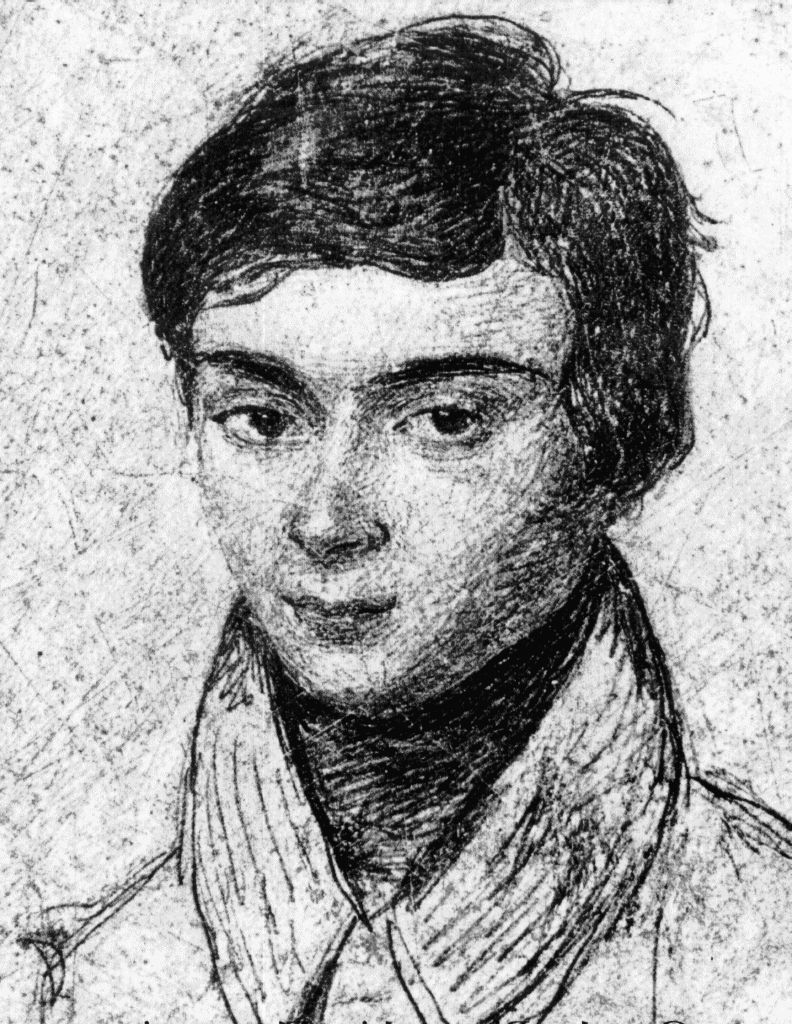
Overview
When David Hilbert introduced Emmy Noether to his Göttingen colleagues in 1915, he apologized: “The university senate has declared that a woman cannot teach. This is a university, not a bathhouse.” Within a decade the same faculty was calling her “Der Noether,” a grammatical gender switch that signaled respect. In 1918 she published Noether’s first theorem, showing that every differentiable symmetry of a physical action corresponds to a conservation law—energy, momentum, angular momentum—an insight that later guided the search for gauge bosons and the Standard Model. By 1921 her paper Idealtheorie in Ringbereichen had created the axioms for Noetherian rings, structures now baked into every algebraic geometry package and error-correcting code on the planet. Pavel Alexandrov, Albert Einstein, Jean Dieudonné, Hermann Weyl, and Norbert Wiener independently crowned her “the most important woman in the history of mathematics,” a consensus no scholar has challenged since.
Background & Origins
Born Amalie Emmy Noether on 23 March 1882 in Erlangen, Bavaria, she grew up surrounded by mathematics. Her father, Max Noether, was a professor at the University of Erlangen and a leading figure in algebraic geometry. Emmy originally trained to teach English and French, but after sitting in on lectures by Hilbert and Minkowski she switched to mathematics, passing the Abitur in 1903—one of only two women in the state. She spent 1903-1904 auditing courses at Erlangen, where she met the algebraist Paul Gordan. Under his guidance she completed her doctorate in 1907 with a dissertation on invariant theory, but German universities refused women habilitation, so she worked unpaid for seven years, lecturing under Hilbert’s name.
Major Achievements & Milestones
Noether’s First Theorem (1918): Proved that if a physical system has a continuous symmetry, there exists a corresponding conserved quantity. The proof uses variational calculus and Lie groups, and it underpins the conservation of electric charge (U(1) symmetry) and color charge (SU(3) symmetry) in particle physics.
Noetherian Rings (1921): Introduced ascending-chain-condition rings in which every ideal is finitely generated. Today these rings guarantee that polynomial equations can be solved algorithmically—used in robotics, cryptography, and computer algebra systems like Macaulay2 and Singular.
Non-commutative Algebras (1927-1929): With Brauer and Hasse, she classified central-simple algebras over number fields, completing the Albert–Brauer–Hasse–Noether theorem. This result settled the last open cases of Hilbert’s 9th problem and paved the way for class-field theory.
Timeline
- 1882: Born in Erlangen, Germany
- 1907: Earns Ph.D. summa cum laude from Erlangen
- 1915: Invited by Hilbert and Klein to Göttingen to work on general relativity
- 1918: Submits Invariante Variationsprobleme containing both Noether theorems
- 1919: Finally granted habilitation; becomes Privatdozent
- 1921: Publishes Idealtheorie in Ringbereichen
- 1932: Delivers plenary address at International Congress of Mathematicians, Zürich
- 1933: Dismissed by Nazi regime; accepts professorship at Bryn Mawr College, USA
- 1935: Dies after surgery to remove an ovarian cyst, aged 53
Impact & Legacy
Noether’s ideas are the invisible scaffolding of modern science. Particle physicists invoke her theorem to predict new particles: if a symmetry is broken, a gauge boson must appear. Cryptographers rely on Noetherian rings to prove that Gröbner-basis attacks on multivariate polynomial systems terminate. In robotics, kinematic constraints form Noetherian modules, ensuring that motion-planning algorithms finish in finite time. Her conceptual style—replacing messy coordinate calculations with structure-preserving arrows—became the lingua franca of category theory, influencing every branch of pure mathematics. When the Association for Women in Mathematics created the Emmy Noether Lectures in 1980, they chose her name because, as Einstein wrote in The New York Times, “Pure mathematics is, in its way, the poetry of logical ideas. Emmy Noether was the greatest poetess we have ever had.”
Records & Notable Facts
- First woman plenary speaker at the International Congress of Mathematicians (1932)
- The lunar crater Noether (diameter 64 km) and the minor planet 7001 Noether are named in her honor
- Google Doodles celebrated her 133rd birthday on 23 March 2015
- Her collected works fill only 626 pages—yet every page seeded entire disciplines
> “My methods are really methods of working and thinking; this is why they have crept in everywhere anonymously.” — Emmy Noether, 1931