Overview
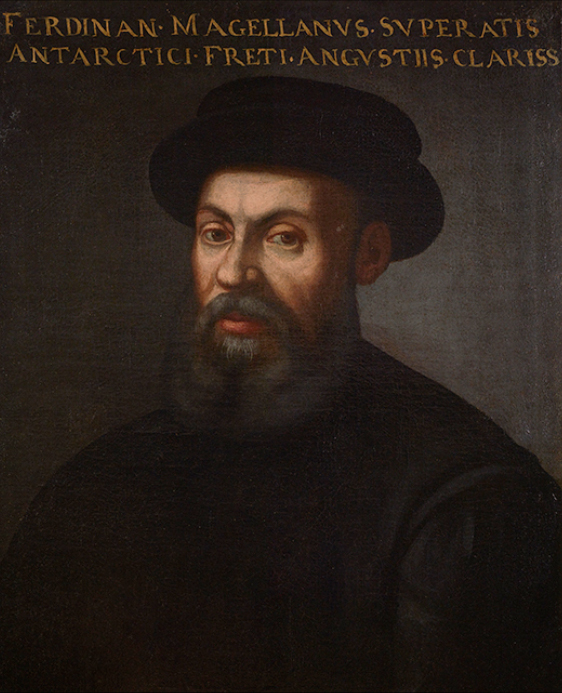
Ferdinand Magellan (Portuguese: Fernão de Magalhães, Spanish: Fernando de Magallanes) was the visionary yet controversial commander whose audacious plan to sail west to the Spice Islands inaugurated the age of truly global navigation. Though he perished mid-voyage in what is today the Philippines, his expedition’s surviving members—under Juan Sebastián Elcano—completed the circumnavigation that forever altered Europe’s understanding of planetary scale and geopolitical possibility. Magellan’s name endures in straits, galaxies, and spacecraft, testifying to a legacy that blends bold imagination with the harsher realities of early-modern empire.Born minor nobility in northern Portugal, trained in cartography and naval warfare, Magellan became convinced—through study of secret Portuguese charts and the recently discovered “Treaty of Tordesillas” demarcation—that a westward passage to the lucrative clove and nutmeg markets of the Moluccas lay just south of the South American landmass. Rebuffed by his own king, he renounced Portuguese allegiance, offered his services to the young Habsburg monarch Charles V of Spain, and secured backing for five small ships and roughly 270 men. The fleet’s departure from Seville on 20 September 1519 launched the most ambitious maritime venture yet attempted.
History/Background
Magellan’s early career unfolded during Portugal’s aggressive push into the Indian Ocean. Embarking for India in 1505, he spent eight years in campaigns from East Africa to the Malay Peninsula, twice saving himself from shipwreck and learning celestial navigation, logistics, and the brutal calculus of colonial trade. Wounded in Morocco in 1513, he fell from royal favor after accusations of illegal trading. Turning to scholarship, he studied charts with cosmographer Rui Faleiro and concluded that the Spanish-controlled hemisphere might hide a strait permitting westward passage to the Spice Islands without infringing Portuguese routes around Africa.His 1517 petition to Spain’s Casa de Contratación promised not only spices but also the possibility of claiming the rumored “Islands of the West” (possibly the Philippines) for Charles V. The expedition received royal sanction in March 1518, but preparation delays, Portuguese sabotage, and crew mutinies plagued the fleet even before it cleared the Guadalquivir River. After wintering in Patagonia, the loss of the Santiago, and a bloody mutiny at Puerto San Julián, Magellan’s remaining three ships entered the treacherous passage that now bears his name on 21 October 1520, emerging 38 days later onto an ocean so calm he christened it “Pacific.”
Key Information
- Discovery of the Strait of Magellan: Navigating 570 km of narrow, fjord-like channels between the South American mainland and Tierra del Fuego, Magellan proved that the continent was not fused to a hypothetical southern polar landmass.- First European crossing of the Pacific: From November 1520 to March 1521, the fleet sailed 12,000 km across uncharted waters, suffering scurvy and starvation that reduced the crew by half.
- European contact with the Philippines: Arriving at Guam and then Samar in March 1521, Magellan’s expedition became the first documented Europeans to reach the archipelago, planting a cross and claiming it for Spain.
- Death at Mactan: On 27 April 1521, Magellan was killed while aiding the chief of Cebu against the resisting chieftain Lapulapu; his Malay interpreter-slave Enrique of Malacca survived, arguably completing the first circumnavigation linguistically if not geographically.
- Completion under Elcano: With only Victoria remaining, the Basque navigator Elcano sailed west through the Indian Ocean, around the Cape of Good Hope, and back to Seville on 6 September 1522, with 18 Europeans and a handful of Asian sailors—proof that the globe could be encircled by sea.
Significance
Magellan’s voyage collapsed ancient and medieval cosmographies, demonstrating that oceans covered more of Earth’s surface than Europeans had imagined and that continuous westward sea travel was feasible, if grueling. By revealing the true size of the Pacific, the expedition underscored Spain’s logistical disadvantage in the spice trade, prompting renewed interest in trans-Pacific colonization via the Philippines and the 1565-1815 Manila-Acapulco galleon route. The expedition’s meticulous logbooks and Antonio Pigafetta’s journal provided data that helped future navigators plot more accurate longitude and understand global wind patterns.Culturally, Magellan’s circumnavigation became a foundational myth of globalization, symbolizing both the promise of cross-cultural contact (the first Christian baptisms in the Philippines) and its violent asymmetries (subsequent Spanish conquest). Modern navigators, astronomers, and aerospace engineers have honored his legacy by naming the Strait of Magellan, the Magellanic Clouds (dwarf galaxies visible from the Southern Hemisphere), and NASA’s Magellan spacecraft for him. Yet his story also invites critical reassessment of European “discovery” narratives, recognizing indigenous polities that already traded across the Indian and Pacific Oceans long before 1519.