




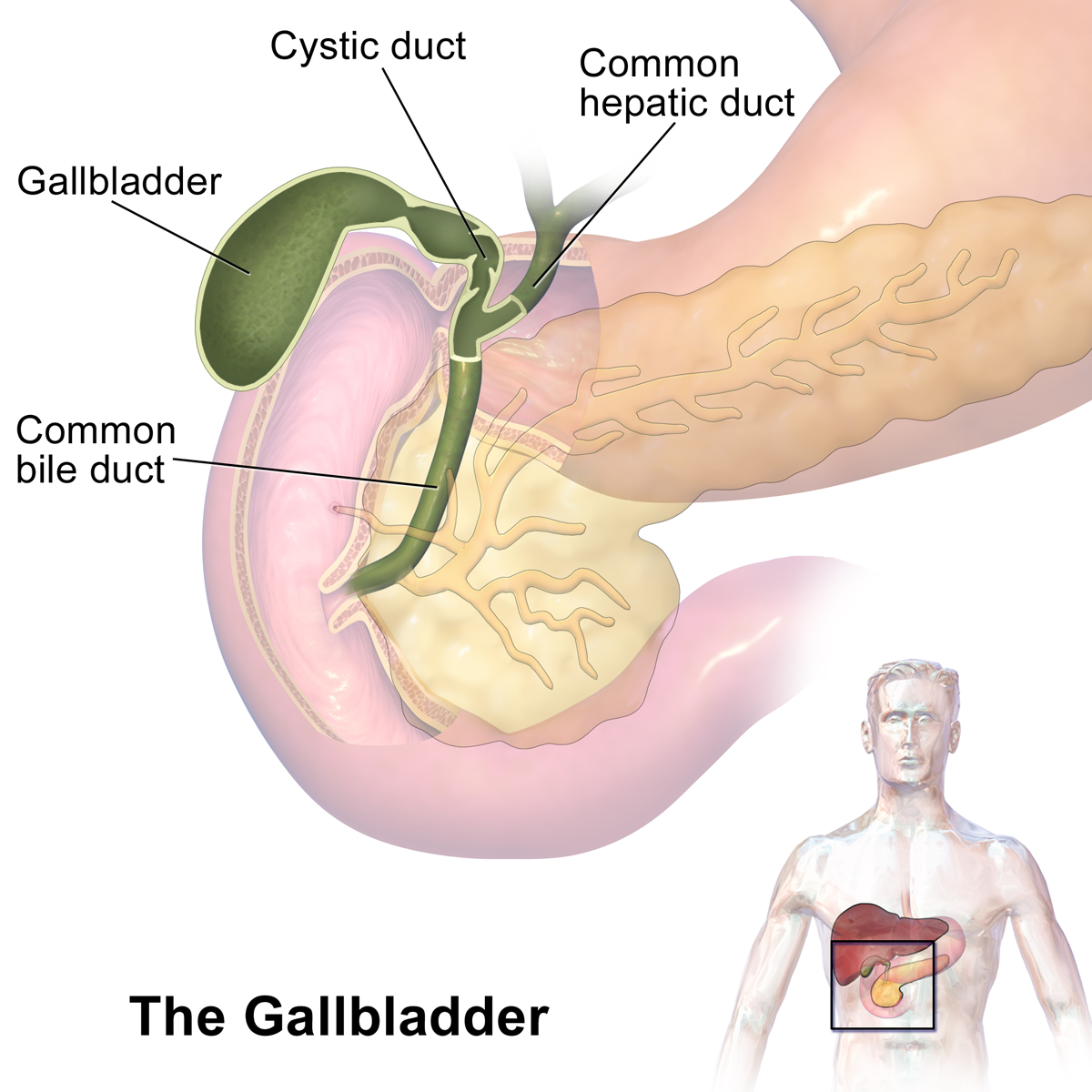
Gallbladder
SUMMARY: The gallbladder is a small, pear-shaped organ in vertebrates that stores and concentrates bile before releasing it into the small intestine to aid in fat digestion.
Overview
The gallbladder, also known as the cholecyst, is a crucial organ in the digestive system of vertebrates. Its primary function is to store and concentrate bile, a digestive fluid produced by the liver, before releasing it into the small intestine. The gallbladder plays a vital role in the digestion of fats, and its dysfunction can lead to various health issues. In humans, the gallbladder is located beneath the liver, although its structure and position can vary significantly among animal species.
The gallbladder receives bile from the liver via the common hepatic duct and stores it in a concentrated form. The stored bile is then released into the duodenum, the first part of the small intestine, via the common bile duct. In the duodenum, the bile helps to emulsify fats, making it easier for enzymes to break them down into smaller particles that can be absorbed by the body.
History/Background
The gallbladder has been a subject of interest for centuries, with ancient civilizations recognizing its importance in digestion. The Ebers Papyrus, an ancient Egyptian medical text, describes the gallbladder as a vital organ responsible for digestion. In the 19th century, the French physician Jean Cruveilhier performed the first successful surgical removal of the gallbladder, known as a cholecystectomy. This pioneering surgery paved the way for modern gallbladder removal procedures.
Key Information
* Structure: The gallbladder is a small, pear-shaped organ that can vary in size and shape among animal species.
* Function: The gallbladder stores and concentrates bile before releasing it into the small intestine to aid in fat digestion.
* Location: In humans, the gallbladder is located beneath the liver.
* Blood supply: The gallbladder receives blood from the cystic artery, a branch of the right hepatic artery.
* Nerve supply: The gallbladder is innervated by the cystic plexus, a network of nerves that regulates its function.
* Diseases: The gallbladder can be affected by various diseases, including cholecystitis, gallstones, and gallbladder cancer.
Significance
The gallbladder plays a crucial role in the digestive process, and its dysfunction can lead to various health issues. Gallstones, for example, can cause cholecystitis, a painful inflammation of the gallbladder. Gallbladder cancer is a rare but aggressive disease that can be fatal if left untreated. The gallbladder's importance in digestion has led to significant advances in medical research and treatment, including the development of laparoscopic cholecystectomy, a minimally invasive surgical procedure for removing the gallbladder.
INFOBOX:
- Name: Gallbladder
- Type: Organ
- Date: Ancient civilizations recognized the gallbladder's importance in digestion
- Location: Beneath the liver in humans
- Known For: Storing and concentrating bile for fat digestion
TAGS: Gallbladder, Bile, Liver, Small intestine, Digestion, Gallstones, Cholecystitis, Gallbladder cancer, Laparoscopic cholecystectomy



