




Overview
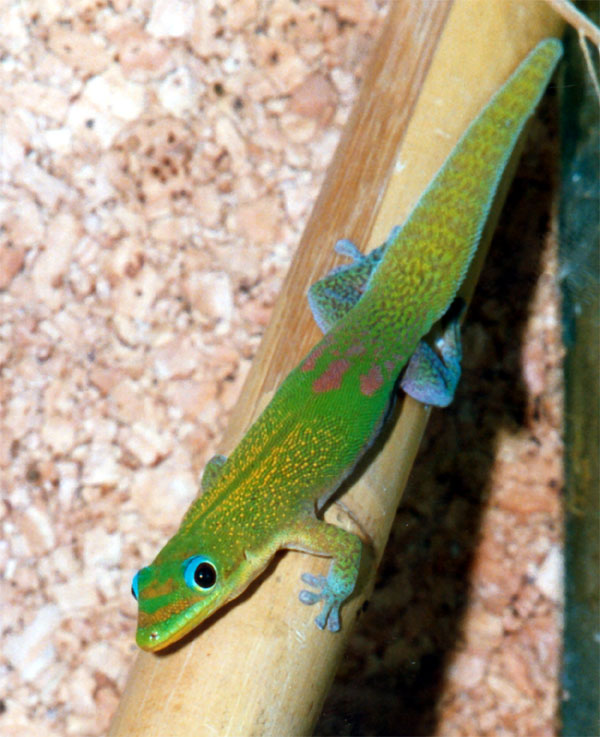
Geckos belong to the diverse suborder Gekkota, a lineage that has radiated into more than 1,500 species across six families. These diminutive reptiles range in size from a modest 1.6 cm in the dwarf leaf‑toed gecko (Sphaerodactylus ariasae) to a robust 67 cm in the Tokay gecko (Gekko gecko). Their bodies are typically flattened, with large, lidless eyes that grant excellent nocturnal vision, and a tail that can be shed and regenerated as a defense mechanism. One of the most celebrated adaptations is the set of microscopic hair‑like structures called setae on their toe pads, allowing geckos to climb smooth surfaces—from glass windows to ceiling tiles—by exploiting van der Waals forces.Geckos thrive in warm climates and are found on every continent except Antarctica, inhabiting deserts, rainforests, urban gardens, and even caves. Their diets are largely carnivorous, consisting of insects, spiders, and other small arthropods, though some larger species will opportunistically consume small vertebrates or fruit. Many geckos are nocturnal and communicate through a repertoire of chirps, clicks, and barks, a rarity among lizards that adds a distinctive acoustic signature to night‑time ecosystems.
Beyond their ecological roles as insect predators, geckos have captured human fascination for centuries. Their ability to cling to walls inspired early observations of natural adhesion, while their vocalizations have earned them nicknames such as “bark geckos” and “chirping lizards.” In modern times, geckos serve as model organisms in studies of locomotion, skin regeneration, and even bio‑inspired engineering.
History/Background
The fossil record of geckos stretches back to the Cretaceous period, roughly 100 million years ago, indicating an ancient origin that predates the breakup of the supercontinent Gondwana. Molecular phylogenetics suggests that the major gecko families diverged during the Late Jurassic to Early Cretaceous, allowing them to colonize emerging landmasses as continental drift progressed. By the Miocene epoch (≈23–5 million years ago), geckos had diversified into the myriad forms seen today, adapting to a wide range of habitats.Human awareness of geckos dates to antiquity; ancient Egyptian hieroglyphs depict gecko‑like figures, and traditional Asian folklore often associates geckos with good luck and household protection. In the 19th century, naturalists such as John Edward Gray and Albert Günther formally described numerous species, laying the taxonomic groundwork still used by herpetologists. The 20th century saw the rise of geckos in the pet trade, especially the Leopard gecko (Eublepharis macularius), which became a staple of captive breeding programs and contributed to public interest in reptile conservation.
Key Information
- Taxonomy: Suborder Gekkota, comprising families Gekkonidae, Eublepharidae, Phyllodactylidae, Sphaerodactylidae, Carphodactylidae, and Diplodactylidae. - Size range: 1.6 cm (dwarf leaf‑toed) to 67 cm (Tokay). - Distribution: Global in tropical and subtropical zones; absent only from Antarctica. - Adaptations: Adhesive toe pads (setae), autotomy (tail shedding), vocal communication, and remarkable regenerative capacity of skin and tail tissue. - Diet: Primarily insects and arthropods; some species are omnivorous or opportunistic carnivores. - Reproduction: Mostly oviparous, laying one or two hard‑shelled eggs; a few species exhibit parthenogenesis (asexual reproduction). - Conservation status: While many species are listed as Least Concern, habitat loss, invasive predators, and the pet trade threaten several endemic island species, prompting targeted conservation programs.Significance
Geckos play a pivotal ecological role as biological control agents, curbing insect populations that could otherwise become agricultural pests or disease vectors. Their unique adhesive system has inspired biomimetic technologies, leading to the development of dry adhesives, climbing robots, and medical tapes that mimic gecko setae without relying on glues. Moreover, the regenerative abilities of gecko skin and tail tissue provide valuable models for regenerative medicine, offering insights into scar‑free healing and tissue engineering.From a cultural perspective, geckos symbolize resilience and adaptability across many societies, reinforcing the intrinsic link between humans and the natural world. Conservation initiatives that protect gecko habitats—such as preserving mangroves, dry forests, and urban green spaces—also safeguard countless other species, underscoring the gecko’s role as an umbrella species. By fostering public appreciation through education and responsible pet ownership, we can ensure that these remarkable lizards continue to thrive in both wild and human‑shared environments.


