




Overview
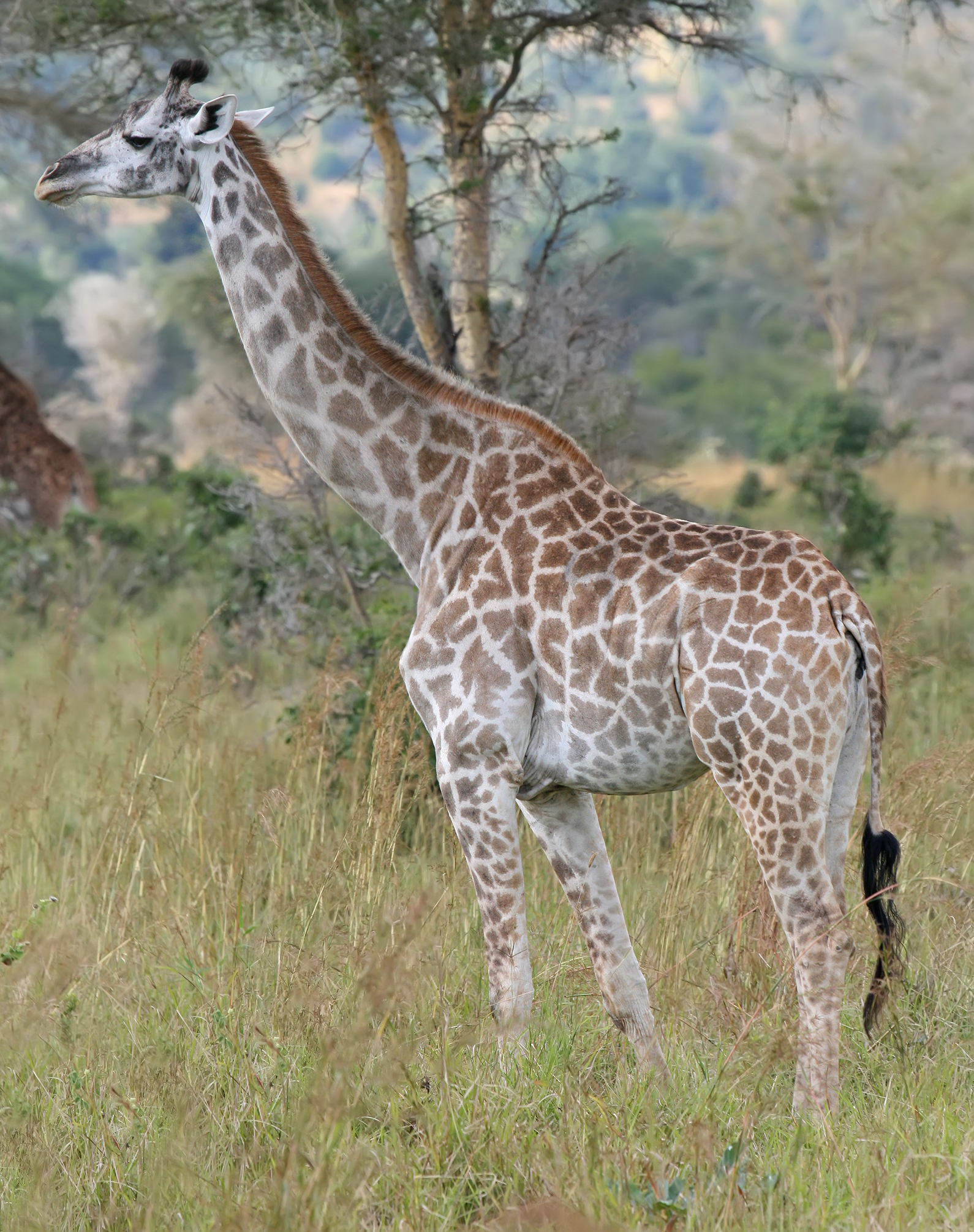
The giraffe (Giraffa camelopardalis) is a large African hoofed mammal distinguished by its extraordinary height—males can reach up to 5.9 m (19 ft) at the shoulder and 6.1 m (20 ft) when standing fully upright. Its elongated neck, comprising just seven elongated cervical vertebrae, supports a patchwork coat of irregular brown patches separated by lighter lines, a pattern that varies among populations and underpins recent taxonomic revisions. As the largest ruminant on Earth, the giraffe possesses a four‑chambered stomach that ferments tough savanna browse, primarily acacia leaves, enabling it to thrive where many herbivores cannot.Giraffes are social yet fluid; they form loose aggregations called towering or towers, which can fluctuate in size and composition throughout the day. Communication relies on low‑frequency vocalizations, body postures, and the iconic “necking” behavior of males—ritualized combat that establishes dominance without lethal injury. Their long legs and powerful hooves provide both speed (up to 60 km/h) and a formidable defense against predators such as lions and hyenas.
Ecologically, giraffes act as ecosystem engineers. By feeding on high canopy foliage, they prune trees, stimulate new growth, and disperse seeds through their dung. Their browsing also creates pathways for other herbivores, and their towering presence offers a unique perch for birds that feed on insects disturbed by the giraffe’s movement.
History/Background
Fossil evidence traces the giraffe lineage back to the Miocene epoch, roughly 1.8 million years ago, when early giraffids such as Palaeotragus roamed the African plains. Six extinct species of the genus Giraffa have been identified, illustrating a once richer diversity that included robust, short‑necked forms adapted to varied habitats. The modern giraffe’s closest living relative is the okapi (Okapia johnstoni), a forest-dwelling giraffid of the Congo Basin, highlighting a dramatic evolutionary split between open‑savanna and dense‑forest niches.For centuries, indigenous peoples and early explorers revered giraffes for their height and graceful gait, incorporating them into folklore and art. In the 19th century, European naturalists classified all giraffes under a single species, Giraffa camelopardalis, with nine subspecies based on coat pattern and geography. A paradigm shift occurred in 2021 when a consortium of geneticists and morphologists proposed four distinct species—G. camelopardalis, G. giraffa, G. reticulata, and G. tippelskirchi—each containing several subspecies. This reclassification, grounded in mitochondrial DNA and cranial measurements, has profound implications for conservation policy.
Key Information
- Taxonomy: Family Giraffidae; order Artiodactyla. Four extant species recognized by the latest consensus, encompassing seven subspecies. - Physical traits: Height up to 5.9 m; weight 800–1,400 kg; neck length ~2 m; heart weighing ~11 kg, capable of generating 5 psi to pump blood to the brain. - Diet: Primarily leaves, buds, and fruits of over 100 plant species; preference for Acacia spp. due to high protein and low tannin content. - Reproduction: Gestation ~15 months; calves stand within an hour of birth and can run within six hours, a critical adaptation against predation. - Distribution: Scattered across sub‑Saharan Africa, from the Sahelian woodlands to the savannas of Southern Africa; populations are most dense in Kenya, Tanzania, and South Africa. - Conservation status: Classified as Vulnerable by the IUCN, with some newly recognized species listed as Endangered due to habitat loss, poaching, and civil unrest. Global numbers have declined by roughly 40 % over the past three decades. - Cultural impact: Featured on national symbols (e.g., Kenya’s coat of arms), in literature, and as a flagship species for ecotourism, generating significant revenue for wildlife reserves.Significance
The giraffe’s ecological role extends beyond its charismatic appeal; its browsing regulates tree architecture, fostering biodiversity by allowing sunlight to reach understory plants and creating habitats for insects, birds, and small mammals. Seed dispersal via dung contributes to the regeneration of key savanna flora, reinforcing ecosystem resilience in the face of climate variability.From a conservation perspective, giraffes serve as a sentinel species—their decline signals broader environmental pressures such as desertification, illegal hunting, and fragmentation of migratory corridors. The recent taxonomic split underscores the necessity of species‑specific management plans, as each newly defined species faces distinct threats and occupies unique ranges. Protecting giraffes thus safeguards a suite of co‑occurring species and the ecological processes they support.
In the realm of science and education, giraffes inspire research into cardiovascular physiology (how a massive heart overcomes gravity), biomechanics of neck movement, and evolutionary biology. Their iconic silhouette has become a global emblem for wildlife preservation, galvanizing public support for protected areas, anti‑poaching initiatives, and community‑based conservation programs that integrate local livelihoods with wildlife stewardship.


