Overview
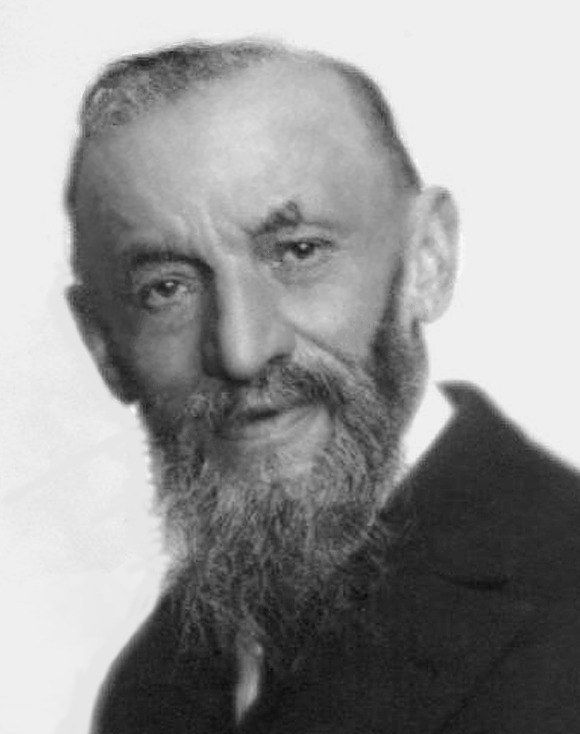
Giuseppe Peano’s career looks like a one-man campaign to make mathematics speak more clearly. Starting with the calculus of geometric surfaces, he moved inward to the foundations of arithmetic, outward to the grammar of logical symbolism, and finally beyond mathematics into linguistics, where he carved Classical Latin into “Latino sine flexione,” a language without inflections. Along the way he produced more than 200 books and articles, introduced the now-standard symbols for set union and intersection, and distilled the entire counting process into five crisp axioms that still bear his name.Peano’s axioms are so simple that a child can recite them, yet they encode every property we expect the natural numbers 0, 1, 2, … to enjoy: a starting point (0), a successor function S, and the principle that if a statement holds for 0 and survives the passage from n to S(n), then it holds for every number. This last clause is the rigorous form of mathematical induction, a technique that had been used informally since the 17th century but which Peano embedded in a symbolic system strong enough to support all of elementary arithmetic—and, eventually, modern proof assistants.
History/Background
Born on 27 August 1858 in a farmhouse near Cuneo, Peano entered the University of Turin in 1876, published his first paper on analytic geometry at twenty, and by twenty-five was a full professor. The intellectual climate of northern Italy in the 1880s was electric: Cantor’s set theory was circulating, Frege’s Begriffsschrift had just appeared, and the need for a common logical language was felt everywhere. Peano’s response was the Formulario Mathematico, a series of five editions (1895–1908) that grew from a 52-page pamphlet into a 420-page encyclopedia of mathematics written entirely in his symbolic language. Each edition was a community effort: colleagues across Europe sent contributions, and Peano edited them into a uniform notation—often over the protests of authors who discovered their prose had been translated into “Peanese.”In 1903 Peano withdrew from mainstream mathematical research to promote Latino sine flexione, a zippy version of Latin that eliminated gender, case endings, and irregular verbs. He used it for his later papers, taught courses in it, and even addressed international congresses in what sounded to classicists like butchered Cicero. The mathematical world, meanwhile, adopted his axioms and notation wholesale, ensuring that while the language of his later works faded, the logical skeleton of his early work became permanent.
Key Information
- Peano axioms (1889) 1. 0 is a natural number. 2. Every natural number n has a successor S(n). 3. 0 is not the successor of any number. 4. Different numbers have different successors. 5. Induction axiom: If K is a set such that 0 ∈ K and n ∈ K ⇒ S(n) ∈ K, then every natural number is in K.- Notation still in daily use
∈ (“is an element of”), ∪ (union), ∩ (intersection), ∅ (empty set), and the “such that” bar in set-builder notation.
- Space-filling curve (1890)
Constructed a continuous surjective map from the unit interval onto the unit square, shocking geometers who believed such a curve impossible.
- Latino sine flexione
Vocabulary of Classical Latin, grammar reduced to a single declension and two verb endings; sample sentence: “Matematica es scientia de numero” (“Mathematics is the science of number”).
- Editorial activity
Founded the journal Rivista di Matematica in 1891 and directed it for fifteen years, turning Turin into a magnet for logicians.