




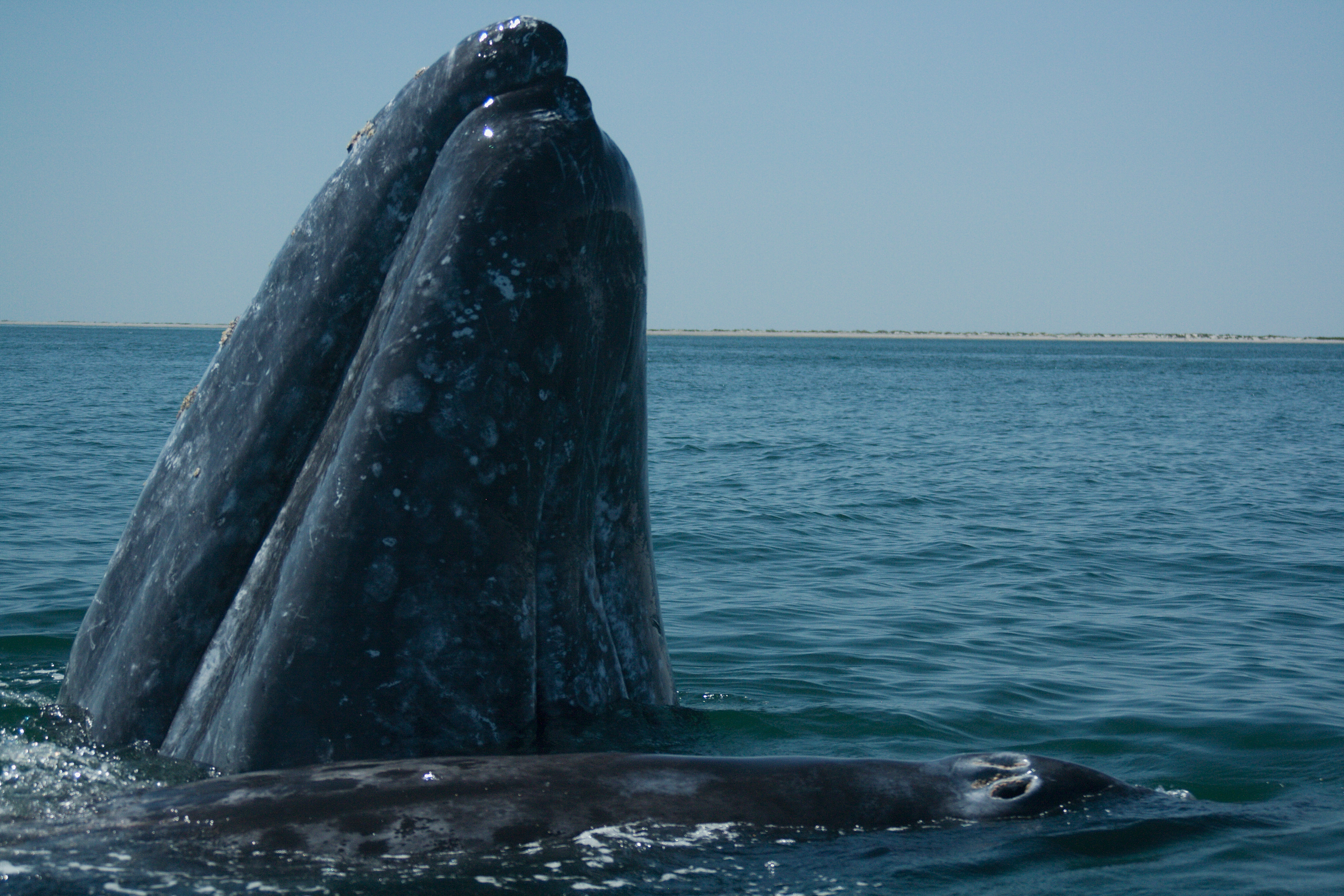
Gray Whale
SUMMARY: The gray whale is a majestic, migratory baleen whale that has captivated humans for centuries with its remarkable size, gentle nature, and incredible endurance.
Overview
The gray whale (Eschrichtius robustus) is one of the most iconic and awe-inspiring creatures in the ocean. These massive, gentle giants can be found in the world's oceans, migrating between their feeding grounds in the Arctic and their breeding grounds in Mexico and Alaska. Gray whales are known for their distinctive gray patches and white mottling on their dark skin, which gives them their name. They are also famous for their incredible endurance, with some individuals migrating over 12,000 miles each year, making them one of the most traveled mammals on the planet.
Gray whales are filter feeders, using their baleen plates to strain tiny crustaceans, plankton, and small fish from the water. They are social creatures, often traveling in large groups, and have been observed displaying complex behaviors such as courtship rituals and cooperative hunting. Despite their size and strength, gray whales are incredibly gentle, and have been known to interact with humans in a non-aggressive manner.
History/Background
The gray whale has a rich and fascinating history that dates back to the Neogene period, over 2 million years ago. During this time, filter-feeding whales evolved to become one of the most successful groups of marine mammals. The gray whale is thought to have descended from these early filter-feeding whales, and has since evolved into the majestic creature we know today.
In the past, gray whales were hunted extensively for their oil and baleen, which was used in corsets and other products. This led to a significant decline in gray whale populations, and by the mid-20th century, there were only around 1,000 individuals remaining. However, thanks to conservation efforts and the establishment of protected areas, gray whale populations have begun to recover, and there are now an estimated 27,000 individuals worldwide.
Key Information
* Length: 14.9-15.2 meters (49-50 feet)
* Weight: Up to 41-45 tonnes
* Lifespan: 55-70 years, with one individual estimated to be 75-80 years old
* Migration: Up to 12,000 miles per year
* Diet: Filter feeder, feeding on tiny crustaceans, plankton, and small fish
* Social behavior: Social creatures, often traveling in large groups
* Habitat: Found in the world's oceans, migrating between feeding and breeding grounds
Significance
The gray whale is an important species for several reasons. Firstly, they play a crucial role in maintaining the health of marine ecosystems, serving as a key link in the food chain. Secondly, their incredible endurance and migratory patterns make them an important indicator species, providing valuable insights into the impacts of climate change and ocean health. Finally, the gray whale has significant cultural and spiritual significance for many indigenous communities, who have traditionally relied on them for food, transportation, and spiritual guidance.
INFOBOX:
- Name: Gray Whale (Eschrichtius robustus)
- Type: Balaenopteridae (or Eschrichtiidae)
- Date: Neogene period (over 2 million years ago)
- Location: World's oceans, migrating between feeding and breeding grounds
- Known For: Incredible endurance, gentle nature, and significant cultural and spiritual significance
TAGS: Gray whale, baleen whale, filter feeder, migratory species, endangered species, conservation, marine biology, ocean health, climate change.


