




**
Overview
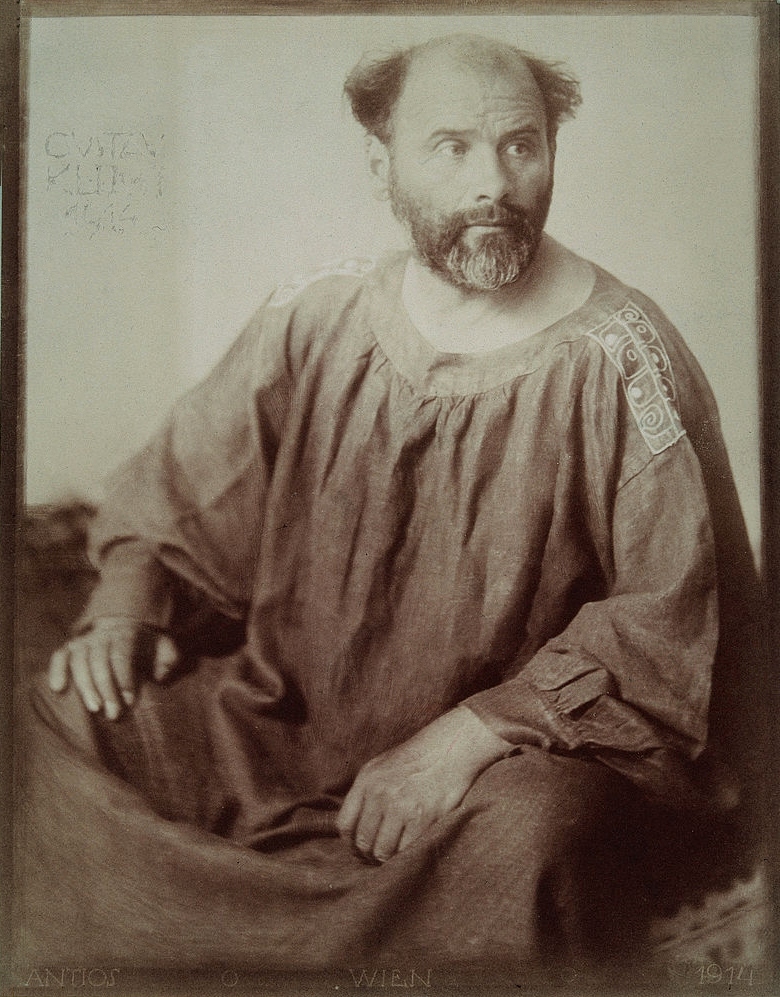
Gustav Klimt emerged from the bustling cultural crossroads of late‑19th‑century Vienna to become one of the most recognizable figures in modern art. A master of oil, tempera, and gold leaf, he fused Symbolist allegory with the sinuous lines of Art Nouveau, creating works that pulse with sensuality and ornamental richness. While his oeuvre spans portraits, allegorical scenes, and idyllic landscapes, the female body remains his most compelling subject, rendered with a frank eroticism that both scandalized and mesmerized contemporary audiences. Klimt’s most celebrated pieces—The Kiss and Portrait of Adele Bloch‑Bauer I—exemplify his ability to merge intimate psychology with opulent surface treatment, turning canvas into a shimmering tapestry of gold, pattern, and emotion.Beyond the studio, Klimt was a pivotal force in the Vienna Secession, a breakaway group of artists who rejected the conservatism of the Academy of Fine Arts. As a founding member and later president of the Secession, he championed artistic freedom, interdisciplinary collaboration, and the integration of fine and applied arts—a philosophy that resonated with the broader European Art Nouveau movement.
History/Background
Born on July 14, 1862 in Baumgarten, a suburb of Vienna, Klimt was the second of seven children in a modest family of artisans. He trained at the Vienna School of Arts and Crafts (Kunstgewerbeschule), where he honed his skills in decorative painting and learned the fundamentals of architectural ornamentation. By the 1880s, Klimt was a prolific muralist, executing large‑scale commissions for public buildings such as the Kunsthistorisches Museum and the University of Vienna.In 1897, disillusioned with the Academy’s rigid standards, Klimt co‑founded the Vienna Secession alongside artists like Egon Schiele, Koloman Moser, and Josef Hoffmann. The Secession’s manifesto called for “the total work of art” (Gesamtkunstwerk), encouraging the synthesis of painting, architecture, and design. Klimt’s 1900–1902 Beethoven Frieze, created for the Secession’s exhibition hall, epitomized this ideal, marrying mythic narrative with a mosaic‑like surface that echoed both Japanese ukiyo‑e prints and the ornamental motifs of the Mingei movement.
The early 1900s marked Klimt’s “Golden Phase,” a period defined by the lavish use of gold leaf—a technique inspired by Byzantine mosaics and Japanese lacquer work. During this time, he produced his most iconic portraits, including Portrait of Adele Bloch‑Bauer I (1907) and the sensual masterpiece The Kiss (1907–1908). Despite his commercial success, Klimt faced criticism from conservative circles for the overt sexuality and perceived decadence of his work, leading to a temporary ban on his murals for the University of Vienna in 1912.
Klimt continued to paint until his death from a stroke on February 6, 1918, leaving behind a legacy that would profoundly influence Expressionism, Surrealism, and contemporary feminist art discourse.
Key Information
- Full Name: Gustav Klimt - Birth/Death: 1862 – 1918 - Primary Media: Oil, tempera, gold leaf, drawing, decorative murals, and applied‑art objects. - Artistic Movements: Symbolism, Art Nouveau, Vienna Secession. - Signature Themes: Female eroticism, allegorical mythology, ornamental patterning, and the interplay of surface and narrative. - Major Works: The Kiss, Portrait of Adele Bloch‑Bauer I, Beethoven Frieze, Danaë, Adele Bloch‑Bauer II, The Tree of Life, numerous portrait commissions of Viennese high society. - Influences: Japanese woodblock prints (especially Katsushika Hokusai), Byzantine mosaics, the Arts and Crafts movement, and the Viennese intellectual climate fostered by figures like Sigmund Freud. - Awards/Positions: President of the Vienna Secession (1902–1905), member of the Academy of Fine Arts Vienna (honorary).Significance
Klimt’s work reshaped the visual language of early‑20th‑century Europe by daringly foregrounding female sexuality as a source of aesthetic power rather than moral caution. His synthesis of fine art with decorative motifs broke down hierarchical distinctions between “high” and “applied” art, a principle that would echo in the Bauhaus and later postmodern practices. The golden surface of his portraits not only created a visual spectacle but also invoked a timeless, almost sacred aura, positioning his subjects—often women of the Viennese elite—as modern icons of both beauty and agency.The Vienna Secession, under Klimt’s leadership, became a crucible for avant‑garde experimentation, influencing contemporaries such as Egon Schiele and Oskar Kokoschka, and later inspiring the Expressionist and Surrealist movements. Moreover, Klimt’s engagement with Japanese aesthetics prefigured the broader Japonisme trend that swept across Europe, demonstrating how cross‑cultural exchange could invigorate Western art.
In contemporary culture, Klimt’s paintings continue to command record auction prices, inspire fashion collections, and feature in popular media, underscoring his enduring relevance. Scholars cite his oeuvre when discussing the politics of the gaze, the commodification of the female form, and the interplay between ornament and meaning—issues that remain central to art historical discourse today.
INFOBOX:
- Name: Gustav Klimt
- Type: Austrian Symbolist Painter, Founder of Vienna Secession
- Date: 1862 – 1918
- Location: Vienna, Austria (birthplace, primary studio, and death)
- Known For: The Kiss, Portrait of Adele Bloch‑Bauer I, pioneering Art Nouveau in Central Europe
TAGS: Gustav Klimt, Symbolism, Vienna Secession, Art Nouveau, Austrian Art, The Kiss, Portrait of Adele Bloch-Bauer I, Female Nude


