




**
Overview
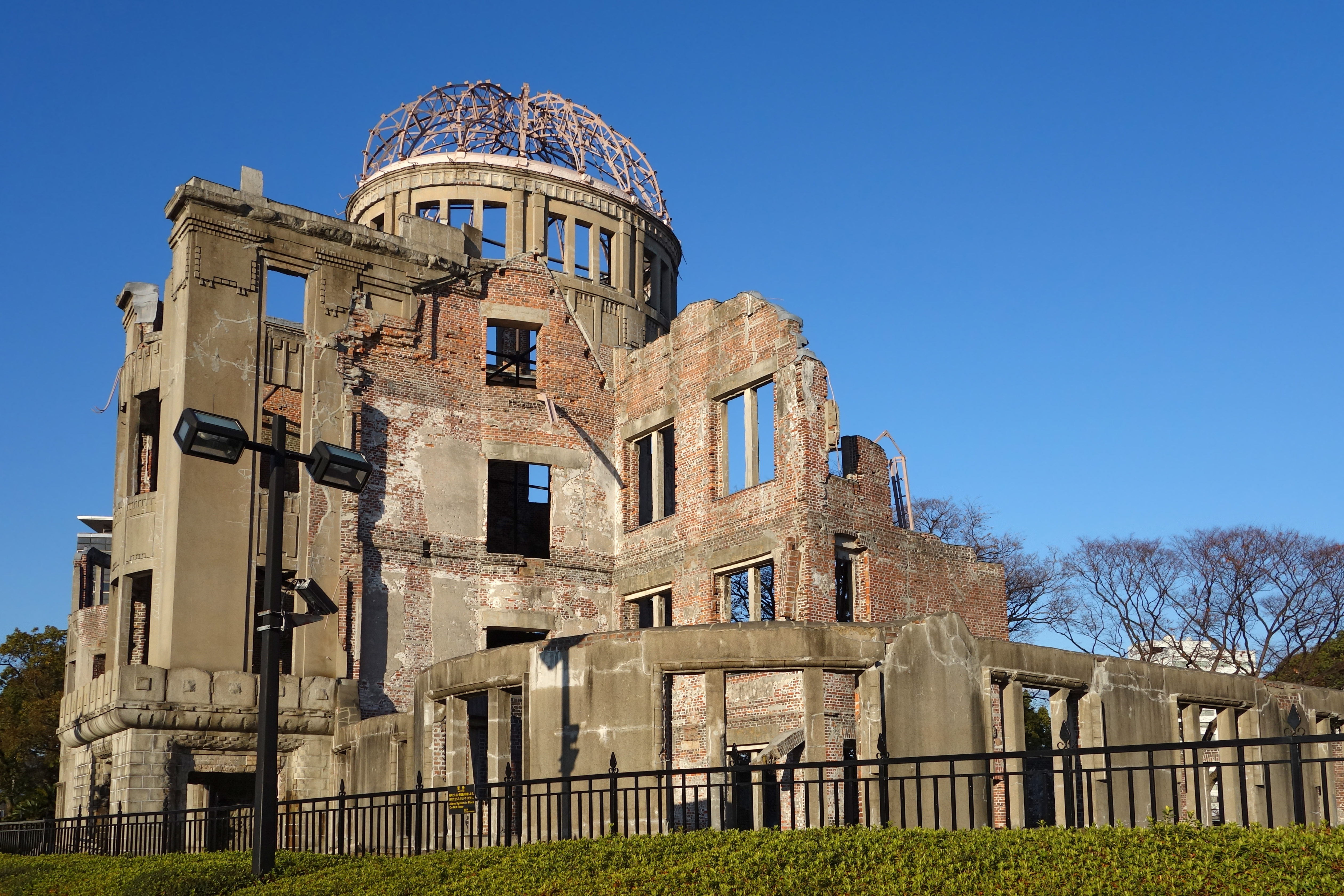
Rising from the ashes of August 6 1945, the Hiroshima Peace Memorial—often called the Genbaku Dome or A‑Bomb Dome—is the most recognizable relic of the world’s first nuclear attack. The skeletal steel frame and charred brick walls of the former Hiroshima Prefectural Industrial Promotion Hall remain exactly as they were moments after the bomb detonated 600 meters above the city. Encircled by a tranquil pond and a wide expanse of greenery known as Hiroshima Peace Memorial Park, the dome draws millions of visitors each year, offering a stark visual reminder of the destructive power of nuclear weapons and a hopeful call for global peace.The site is not merely a ruin; it is a carefully curated memorial space. Inside the dome’s open interior, plaques recount the human toll—over 140,000 deaths by the end of 1945—and the broader humanitarian crisis that followed. Outside, the park’s pathways lead to the Peace Memorial Museum, the Children’s Peace Monument, and the Cenotaph for All the Victims of the Atomic Bombings, forming a cohesive narrative that moves from devastation to reconciliation. The dome’s preservation was a deliberate decision made by the Japanese government and local citizens in the 1960s, reflecting a collective desire to keep the physical evidence of the tragedy visible for future generations.
In 1996, UNESCO inscribed the Hiroshima Peace Memorial on the World Heritage List, citing its “exceptional testimony to the catastrophic consequences of nuclear warfare” and its role as a “symbol of peace and a reminder of the need for nuclear disarmament.” The designation underscores the site’s universal value, transcending national boundaries and speaking to the shared responsibility of humanity to prevent such horrors again.
History/Background
The building that would become the Genbaku Dome was completed in 1915 as the Hiroshima Prefectural Industrial Promotion Hall, designed by architect Tatsuno Kingo, a disciple of the famed British architect Sir George Gilbert Scott. Its Western‑style brick façade and iron framework made it a landmark of early 20th‑century modernity, housing a museum, a conference hall, and offices for the prefectural industrial bureau.On 6 August 1945, at 8:15 a.m., the U.S.‑dropped atomic bomb “Little Boy” exploded 600 meters above Hiroshima, releasing an energy equivalent to roughly 15 kilotons of TNT. The blast vaporized everything within a 150‑meter radius; the Hall, located about 160 meters from the hypocenter, was partially destroyed. Its central dome survived because the intense heat caused the surrounding concrete to melt away, leaving the steel skeleton exposed.
In the immediate post‑war years, the ruin stood amid a devastated cityscape. By 1949, the Japanese government began clearing debris, but local residents petitioned to preserve the dome as a “peace memorial.” After a series of debates, the Hiroshima Peace Memorial City Construction Law of 1950 officially designated the site for preservation. The surrounding park was formally opened in 1955, and the Peace Memorial Museum followed in 1956, providing educational context for the tragedy.
The dome’s UNESCO inscription in 1996 came after a rigorous evaluation process that highlighted its authenticity, integrity, and outstanding universal value. The site’s management plan, updated in 2005, emphasizes conservation of the original materials, controlled visitor access, and ongoing educational programming.
Key Information
- Official Name: Hiroshima Peace Memorial (Genbaku Dome) - Construction: 1915; architect Tatsuno Kingo - Atomic Bombing: 6 August 1945, 15 kilotons, 600 m altitude - Survival: Only the steel framework and a portion of the brick façade remained intact - UNESCO World Heritage Site: Inscribed 1996 (Criteria (vi)) - Location: Hiroshima Peace Memorial Park, 2‑1 Nakajimacho, Naka‑ku, Hiroshima, Japan - Visitation: Approximately 3 million visitors annually (pre‑COVID figures) - Preservation: Maintained in its post‑blast condition; no reconstruction of lost elements - Associated Institutions: Hiroshima Peace Memorial Museum, Children’s Peace Monument, CenotaphSignificance
The Hiroshima Peace Memorial serves as a global conscience‑shaper, embodying the stark reality of nuclear warfare and the urgent need for disarmament. Its preserved ruin provides an irreplaceable, tangible record of the bomb’s destructive power, making abstract statistics about casualties and radiation effects viscerally real for visitors. By standing in the middle of a park dedicated to peace, the dome transforms from a symbol of death into a catalyst for dialogue, inspiring countless peace movements, educational curricula, and diplomatic initiatives aimed at nuclear non‑proliferation.Culturally, the dome has entered the collective imagination through literature, film, and art, often depicted as a haunting silhouette against a sunrise—an image that reinforces Hiroshima’s identity as a “city of peace.” The annual Peace Memorial Ceremony on August 6, attended by Japanese officials and international dignitaries, uses the dome as a focal point for prayers, speeches, and the release of paper cranes, a tradition that underscores hope and reconciliation.
In the broader context of heritage preservation, the Genbaku Dome challenges conventional notions of restoration. Rather than rebuilding, the decision to conserve the ruin respects the authenticity of the trauma, allowing future generations to confront history directly. This approach has informed preservation strategies for other conflict‑related sites worldwide, from the Old Town of Warsaw to the Krak des Chevaliers in Syria.
INFOBOX:
- Name: Hiroshima Peace Memorial (Genbaku Dome)
- Type: UNESCO World Heritage Site / Historic Memorial
- Date: Completed 1915; designated World Heritage 1996; bombing 1945
- Location: Hiroshima Peace Memorial Park, Hiroshima, Japan
- Known For: Surviving structure of the 1945 atomic bomb, symbol of peace and nuclear disarmament
TAGS: Hiroshima, Genbaku Dome, World Heritage, Atomic Bomb, Peace Memorial, Nuclear Disarmament, Cultural Heritage, Japanese History


