




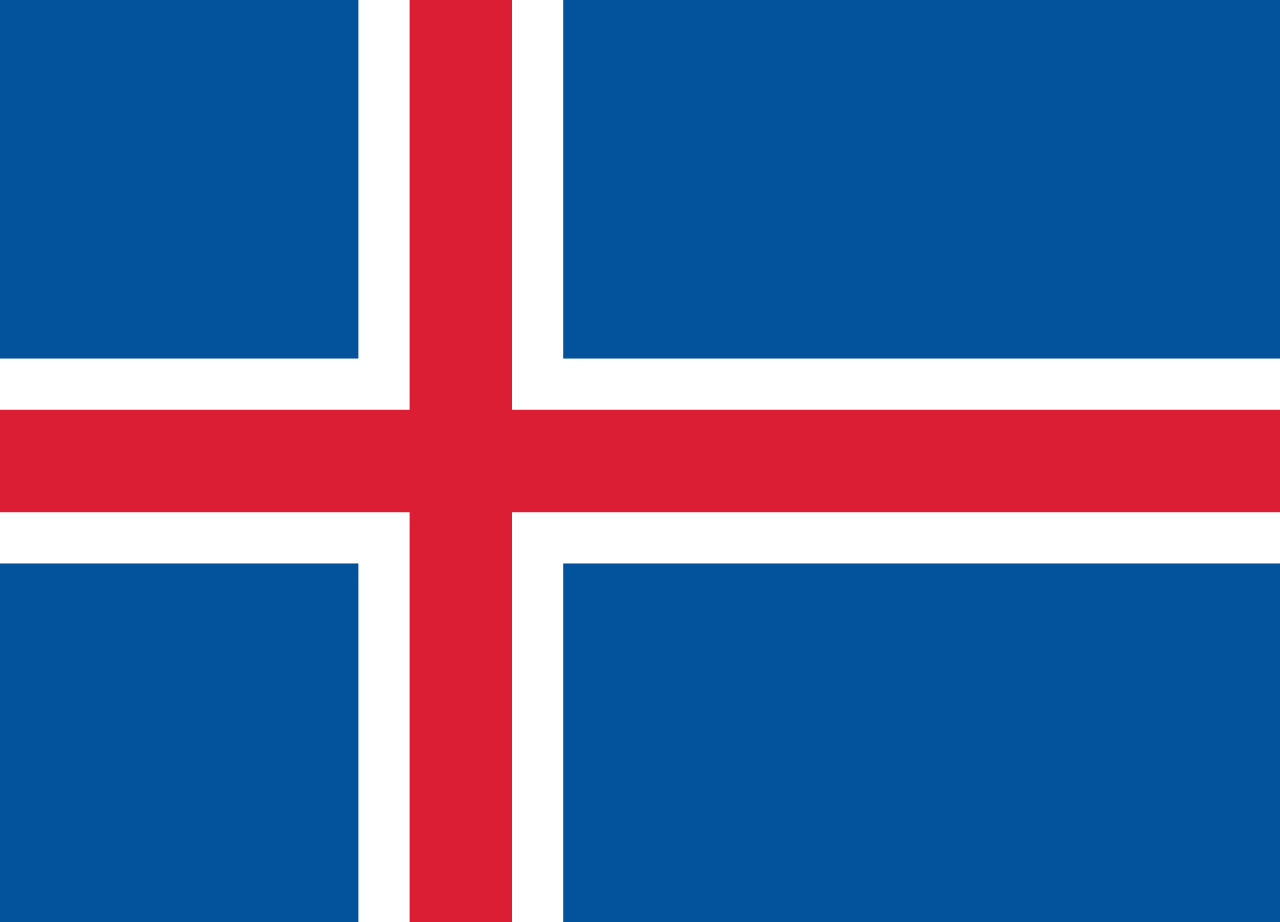
**
Overview
Iceland sits at the crossroads of the Arctic Ocean and the North Atlantic, straddling the tectonic boundary between the North American and Eurasian plates. This unique geological setting gifts the island with a mosaic of geysers, hot springs, basaltic lava fields, and towering glaciers that coexist within a relatively compact landmass of 103,000 km². Despite its high latitude—just south of the Arctic Circle—the Gulf Stream moderates the climate, delivering a temperate, maritime weather pattern where summer highs rarely exceed 15 °C and winter lows hover around freezing along the coast.The country’s population of roughly 395,000 is the smallest among the Nordic states, and the westernmost of Europe’s sovereign nations. Over a third of Icelanders live in the capital, Reykjavík, a compact yet cosmopolitan city that serves as the cultural, economic, and political heart of the island. Icelandic, a North‑Germanic language unchanged since the Viking Age, is the sole official language, preserving a literary tradition that stretches back to the Íslendingasögur (Sagas of the Icelanders).
Iceland’s landscape is a study in contrasts: a barren, volcanic interior known as the highlands gives way to fertile coastal plains where agriculture and fishing thrive. The Þingvellir rift valley, a UNESCO World Heritage Site, marks the visible split between the two tectonic plates and was the site of the world’s oldest parliament, the Alþingi, founded in 930 AD. This blend of raw natural power and deep historical roots makes Iceland a living laboratory for geologists, climate scientists, and cultural scholars alike.
History/Background
Human settlement began in 874 AD when Norse chieftain Ingólfur Arnarson established a homestead in what is now Reykjavík. The early settlers, primarily of Norwegian origin, brought with them a legal framework that evolved into the Alþingi, one of the longest‑running parliamentary institutions on Earth. Throughout the Middle Ages, Iceland oscillated between independence and foreign rule, becoming part of the Norwegian Crown in 1262 and later the Danish Realm in 1380.The 19th‑century national romantic movement sparked a cultural renaissance, reviving Icelandic language and literature and culminating in the declaration of independence on June 17, 1944, during World War II when Denmark was occupied. Post‑war Iceland leveraged its abundant geothermal energy and hydropower to industrialize rapidly, transitioning from a fishing‑dependent economy to a diversified one that includes technology, tourism, and renewable energy exports. Key dates include the eruption of Laki (1783), which caused a severe climatic downturn in Europe, and the cod wars (1958‑1976), a series of confrontations that secured Iceland’s exclusive fishing zones and reshaped its economic base.
Key Information
- Capital & Largest City: Reykjavík (≈ 140,000 inhabitants) - Official Language: Icelandic (preserves Old Norse grammar and vocabulary) - Population: ~ 395,000 (2023 estimate) - Area: 103,000 km², making it the 12th largest island in the world - Government: Parliamentary republic; President (ceremonial) and Prime Minister (executive) - Economy: High‑GDP per capita; major sectors include fisheries (≈ 40 % of export value), renewable energy (≈ 85 % of total energy consumption), tourism (≈ 30 % of GDP), and information technology - Geology: Situated on the Mid‑Atlantic Ridge; active volcanoes include Eyjafjallajökull (2010 eruption that disrupted European air traffic) and Bárðarbunga (2014‑15 eruption) - Climate: Temperate maritime; coastal areas experience mild winters, while the interior is sub‑arctic with glaciers covering 11 % of the land - Cultural Highlights: Sagas, Þorrablót mid‑winter feast, Icelandic music (Björk, Sigur Rós), and a thriving literary scene with the Icelandic Literary PrizeSignificance
Iceland’s importance extends far beyond its modest size. Geologically, it offers a rare, accessible window into plate tectonics and volcanic processes, making it a natural laboratory for Earth scientists. Its pioneering use of geothermal and hydroelectric power sets a global benchmark for sustainable energy, demonstrating how a nation can achieve near‑complete decarbonization while maintaining economic growth.Culturally, Iceland preserves a linguistic time capsule; Icelandic remains intelligible to speakers of Old Norse, providing scholars with a living link to medieval literature and Viking heritage. The nation’s democratic tradition, embodied by the Alþingi, serves as a model of continuity and civic engagement. Moreover, Iceland’s soft power—through music, literature, and cinema—has amplified its global profile, attracting millions of tourists each year who seek the aurora‑lit skies, black‑sand beaches, and the stark beauty of places like Jökulsárlón glacier lagoon.
In the face of climate change, Iceland’s resilience and innovation are especially noteworthy. Its commitment to carbon neutrality by 2040, extensive marine stewardship, and investment in green technology research position the island as a leader in the global transition to a low‑carbon future.
INFOBOX:
- Name: Republic of Iceland
- Type: Sovereign nation (Nordic island state)
- Date: Independence declared 17 June 1944
- Location: North Atlantic Ocean, between the Arctic Circle and the Mid‑Atlantic Ridge
- Known For: Volcanic activity, geothermal energy, Icelandic sagas, and a high standard of living
TAGS: Iceland, Nordic countries, volcanic islands, geothermal energy, Reykjavík, Alþingi, Icelandic language, tourism


