




Overview
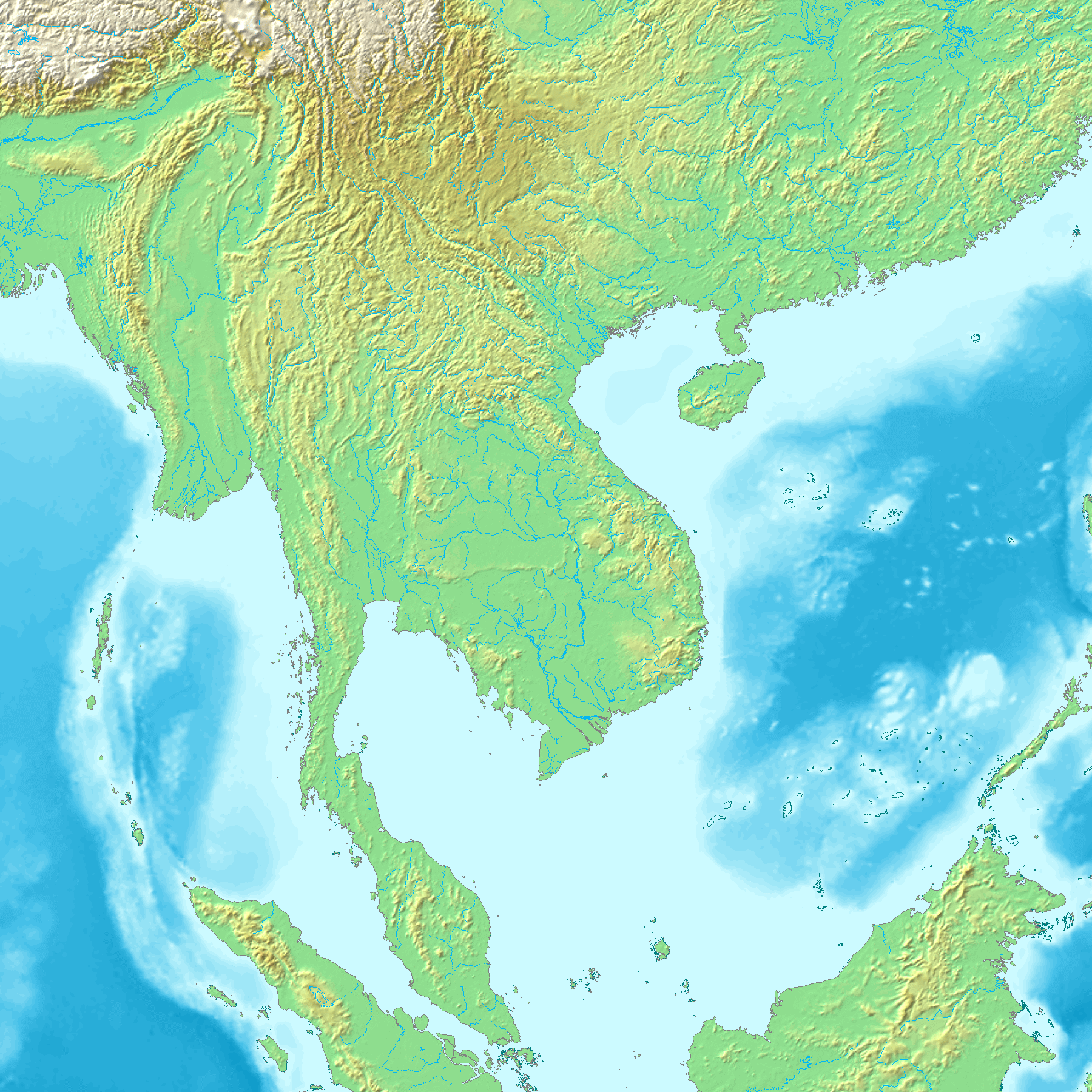
The lands commonly labeled Indochina stretch from the rugged highlands of northern Myanmar to the fertile Mekong Delta in southern Vietnam. Bordered by the Indian Ocean to the west and the Pacific Ocean to the east, this swath of territory covers roughly 2.2 million km² and is home to over 250 million people. Its geography is a tapestry of monsoon‑fed river basins, dense tropical rainforests, limestone karsts, and soaring mountain ranges, each shaping distinct yet interconnected ways of life.Culturally, Indochina is a melting pot where Indian religious ideas (Hinduism, Buddhism), Chinese administrative models, and local animist practices have fused to create unique artistic, linguistic, and culinary traditions. From the gilded temples of Angkor Wat to the bustling floating markets of the Mekong, the region’s heritage is both ancient and vibrantly alive. Modern cities such as Bangkok, Hanoi, and Yangon showcase rapid urbanization while still echoing centuries‑old customs.
Economically, the region balances agriculture—particularly rice, rubber, and coffee—with burgeoning manufacturing, tourism, and services sectors. The ASEAN framework has further integrated these nations, fostering trade corridors that link the Indian Ocean ports of Mawlamyine and Da Nang with the Pacific gateways of Ho Chi Minh City and Bangkok.
History/Background
The concept of Indochina emerged in the early 19th century as European explorers noted the cultural blend of Indian and Chinese influences across the mainland. French colonial ambitions crystallized the term when, in 1887, French Indochina was formally established, uniting Vietnam, Laos, and Cambodia under a single administrative umbrella. Key dates include the Treaty of Huế (1884), which placed Vietnam under French protectorate, and the Siamese Reorganization (1907) that ceded parts of Laos to French control.World War II disrupted colonial rule; Japanese occupation (1940‑45) ignited nationalist movements. Post‑war, the First Indochina War (1946‑1954) culminated in the Geneva Accords, granting independence to Vietnam, Laos, and Cambodia. Meanwhile, Myanmar (then Burma) and Thailand had followed separate colonial trajectories—British and Siamese respectively—yet remained integral to the broader Indochinese cultural sphere.
The Cold War era saw the region become a geopolitical flashpoint, especially in Vietnam, where the Vietnam War (1955‑1975) reshaped regional politics. The late 20th century brought economic liberalization, ASEAN membership (1976‑1995), and a shift from agrarian economies to export‑driven growth, setting the stage for today’s dynamic Indochinese landscape.
Key Information
- Population: ~260 million (2023 estimate) - Area: ~2.2 million km² - Major Rivers: Mekong, Salween, Irrawaddy, Chao Phraya - Languages: Thai, Vietnamese, Khmer, Lao, Burmese, plus numerous minority tongues - Religions: Theravada Buddhism (dominant), Mahayana Buddhism, Islam, Christianity, indigenous animism - Economic Highlights: Rice production (world’s 5th largest), textile manufacturing, tourism (Angkor, Luang Prabang, Bagan) - UNESCO World Heritage Sites: Angkor Wat (Cambodia), Hạ Long Bay (Vietnam), Bagan (Myanmar), Sukhothai Historical Park (Thailand) - Climate: Tropical monsoon with distinct wet (May‑Oct) and dry (Nov‑April) seasons, varying by altitudeSignificance
Indochina’s importance lies in its role as a bridge between two great civilizational spheres—South Asia and East Asia—facilitating the diffusion of religions, scripts, and trade goods for over a millennium. The region’s archaeological treasures, especially the Khmer empire’s monumental architecture, have reshaped global understandings of pre‑modern statecraft and urban planning. Politically, the decolonization struggles of the mid‑20th century provided a template for anti‑imperial movements worldwide, while the subsequent economic reforms demonstrated how formerly agrarian societies could transition to manufacturing and services‑based economies within a generation.Ecologically, the Mekong basin alone supports one of the planet’s most biodiverse freshwater systems, crucial for food security across the region. Contemporary challenges—climate change, rapid urbanization, and balancing heritage preservation with development—make Indochina a focal point for sustainable policy experiments that could inform broader global strategies.


