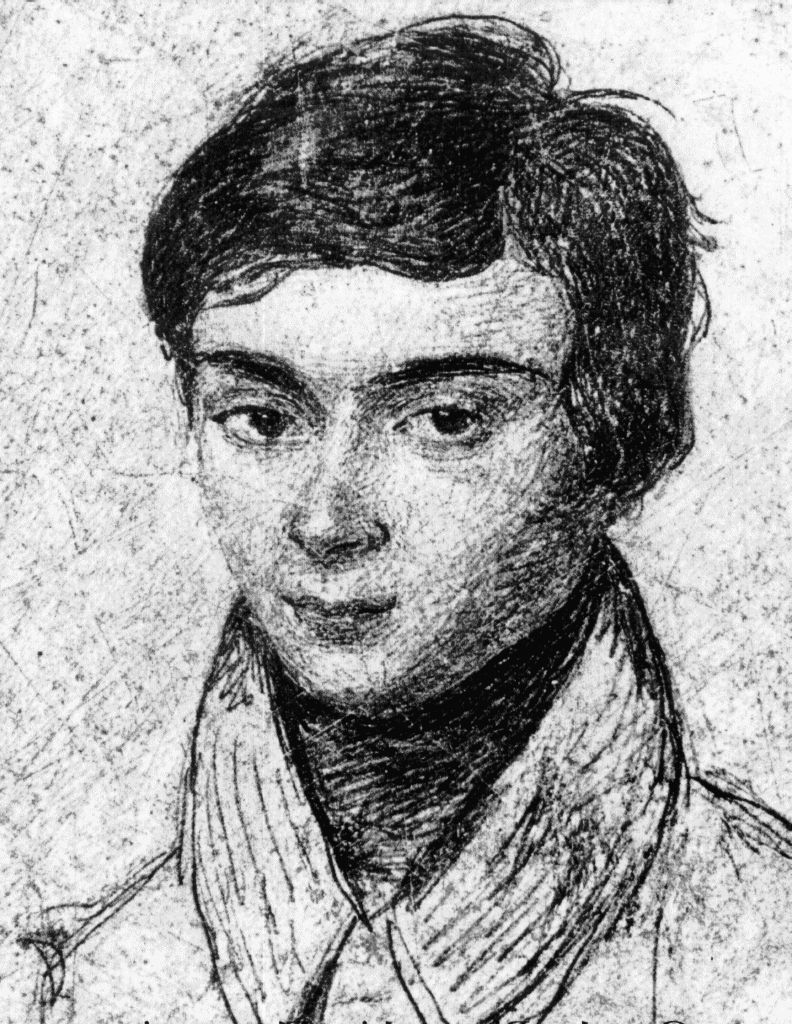
Jean-Pierre Serre is a towering figure in 20th-century mathematics whose revolutionary work in algebraic topology, algebraic geometry, and number theory earned him the Fields Medal at 27 and, half a century later, the inaugural Abel Prize.
Felix Numbers
Mathematics Editor
15 views4 min readAug 17, 2026
Overview
Jean-Pierre Serre’s career reads like a roadmap of modern pure mathematics. Beginning in the early 1950s, he transformed algebraic topology by showing how the fledgling theory of spectral sequences could be used to compute the homotopy groups of spheres—problems that had stumped topologists for decades. From there he turned to algebraic geometry, where his elegant formulation of sheaf cohomology (“faisceaux”) and his 1955 tour-de-force Faisceaux algébriques cohérents (FAC) turned varieties into manageable objects of algebra. Not content to stop, Serre spent the 1960s and 70s importing geometric insight into number theory, formulating the “Serre conjecture” (now a theorem) that every two-dimensional odd irreducible Galois representation over a finite field comes from a modular form, a precursor to the Langlands program and a cornerstone of Wiles’s proof of Fermat’s Last Theorem.
History/Background
Born 14 September 1926 in Bages, a small village near Perpignan, Serre grew up under the shadow of war yet managed to reach the École Normale Supérieure in 1945. Paris in the late 1940s was alive with new mathematical structures: Bourbaki’s encyclopedic project, Leray’s sheaf theory, and Cartan’s seminars. Henri Cartan became Serre’s mentor and quickly steered him toward the open problem of computing higher homotopy groups. By 1951 Serre’s doctoral thesis introduced the method of Serre spectral sequences, reducing seemingly intractable topological questions to graded algebra. The 1954 International Congress of Mathematicians in Amsterdam awarded Serre the Fields Medal—the youngest recipient at the time—citing “his spectacular and elegant work on homotopy groups.” Three decades of unbroken influence followed: the 1960s saw the birth of scheme theory with Grothendieck, where Serre’s duality, theorems A & B, and GAGA principle linked analytic and algebraic geometry; the 1970s and 80s witnessed Serre’s “Abelian l-adic Representations and Elliptic Curves” and the Cohomologie galoisienne lecture notes that reshaped modern number theory. In 2003 the Norwegian Academy created the Abel Prize and gave its first award to Serre “for playing a key role in shaping the modern form of many parts of mathematics.”
Key Information
- Spectral Sequences & Homotopy Groups: Serre showed πₖ(Sⁿ) is finite except when k = n or k = 2n − 1 with n even, settling long-standing conjectures.
- FAC & GAGA: Coherent sheaves on projective varieties are governed by their global sections; over C, analytic and algebraic coherent sheaves are equivalent—bridging analysis and algebra.
- Serre Duality: On a smooth projective variety X of dimension n, Hⁱ(X, F) pairs with Hⁿ⁻ⁱ(X, K_X ⊗ F*) to perfection, generalizing the classical Riemann-Roch theorem.
- The Serre Conjecture: Every continuous irreducible representation ρ : Gal(ℚ̄/ℚ) → GL₂(𝔽̄_p) that is odd comes from a Hecke eigenform; proved by Khare–Wintenberger (2009).
- Openness of Galois Images: For non-CM elliptic curves E/ℚ, the image of Gal(ℚ̄/ℚ) in T_ℓ(E) is open in GL₂(ℤ_ℓ) for almost all ℓ, a linchpin of the ℓ-adic program.
- Books & Exposition: Cours d’arithmétique (1970) introduced modular forms to generations; Trees (1977) linked SL₂ over local fields to graph theory; Galois Cohomology (1964, rev. 1997) remains the bible for deformation theory.
- Awards: Fields Medal (1954), Balzan Prize (1985), Steele Prize (1995), Wolf Prize (2000), Abel Prize (2003).
- Students & Legacy: Serre advised over 30 PhD students, including Michel Broué, Jean-Marc Fontaine, Pierre Deligne, and Benedict Gross, extending his intellectual lineage across the globe.
Significance
Serre’s influence lies not merely in solving problems but in creating the very language through which modern mathematics speaks. Spectral sequences are now as routine as long division; sheaf cohomology is the default tool for every algebraic geometer; the Serre twist O_X(d) governs Hilbert schemes and projective embeddings; ℓ-adic cohomology, introduced by Serre and Grothendieck, underpins the Weil conjectures and the entire motivic worldview. His insistence on clarity—every theorem accompanied by a crisp, often delightfully short proof—set a standard for exposition matched by few. The conjecture that bears his name galvanized a half-century of research linking motives, automorphic forms, and the arithmetic of Galois representations, culminating in modularity lifting theorems that power modern Diophantine geometry. Even the bible of error-correcting codes, cryptography, and post-quantum algebra relies on his work on curves over finite fields. Today, when number theorists speak of “Serre weights” or geometers invoke “Serre vanishing,” they testify to a career that has become synonymous with the field itself.
Tip: double-click any word in this article for an instant definition from the NerdDictionary.