Overview
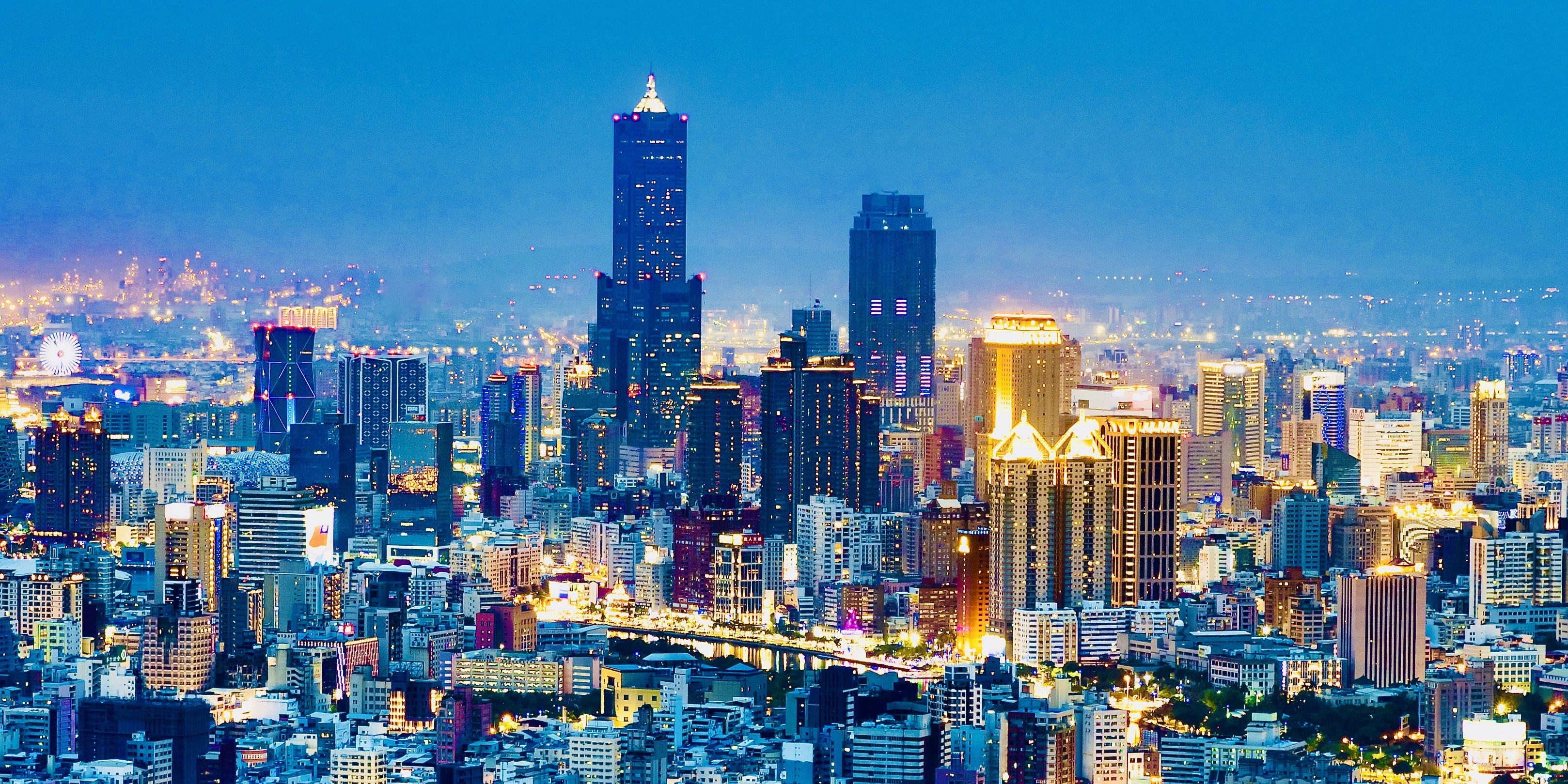
Kaohsiung, officially Kaohsiung City, is a special municipality in southern Taiwan that boasts a unique blend of urban and rural landscapes. The city spans a vast area of 2,952 km2 (1,140 mi2), making it the largest city in Taiwan by area. With a population of approximately 2.72 million people, Kaohsiung is Taiwan's third most populous city and the largest city in southern Taiwan. The city's diverse geography ranges from the coastal urban center to the rugged Yushan Range, offering breathtaking scenery and a wide range of outdoor activities. Kaohsiung's strategic location on the southwestern coast of Taiwan has made it an important hub for trade, commerce, and tourism.
Kaohsiung's name is derived from the Hokkien Chinese phrase "Kâu-hōng-siōng," which translates to "hollow harbor" or "empty harbor." This refers to the city's natural harbor, which was once a shallow and narrow waterway. However, with the construction of the Kaohsiung Harbor in the late 19th century, the city's harbor was transformed into a major shipping and trade center. Today, Kaohsiung is a thriving metropolis with a rich cultural heritage, a strong economy, and a high standard of living.
History/Background
Kaohsiung's history dates back to the Qing dynasty, when the city was a small fishing village. During the Japanese colonial period (1895-1945), Kaohsiung underwent rapid modernization and urbanization. The city's harbor was expanded, and new infrastructure was built, including roads, railways, and utilities. After World War II, Kaohsiung continued to grow and develop, becoming one of the most important cities in Taiwan. In 1979, Kaohsiung was designated as a special municipality, granting it greater autonomy and administrative powers.
Key Information
-
Population: Approximately 2.72 million people
-
Area: 2,952 km2 (1,140 mi2)
-
Economy: Kaohsiung is a major industrial and commercial center, with a strong focus on manufacturing, logistics, and tourism.
-
Cultural Heritage: Kaohsiung is home to numerous cultural attractions, including the Lotus Pond, the Dragon and Tiger Pagodas, and the Kaohsiung Museum of Fine Arts.
-
Natural Beauty: The city is surrounded by scenic natural landscapes, including the Yushan Range, the Meinong Hakka Cultural Village, and the Kenting National Park.
Significance
Kaohsiung's significance extends beyond its economic and cultural achievements. The city's unique blend of urban and rural landscapes has made it a popular destination for tourists and outdoor enthusiasts. Kaohsiung's harbor has also played a crucial role in Taiwan's trade and commerce, making it an important hub for international shipping and logistics. Additionally, the city's rich cultural heritage and natural beauty have made it a source of inspiration for artists, writers, and musicians.