




Overview
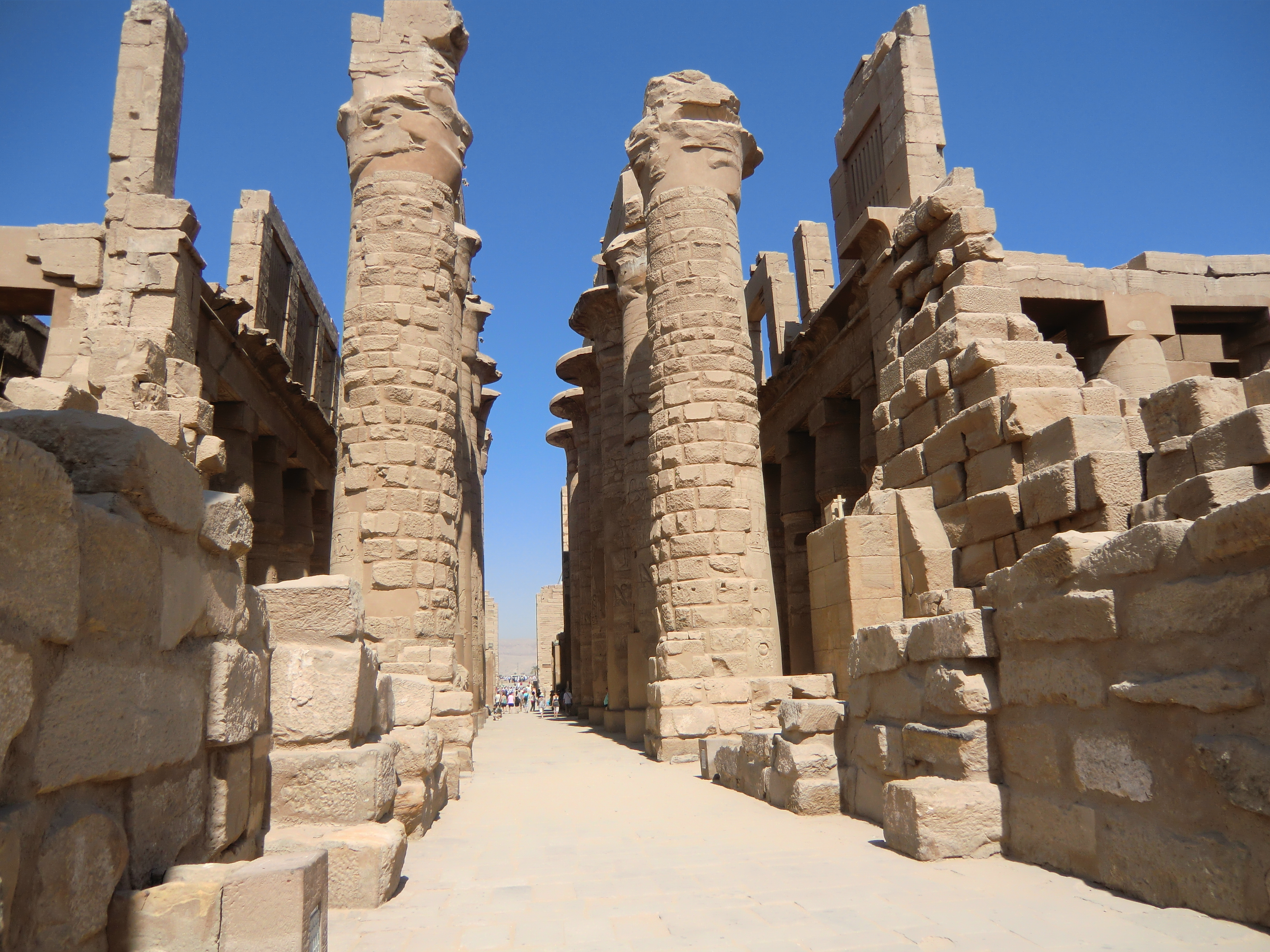
The Karnak Temple Complex—often simply called Karnak—is a monumental ensemble of sanctuaries, pylons, hypostyle halls, and sacred lakes that stretches over 200 acres on the east bank of the Nile near modern‑day Luxor. Its sheer scale makes it one of the largest religious sites ever built, rivaling the combined footprint of many contemporary cathedrals and mosques. Visitors wander through a labyrinth of stone, where towering columns carved with hieroglyphic prayers rise like forest trunks, and massive gateways (known as pylons) frame the procession routes once trodden by pharaohs and priests.Karnak was not a single temple but a city of temples, each dedicated to a different deity or royal cult. The centerpiece is the Great Temple of Amun‑Re, the chief god of the Theban Triad, flanked by chapels to his consort Mut and their son Khonsu. Over centuries, successive rulers added their own shrines, obelisks, and monumental statues, turning the site into a living archive of Egyptian art, architecture, and theology. The complex still reverberates with the echo of ancient festivals, most famously the Opet Festival, when a sacred barque carried Amun’s statue from Karnak to the nearby Luxor Temple.
Beyond its religious function, Karnak served as a political stage. Pharaohs inscribed their victories on its walls, proclaimed divine legitimacy, and used the sheer grandeur of the complex to impress both domestic subjects and foreign envoys. The site’s layout—aligned precisely with the rising sun on specific festival days—demonstrates the Egyptians’ sophisticated understanding of astronomy, engineering, and urban planning.
History/Background
Construction at Karnak began in the Middle Kingdom under Senusret I (c. 1971–1926 BC), who initiated the first stone sanctuary dedicated to Amun. However, the complex truly blossomed during the New Kingdom (c. 1550–1070 BC), especially under the 18th Dynasty pharaohs Hatshepsut, Thutmose III, Amenhotep III, and Ramesses II. These rulers expanded the Great Temple, added the iconic Hypostyle Hall (≈ 50 m × 20 m, 134 massive columns), and erected towering obelisks that still dominate the skyline.The 19th Dynasty saw further embellishment, with Seti I and Ramesses II carving colossal statues and reliefs that celebrate military campaigns in the Levant. By the Ptolemaic period (332–30 BC), Greek rulers continued to add chapels and restore older structures, integrating Hellenistic motifs while preserving the core Egyptian religious framework. Despite occasional neglect during the Roman and early Islamic eras, the site remained a pilgrimage destination, and its stones were occasionally quarried for new building projects.
Systematic archaeological excavation began in the 19th century, led by French and British scholars such as Champollion and Lepsius, who first documented the hieroglyphic inscriptions. Modern conservation efforts, spearheaded by the Egyptian Ministry of Antiquities, continue to stabilize the massive stonework and protect the delicate reliefs from environmental decay.
Key Information
- Location: West bank of the Nile, near modern Luxor (ancient Thebes), Egypt. - Construction span: c. 1970 BC – 30 BC (over 1,900 years). - Primary deity: Amun‑Re, head of the Theban Triad (Amun, Mut, Khonsu). - Area: Approximately 200 acres (≈ 0.8 km²). - Major structures: Great Temple of Amun‑Re, Hypostyle Hall, Sacred Lake, Avenue of Sphinxes, multiple pylons (e.g., Pylon of Ramesses III), and dozens of obelisks (the tallest original standing at 32 m). - Architectural feats: Alignment with the winter solstice sunrise; use of massive quartzite columns (up to 21 m tall); intricate relief program depicting the “Festival of Opet” and royal conquests. - Cultural artifacts: Over 2,000 inscriptions, including the Great Hymn to Amun, early examples of hieroglyphic narrative art, and the Karnak King List (a chronological record of early dynastic rulers). - Visitor statistics: Receives roughly 2 million tourists annually, making it Egypt’s most visited archaeological site after the Pyramids of Giza.Significance
Karnak stands as a testament to the political power and religious devotion of ancient Egypt, embodying the symbiotic relationship between state and deity. Its layered construction provides scholars with a chronological cross‑section of Egyptian art, from the austere reliefs of the Middle Kingdom to the lavish, naturalistic scenes of the Late Period. The complex’s astronomical alignments reveal the sophistication of Egyptian calendrical science, while its massive scale illustrates the logistical capabilities of a civilization that could mobilize thousands of laborers, quarry massive stone blocks, and transport them across the Nile.Culturally, Karnak shaped Egyptian identity; the annual Opet Festival reinforced the pharaoh’s role as the earthly intermediary of Amun, reinforcing social cohesion across Upper and Lower Egypt. In modern times, the site has inspired countless artists, writers, and filmmakers, serving as a visual shorthand for “ancient mystery” and “timeless grandeur.” Its preservation challenges—balancing tourism, climate, and urban encroachment—have driven advances in conservation science, influencing heritage management worldwide.


