



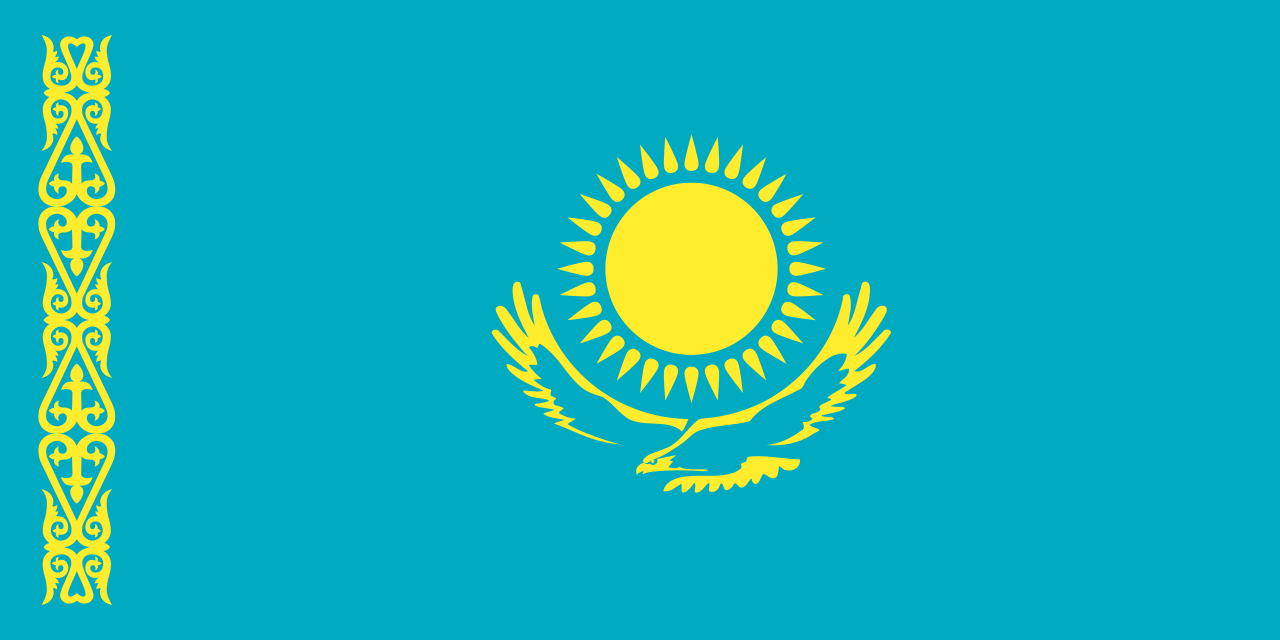

Overview
Kazakhstan is the world's largest landlocked country, spanning over 2.7 million square kilometers (1.05 million square miles). It is a country of breathtaking contrasts, where the snow-capped Tian Shan mountains meet the endless steppes of the Eurasian plain. The landscape is dotted with ancient trade routes, oases, and nomadic settlements, reflecting the country's complex history and cultural diversity. From the bustling cities of Astana and Almaty to the remote villages of the countryside, Kazakhstan is a land of warm hospitality, rich traditions, and endless possibilities.
The country's strategic location at the crossroads of Europe and Asia has made it an important hub for trade and cultural exchange throughout history. The Silk Road, a network of ancient trade routes, passed through Kazakhstan, bringing merchants, travelers, and ideas from China to the Mediterranean. Today, Kazakhstan is a modern, independent nation, with a growing economy and a strong sense of national identity.
History/Background
Kazakhstan has a rich and complex history, with evidence of human habitation dating back to the Paleolithic era. The country was a major center of the ancient Silk Road, with cities like Turkestan and Samarkand playing important roles in the trade and cultural exchange between East and West. In the 13th century, Genghis Khan and the Mongol Empire conquered much of present-day Kazakhstan, leaving a lasting legacy of nomadic culture and traditions.
In the 19th century, Kazakhstan became part of the Russian Empire, which brought modernization and economic development to the region. However, the country's cultural and linguistic identity was suppressed, and many Kazakhs were forced to adopt Russian language and customs. After the Russian Revolution, Kazakhstan became an autonomous republic within the Soviet Union, with a growing sense of national identity and a desire for independence.
Key Information
- Area: 2,724,900 square kilometers (1,052,100 square miles)
- Population: approximately 18.5 million people
- Capital: Astana (since 1997)
- Largest city: Almaty (population: over 1.8 million)
- Language: Kazakh (official), Russian (widely spoken)
- Currency: Kazakhstani tenge (KZT)
- Economy: oil and gas, agriculture, mining, manufacturing
- Natural resources: oil, natural gas, coal, iron ore, copper
Significance
Kazakhstan is a country of great significance, not only for its rich cultural heritage and stunning natural landscapes but also for its strategic location and growing economy. As a major producer of oil and natural gas, Kazakhstan plays an important role in the global energy market. The country is also a key player in regional politics, with a strong sense of national identity and a desire to promote peace and stability in Central Asia.


